
The urban landscape of Mykolaiv is currently enduring a paradoxical shift where the frequency of kinetic activity has declined, yet the physical consequences on the ground have become markedly more severe. This phenomenon is driven by an evolution in the destructive power of specialized weaponry that prioritizes structural penetration and broad blast radiuses over the sheer volume of strikes seen in previous years. Local residents and municipal authorities are finding that a single modern engagement can now inflict more catastrophic damage than dozens of older artillery rounds combined, leaving neighborhoods to grapple with unprecedented levels of rubble and debris. As the nature of the conflict matures through 2026, the city’s defense and recovery frameworks are being forced to adapt to a reality where numerical data regarding incoming fire no longer correlates with the safety of civilian infrastructure. The resulting psychological and logistical strain on the community is immense, as the apparent “quiet” between incidents is frequently shattered by high-intensity events that leave lasting scars on the city’s architectural heritage.
The Escalating Burden on Municipal Assessment Infrastructure
The Surge: Managing Record Inspection Volumes
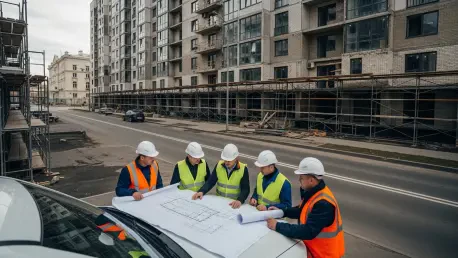
The sheer scale of the administrative response required to address this destruction is reflected in the workload of the State Architectural and Construction Control Department, which has seen an explosion in the number of required property surveys. In the previous year, officials successfully managed 1,008 site inspections, but as the intensity of individual strikes increased throughout early 2026, that number surged to 2,128 by the first quarter alone. This dramatic uptick is not merely a byproduct of new attacks but is often the result of repeated hits on already fragile locations, necessitating multiple follow-up surveys to determine the remaining structural integrity of buildings. In March alone, a concentrated effort saw teams surveying 110 distinct properties, ranging from residential flats to public utility facilities, as they raced to document the devastation. This rapid pace of inspection is essential for maintaining a clear picture of the city’s habitability, yet it places an enormous strain on the technical specialists tasked with entering precarious structures to verify their safety for residents.
Rapid Response: Accelerating the Recovery Process
To meet the urgent needs of the displaced population, the construction control department is working in tight coordination with the Department of Housing and Communal Services and local emergency response units. These organizations are operating under strict weekly deadlines to finalize technical inspection reports, which serve as the primary legal gateway for residents seeking to initiate repairs or clear hazardous materials. The streamlined process is designed to prevent administrative bottlenecks that could leave families in unheated or unstable housing for extended periods, especially during the volatile weather conditions characteristic of the region. However, the diverse nature of the targets—from essential civic infrastructure like transport hubs to educational institutions—means that each report requires specialized engineering knowledge. By prioritizing the most vulnerable high-rise buildings and essential services, the municipal government is attempting to stabilize the urban environment, even as the sophistication of the weaponry used against them continues to evolve and challenge traditional reinforcement methods and civil defense strategies.
Administrative Barriers to Effective Reconstruction Efforts
Legal Hurdles: The Crisis of Property Documentation
While physical reconstruction is a visible challenge, a more insidious obstacle exists in the form of administrative eligibility for state-funded compensation and aid programs. Olena Tuova, the head of the construction control department, has pointed out a recurring and devastating trend where homeowners are denied full assistance due to long-standing gaps in property title registration. A particularly poignant example involves a residence that suffered a direct hit but was ineligible for standard recovery funds because the structure had remained unregistered in official databases since its original construction in 1998. This disconnect between the physical reality of loss and the legal requirements for proof has left many citizens in a precarious position, unable to access the very resources meant to help them rebuild. The lack of valid documentation often stems from historical negligence or complex inheritance laws, but in the current high-stakes environment, these bureaucratic technicalities have become as damaging to a family’s future as the physical strikes themselves, highlighting a desperate need for legal reform.
Strategic Planning: Addressing the Evolving Threat Landscape
The incidents recorded throughout March, including the precision drone strikes on transport networks and the subsequent damage to schools and residential towers, illustrate a shift toward high-value civic targets. This strategy aims to disrupt the rhythm of daily life and degrade the city’s long-term viability by targeting the institutions that sustain a functioning society. In response, city officials are focusing on actionable next steps that involve not only the physical clearing of ruins but also the implementation of a comprehensive digital registry for property rights to prevent future eligibility crises. Looking forward, the emphasis must shift toward building structural resilience and providing legal support to residents to ensure that the administrative burden of proof does not hinder their recovery. City planners are now exploring the integration of reinforced modular construction for essential utilities and educational spaces, recognizing that while the front lines may shift, the structural toll on Mykolaiv’s urban landscape requires a more sophisticated and flexible defensive posture than was previously anticipated.