
The visual language of the modern home is undergoing a radical departure from the clinical and often sterile aesthetics that defined the previous decade, moving toward a much warmer and more resonant philosophy. Homeowners are increasingly walking away from the rigid minimalism and “gray-scale” monotony that once signaled modern luxury, opting instead for spaces that prioritize emotional depth, comfort, and a sense of historical narrative. This current landscape of interior design reflects a fundamental shift in how people perceive their living environments—no longer as static showrooms for guests, but as deeply personal sanctuaries that evolve alongside their inhabitants. By centering character over mass-produced perfection, the prevailing trends are fostering a move toward curated, layered environments that reject the “cookie-cutter” approach in favor of authentic, lived-in charm. This transition is not merely about changing color palettes, but about a psychological reclamation of the home as a place of warmth, organic texture, and meaningful storytelling.
The Death of the Neutral Showroom
Transitioning From Gray to Organic Palettes
The most significant casualty of current design sensibilities is the ubiquitous “all-gray” aesthetic that dominated residential interiors for nearly twenty years. For a long period, various shades of gray were considered the ultimate neutral, prized for their ability to provide a clean, versatile backdrop for any furniture style. However, in the current market, this cool-toned palette is increasingly criticized for its perceived sterility and lack of soul, often being relegated to the status of “builder-grade” or formulaic design. In its place, a much warmer, earthier spectrum has emerged as the new standard for modern living. Designers are now leaning heavily into creamy whites, rich wood tones, and saturated, nature-inspired colors such as sage green, deep blues, and even warm, muted terracottas. This shift represents a widespread desire for “cocooning,” where the home acts as a soft, inviting refuge that feels psychologically grounding. By moving away from the stark, museum-like quality of cool neutrals, residents are creating spaces that feel inherently more human and approachable.
This move toward warmth is not limited to paint colors alone; it extends to a profound appreciation for materials that possess the ability to age gracefully and develop a unique character over time. The sterile perfection of factory-applied finishes is being replaced by “unlacquered” metals and natural stones that are allowed to oxidize and patina through daily use. This approach celebrates the passage of time and the physical interaction between the inhabitant and the environment. When a kitchen island or a bathroom faucet shows signs of wear, it is no longer viewed as a flaw but as a record of a life well-lived within the home. This transition highlights a growing rejection of “disposable” or “fast” design, favoring instead a grounded, enduring environment that values quality and durability. By choosing materials that are inherently organic, homeowners are ensuring that their spaces feel more alive and less like a curated set piece, effectively bridging the gap between high-end sophistication and genuine, everyday comfort.
Embracing Tactile Materiality and Natural Imperfection
Building on the rejection of sterile surfaces, there is a burgeoning movement toward high-texture environments that prioritize the sense of touch. In a world that is increasingly mediated through smooth digital screens, the physical home provides a necessary counterpoint through the use of nubby wools, heavy linens, and raw, hand-plastered walls. This emphasis on tactile materiality serves to break up the visual flatness of a room, adding layers of interest that invite exploration. Designers are frequently utilizing lime wash and Roman clay finishes to provide walls with a subtle, stone-like movement that changes with the shifting light of the day. These finishes offer a depth that traditional flat paint cannot replicate, making the architecture itself feel like a piece of art. The goal is to create a multi-sensory experience where the environment feels substantial and permanent, standing in firm opposition to the lightweight, synthetic materials that have flooded the consumer market over the past several years.
This focus on materiality naturally leads to a greater inclusion of natural wood grains and stone textures that have not been overly polished or processed. The current trend favors “live-edge” details, visible knots in wood flooring, and stone slabs with dramatic, unapologetic veining. These elements serve as focal points that connect the interior space with the natural world outside, reinforcing the “organic” philosophy that currently guides the industry. Moreover, the integration of these materials often involves traditional craftsmanship, such as hand-carved details or custom masonry, which adds a layer of exclusivity and human touch to the design. By prioritizing these raw, authentic elements, homeowners are able to craft spaces that feel both luxurious and humble. The result is an interior that feels established and timeless, avoiding the pitfalls of chasing fleeting trends by rooting the design in the permanent beauty of the natural world and the skill of the artisan.
Seamless Utility and Atmosphere
Integrating Technology and Architectural Intelligence
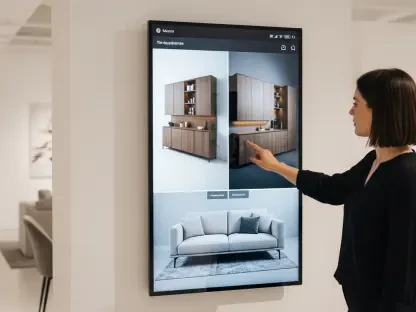
A defining characteristic of a sophisticated home today is the complete invisibility of its technological infrastructure. The era where a massive television screen or high-end sound system served as a focal point or a status symbol has effectively ended, replaced by a mandate for technology to be “felt but not seen.” Visible hardware, such as tangled wires, bulky routers, and traditional control panels, are now viewed as visual clutter that dates an interior and disrupts its aesthetic flow. Instead, leading designers are working closely with architectural engineers to integrate audiovisual and smart home systems directly into the home’s structure. Televisions are being concealed behind bespoke motorized cabinetry or camouflaged as framed artwork, while speakers are being embedded into walls and ceilings behind acoustically transparent plaster. This seamless integration ensures that the digital world does not encroach upon the physical beauty of the living space, allowing the home to remain a tranquil environment free from the distractions of the modern tech cycle.
Furthermore, the centralized management of these systems has moved away from cluttered rows of switches and remotes toward discreet, integrated control hubs or voice-activated interfaces that blend into the background. By treating technology as a hidden utility rather than a prominent feature, designers are ensuring that interiors maintain a timeless quality that will not become obsolete as hardware evolves. This architectural approach to technology also allows for greater flexibility in how spaces are used; a formal living room can transform into a high-performance cinema at the touch of a button, only to return to its original state once the experience is over. The focus has shifted from the “gadgetry” of the smart home to the “experience” of the inhabitant, emphasizing comfort and convenience without sacrificing visual harmony. This level of sophistication creates a home that feels intelligent and responsive, yet retains the classic elegance of traditional design, proving that high-tech and high-style are no longer mutually exclusive.
Shifting Toward Layered and Sculptural Illumination
The methodology of domestic lighting has undergone a complete overhaul, moving away from the harsh, uniform glow of overhead recessed “can” fixtures toward a more nuanced, layered approach. While functional, recessed lighting is increasingly criticized for its inability to create a specific mood, often resulting in a flat, “surgical” feel that drains the character from a room. The current trend emphasizes the use of lighting as an architectural and artistic tool, utilizing multiple sources at different heights to create pockets of warmth and shadow. This includes the strategic placement of table lamps, floor lamps, and wall sconces that highlight specific textures or pieces of art. Pleated fabric pendants and woven materials are particularly popular for their ability to diffuse light softly, adding a layer of warmth that overhead fixtures simply cannot provide. By treating lighting as a sculptural element, designers are able to manipulate the atmosphere of a room throughout the day, ensuring that the space remains inviting even after the sun sets.
This revolution in illumination also places a heavy emphasis on the tone and temperature of light, with a strong preference for warm, dimmable sources that mimic the quality of candlelight. The integration of “circadian” lighting systems, which adjust their color temperature based on the time of day, has become a standard in high-end renovations to support the well-being of the residents. Beyond the functional aspects, the fixtures themselves are being treated as significant design statements. Large-scale, architecturally interesting chandeliers and hand-blown glass pendants serve as the “jewelry” of a room, providing a focal point that ties the various design elements together. This shift represents a move toward a more intentional way of living, where every element of the environment is calibrated to enhance the mood and comfort of the inhabitants. By abandoning the sterile glare of the past, homeowners are reclaiming the evening hours, turning their living spaces into intimate, atmospheric retreats that celebrate the play of light and shadow.
Longevity Through Curation
Prioritizing Heritage Finishes and Eclectic Collections
The 2026 design philosophy strongly champions “longevity through eclecticism,” representing a decisive rejection of the “time capsule” effect that occurs when a space is designed entirely around a single, fleeting trend. There is a growing consensus that the most successful interiors are those that feel “slowly collected” over time, rather than purchased all at once from a single furniture showroom. This involves a thoughtful mix of genuine antiques, vintage finds, and contemporary pieces that together tell a unique story of the inhabitant’s travels, interests, and history. By blending different eras—such as a sleek, modern sofa paired with a mid-century coffee table and a 19th-century oil painting—designers are creating spaces that possess a depth and individuality that cannot be replicated by mass-market sets. This curated approach ensures that a home remains relevant and aesthetically pleasing regardless of changing fashions, as its value is rooted in personal meaning and the timeless quality of the objects themselves.
This focus on authenticity extends down to the smallest hardware and finishes, where the high-contrast trend of matte black is being replaced by “heritage” finishes that offer a softer, more sophisticated look. Materials such as unlacquered brass, aged bronze, and polished nickel are regaining their status as the preferred choices for faucets, cabinet pulls, and door hardware. These finishes are valued for their ability to harmonize with the warmer color palettes that have become standard, providing a “lived-in” charm that matte black lacks. Unlike synthetic coatings, these heritage metals possess a physical weight and a reflective quality that adds a sense of luxury and craftsmanship to a room. They develop a patina through use, which further contributes to the “heirloom” feel that many homeowners now crave. By choosing these enduring materials, residents are investing in a design language that values quality and history over the temporary appeal of high-contrast, “trendy” finishes that quickly lose their luster.
The End of Disposable Furniture and the Return to Craftsmanship
The current direction of interior design marks a definitive end to the era of disposable, mass-produced furniture that was designed for convenience rather than longevity. As the industry moves toward a more sustainable and intentional model, there is a renewed appreciation for high-quality craftsmanship and the work of independent artisans. Homeowners are increasingly willing to wait for custom-made pieces or to invest in the restoration of high-quality vintage items, recognizing that these objects possess a soul and a level of detail that factory-made goods cannot match. This shift is driven by both a desire for unique, one-of-a-kind aesthetics and a growing awareness of the environmental impact of “fast furniture.” The result is a move toward “slow design,” where the goal is to build a home piece by piece, selecting only those items that offer true utility and aesthetic joy. This philosophy encourages a more mindful relationship with our surroundings, prioritizing the permanent over the temporary.
In practice, this return to craftsmanship is visible in the popularity of hand-joined cabinetry, artisanal ceramics, and hand-knotted rugs, all of which carry the subtle imperfections that denote human creation. These elements add a layer of warmth and “messiness” that is vital to making a home feel truly lived-in and comfortable. The design community has shifted its focus away from the pursuit of a “perfect” image toward the creation of a meaningful environment that can withstand the rigors of daily life. By embracing this more authentic path, homeowners successfully moved beyond the sterile, showroom mentality of previous years. The most admired homes of this period were those that displayed a confident, personal style, demonstrating that true elegance was found in the careful curation of objects that reflect a life well-lived. This evolution toward authenticity and durability ensured that the spaces created during this era would remain inviting and beautiful for many decades to come.