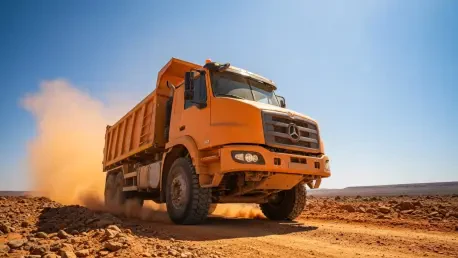

Africa’s continental infrastructure boom, projected to be one of the largest in human history, hinges not on blueprints and capital alone, but on the unwavering reliability of the heavy-duty trucks tasked with conquering its most formidable landscapes. Choosing the right vehicle is a high-stakes calculation where a mistake can lead to catastrophic project delays and financial losses. The continent’s diverse and often brutal operational environment presents a unique crucible that tests engineering to its absolute limits, demanding vehicles that are not merely robust but are fundamentally designed for resilience. This selection process transcends simple specifications, requiring a deep understanding of total cost of ownership, the critical importance of aftermarket support, and the strategic balance between advanced technology and rugged simplicity. For construction companies and fleet managers, success is determined by their ability to navigate this complex market and procure a fleet that can withstand the dual pressures of extreme conditions and intense operational demands, ensuring that progress continues to move forward, one heavy load at a time.
Navigating Africa’s Formidable Operating Environment
The Unforgiving Terrain and Climate
The operational success of any construction truck in Africa is fundamentally dictated by its ability to withstand an extraordinary spectrum of climatic and geological challenges. The continent’s vastness encompasses everything from the searing, arid deserts of the north, where ambient temperatures regularly surpass 122°F (50°C), to the dense, humid tropical rainforests of the central regions. In hyper-arid zones, engine cooling systems are pushed to their breaking point, making oversized radiators, high-capacity cooling fans, and advanced thermal management systems absolutely essential to prevent overheating and catastrophic engine failure during prolonged, heavy-duty operations. Conversely, the high humidity and frequent rainfall in tropical areas introduce persistent threats of moisture ingress and corrosion, demanding superior chassis coatings, sealed electrical components, and robust air intake systems that can function efficiently in moisture-laden air. These extreme climatic variations place immense and continuous strain on every component, from engine performance to cabin electronics, requiring a level of engineering foresight that anticipates failure points and builds in redundancy.
Beyond the climate, the physical terrain presents an even more immediate and relentless test of a vehicle’s structural integrity. While major urban centers may be connected by well-maintained highways, the vast majority of construction, mining, and infrastructure projects are situated in remote locations accessible only by unpaved roads, rocky trails, and surfaces that can rapidly degrade into deep mud or loose sand. This reality makes high ground clearance a non-negotiable feature, allowing trucks to navigate large obstacles without damaging the undercarriage. Equally critical is a heavily reinforced chassis with strengthened frame rails capable of withstanding constant torsional stress as the vehicle traverses uneven ground. The suspension system, typically featuring heavy-duty multi-stage parabolic or semi-elliptical leaf springs, is designed not for comfort but for survival, absorbing the severe and continuous impacts that would quickly destroy standard-duty components. This combination of a fortified chassis and a rugged suspension is the bedrock of a truck’s ability to operate reliably and safely in Africa’s most punishing off-road environments.
The Power to Perform
In the demanding landscape of African construction, the engine and powertrain are the heart of the operation, tasked with moving massive loads across challenging topographies. The combination of heavy payloads, steep inclines, and often long-haul distances between sites necessitates high-torque diesel engines. These power plants must deliver immense pulling power at low revolutions, allowing drivers to maintain momentum and control without overworking the engine, which is critical for preserving engine life and optimizing fuel consumption. The market preference often gravitates toward proven, mechanically simpler engine designs, such as those compliant with Euro III emissions standards. While less technologically advanced than their Euro VI counterparts, these engines are celebrated for their exceptional durability, ease of maintenance, and, most importantly, their tolerance for the variable fuel quality that is a common reality in many remote regions. The presence of impurities or inconsistencies in diesel can quickly damage sensitive modern fuel injection systems, leading to costly downtime, a risk that robust Euro III engines are specifically engineered to mitigate.
The powertrain’s effectiveness extends beyond the engine to include the transmission and axles, which must work in harmony to translate power into effective performance. The choice of transmission—whether a rugged manual gearbox with a crawler gear for extreme off-road conditions or a sophisticated automated manual transmission (AMT) that optimizes gear shifts for fuel efficiency—depends heavily on the specific application. For severe off-road work in mines or on undeveloped sites, the direct control and simplicity of a manual transmission are often favored. However, for mixed-use operations that include highway haulage, AMTs like Mercedes-Benz’s PowerShift or Scania’s Opticruise can offer significant advantages in reducing driver fatigue and lowering fuel costs. Furthermore, hub-reduction axles are a common feature on trucks destined for Africa, as they provide increased torque at the wheels and improve ground clearance, enhancing the vehicle’s ability to navigate obstacles and climb steep gradients under heavy load. This holistic approach to the powertrain ensures the truck has the raw strength and mechanical resilience required to perform consistently.
Top Contenders A Breakdown of Leading Truck Brands
The Premium European Powerhouses
The African heavy-duty truck market is significantly shaped by the presence of established European manufacturers, including Mercedes-Benz, Volvo, MAN, and Scania. These brands occupy the premium segment, offering vehicles that are synonymous with technological sophistication, exceptional safety standards, and robust engineering. While their initial acquisition cost is higher, their value proposition is built on a lower total cost of ownership (TCO) over the vehicle’s lifecycle, achieved through superior fuel efficiency, longer service intervals, and outstanding durability that minimizes unscheduled downtime. These trucks are often the preferred choice for large-scale, high-intensity operations, such as major infrastructure projects and large mining concessions, where performance, reliability, and safety are paramount and can directly impact the financial viability of the entire project. The advanced features they offer, from telematics systems for fleet management to state-of-the-art driver assistance programs, provide a level of operational control and safety that is increasingly demanded by multinational corporations operating on the continent.
Each of the leading European brands has carved out a distinct reputation based on its specific engineering philosophies. Mercedes-Benz, with its Actros and Arocs models, is a dominant force, offering the Actros for long-haul efficiency and the purpose-built Arocs for severe construction and off-road applications. These trucks are proven in extreme conditions and integrate cutting-edge technology like the PowerShift 3 automated transmission and Active Brake Assist 5. Volvo, with its powerful F#6 Series, is highly regarded for its combination of potent performance, exceptional durability, and superior driver comfort, making it a strong contender for projects requiring long hours behind the wheel. MAN trucks, particularly the TGS series, are celebrated for their versatility and rugged construction, adept at handling the challenging unpaved road conditions common across Africa. Scania, with its P-series and R-series, represents a pinnacle of driver-centric design and reliability. Though commanding a premium price, Scania vehicles are justified by their exceptionally low failure rates and superior build quality, while features like the Opticruise gearbox provide the precision maneuvering essential on complex job sites.
Value Driven and Regionally Adapted Champions
Challenging the dominance of the European premium brands is a growing contingent of value-focused manufacturers that provide cost-effective, reliable, and increasingly sophisticated alternatives meticulously tailored to the continent’s specific operational and economic realities. Foremost among these is India’s Tata Motors, which has successfully established a formidable presence by offering a comprehensive range of affordable and durable trucks. From heavy tractor heads in the Prima and Signa families to multi-axle tippers serving the mining and infrastructure sectors, Tata’s vehicles are designed for practicality and resilience. A key example is the LPK 1518 tipper, powered by a durable Cummins engine, which embodies the brand’s focus on dependable performance. Critically, Tata’s strategic advantage is amplified by its extensive aftermarket network, which includes nearly 300 service and parts touchpoints across Africa, ensuring minimal downtime and providing a level of support that directly rivals more expensive competitors. This commitment to serviceability makes Tata a compelling choice for businesses prioritizing operational continuity and budget control.
In a similar vein, Chinese manufacturers like HOWO and SHACMAN have become major players in the African market by offering highly competitive pricing without significantly compromising on robustness. These brands compete by engineering Africa-optimized configurations directly into their vehicles from the factory floor. SHACMAN’s X3000 and F3000 series are noted for their superior chassis strength and reinforced suspension systems, designed explicitly for the continent’s harsh road conditions. Likewise, HOWO’s T7H and A7 series excel with powerful drivetrains, high ground clearance, and features like robust air filters and high-temperature-resistant cooling systems that directly address Africa’s primary operational challenges. UD Trucks, with its Quester and Croner models, also targets this segment, engineering its vehicles with the harsh African environment in mind to prioritize durability and driver comfort. These value-oriented brands have effectively democratized the market, providing smaller and mid-sized construction companies with access to capable, new heavy-duty trucks that offer a strong return on investment.
The Strategic Blueprint for Truck Selection
Beyond the Sticker Price Essential Long Term Considerations
In the context of African construction, the most critical factor influencing the long-term success of a truck fleet is arguably the quality and reach of the manufacturer’s aftermarket support network. A vehicle’s initial purchase price becomes almost secondary when compared to the crippling financial impact of extended downtime. A truck stranded at a remote site due to a lack of available spare parts or qualified technicians can halt a project, incur steep penalties, and damage a company’s reputation. Consequently, brands with established dealerships, strategically located parts distribution centers, and a network of certified service workshops offer an immense competitive advantage. The ability to quickly source genuine spare parts and access professional technical assistance is directly correlated with fleet uptime and operational continuity. This logistical backbone is what separates a mere vehicle purchase from a sustainable, long-term fleet management solution, making the strength of a brand’s local presence a primary purchasing driver for savvy operators.
Furthermore, a comprehensive approach to Total Cost of Ownership (TCO) must extend beyond maintenance to include factors like fuel efficiency and driver training. With fuel representing a substantial portion of operating expenses—a figure that is often magnified in remote areas due to high logistics costs—a truck’s fuel consumption is a direct driver of profitability. Modern engines, even at the Euro III level, that balance power with optimized consumption, alongside features like aerodynamic designs and advanced automated transmissions, are essential for managing TCO. An investment in a slightly more expensive but more fuel-efficient truck can yield significant savings over the vehicle’s lifespan. Equally valuable are manufacturer-provided training programs for both drivers and technicians. Proper training on efficient driving techniques can reduce fuel consumption and component wear, while upskilling local technicians ensures that maintenance and repairs are performed correctly and efficiently, further enhancing operational efficiency and safety.
Ensuring Safety and Compliance on the Ground
The integration of advanced safety features is a rapidly growing trend in the African heavy-duty truck market, moving from a luxury option to a standard expectation for many large-scale projects. The challenging driving conditions, which include poorly lit roads, unpredictable traffic patterns, and the presence of pedestrians and livestock, make vehicle safety a critical concern. Technologies such as Anti-lock Braking Systems (ABS), which prevent wheel lock-up during hard braking, and Electronic Stability Programs (ESP), which help prevent skidding and rollovers, are becoming baseline requirements. Full air dual-circuit brakes provide redundant, reliable stopping power essential for heavy loads on steep descents. Increasingly, more advanced systems like collision warning and automatic emergency braking are being adopted, especially by multinational corporations adhering to global safety standards. These technologies are crucial not only for protecting the driver and the valuable asset they are operating but also for safeguarding other road users and minimizing the risk of costly accidents.
Beyond vehicle technology, fleet procurement must involve navigating a complex and often fragmented web of regulations that vary significantly across different African nations. Compliance is not optional and requires careful attention to detail during the selection process. A key area of concern is emissions standards. While Euro III is a widely accepted baseline across much of the continent due to its compatibility with varying fuel quality, several countries are progressively moving toward stricter Euro IV and V standards, particularly for vehicles operating in urban areas. Fleet managers must ensure their chosen vehicles meet the specific requirements of every country in which they plan to operate. Adherence to local regulations governing vehicle dimensions, axle loads, and specific safety equipment is also mandatory. Failure to comply can result in significant fines, impoundment of vehicles, and the inability to secure contracts, making regulatory diligence an indispensable part of a strategic procurement process.
A Framework for Optimal Fleet Selection
The process of choosing a heavy-duty truck for Africa revealed that no single vehicle could be crowned the “best” for all applications. The optimal choice was a highly tailored solution derived from a multi-faceted analysis of specific operational needs, budgetary realities, and logistical support systems. Success in the continent’s demanding construction sector was ultimately achieved by those who meticulously matched a vehicle’s inherent capabilities—its engine power, chassis strength, and technological features—to the unique and non-negotiable requirements of the project at hand. The decision-making framework rested on a clear assessment of project location, as the demands of an urban site differed vastly from a remote mine. It required a precise understanding of load requirements, dictating whether a tipper, mixer, or tractor unit was appropriate. A strategic balance was struck between the initial purchase price and the long-term TCO. Critically, the strength of a brand’s local service network proved to be a decisive factor, especially in the intended region of operation. By carefully evaluating these interconnected factors, construction companies assembled the reliable and profitable truck fleets that were essential to project success and sustained growth.