
The familiar green lawn, once the undisputed hallmark of the ideal American yard, is steadily giving way to a more textured, enduring, and artful alternative. Once relegated to the role of simple filler or a utilitarian border material, rock has now emerged as a foundational element in contemporary landscape design, fundamentally altering our perception of what an outdoor space can be. For homeowners and designers alike, the embrace of stones—ranging from fine, whisper-soft gravel to commanding, monolithic boulders—is about crafting environments that are at once sophisticated, sustainable, and deeply connected to the natural world. This significant shift moves beyond fleeting aesthetic trends; it represents a redefinition of the modern yard as a space that masterfully balances rugged, organic beauty with clean, architectural lines, resulting in a high-impact presence that requires remarkably little maintenance to sustain its appeal through every season.
The Core Principles of Modern Rock Design
Structure and Contrast
A primary function of rock within contemporary landscape architecture is its unparalleled ability to impart clear, intentional structure and definition to an outdoor space. Designers now utilize stone to meticulously frame lush sections of turf, delineate the soft-scaped areas of garden beds from hardscaped pathways, and establish crisp, clean edges along the foundational lines of fences, homes, and patios. This framing technique provides an immediate sense of order and polish, transforming a potentially chaotic yard into a controlled and cohesive environment that feels deliberate and well-designed. The crisp visual lines created by stone borders against grass or pavers not only prevent visual clutter but also serve a crucial practical purpose, significantly reducing maintenance by effectively containing mulch and inhibiting the encroachment of weeds from one zone to another. This strategic use of stone ensures that every element within the landscape is given its own space to shine, contributing to a harmonious and uncluttered whole.
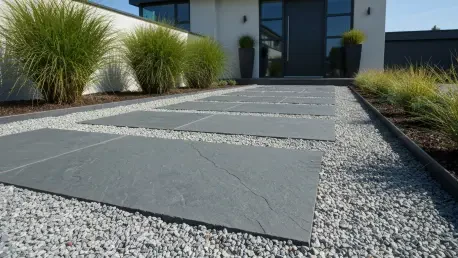
Beyond providing a structural backbone, rock is essential for introducing a rich tapestry of textural and color contrast, a cornerstone principle of modern design. The dynamic interplay between different materials is what elevates a simple yard into a sophisticated landscape composition. This is masterfully achieved by juxtaposing the hard, rugged, and permanent texture of stone with the soft, ephemeral, and organic nature of plants, grasses, and water features. Furthermore, compelling contrast is created by artfully pairing different types of rock against one another. Imagine the striking visual of smooth, light-colored river pebbles flowing alongside dark, irregular flagstones, or the clean geometry of fine gray gravel surrounding large, polished concrete pavers. This deliberate use of textural and color variation, a technique that defines many modern entryways and gardens, makes each element in the landscape “pop,” adding profound visual depth, complexity, and interest to the overall design. It is this thoughtful consideration of contrast that engages the eye and encourages a deeper appreciation of the space.
Flow and Balance
While rock is a master of creating static structure, it is equally adept as a tool for guiding both physical movement and the viewer’s eye, establishing a palpable sense of flow through the landscape. The design of pathways is a recurring theme where this principle is most evident, with a clear preference in modern design for soft, organic curves over rigid, straight lines that can feel abrupt or overly formal. Meandering paths constructed from large stone slabs carefully set in a bed of contrasting gravel can subtly slow a person’s pace, encouraging a more mindful and serene experience of the journey from the street to the front door. This intentional use of “gentle rhythm” and “flow” transforms what could be a mundane walk into a deliberate and engaging progression, making the overall landscape feel more expansive, dynamic, and welcoming. By directing movement in this gentle way, rock landscaping shapes not just the look of a yard, but the very experience of being within it, fostering a deeper connection between the individual and the designed environment.
The most successful and compelling rock landscapes are those that achieve a masterful balance between two distinct and often competing aesthetics: organic naturalism and sleek modernity. On one hand, certain designs champion a raw, natural feeling, employing rocks to mimic formations and textures found in untouched landscapes. These applications often utilize irregularly shaped stones, soft edges, and asymmetrical layouts to create a sense of timelessness, as if the features have “always been there.” Conversely, other examples showcase a crisp, architectural modernism, relying on clean lines, precise geometric patterns, and a minimalist material palette to create a highly structured and polished look. The overarching consensus in contemporary design is that the most impactful landscapes are born from a fusion of these two sensibilities. By integrating natural, earthy materials like stone within a controlled, modern framework, designers create spaces that are simultaneously sophisticated and approachable, offering the best of both worlds in a single, cohesive vision.
The Driving Forces Behind the Trend
The Rise of Low-Maintenance Luxury
A dominant and accelerating force in modern landscaping is the growing demand from homeowners for outdoor spaces that are both exquisitely beautiful and eminently practical. Rock landscaping has emerged as the ideal solution to this demand, offering a dramatic and luxurious visual statement that requires a fraction of the upkeep associated with traditional gardens. By strategically replacing high-maintenance, water-intensive lawns and ephemeral wood mulches with durable and elegant arrangements of gravel, pebbles, and stone beds, property owners can drastically reduce the time and resources spent on watering, mowing, and weeding. This forward-thinking approach is not merely a matter of convenience; it aligns perfectly with the increasingly vital principles of sustainable and drought-friendly design. The result is a landscape that conserves precious resources while maintaining a polished, high-end appearance throughout the year, embodying a new standard of effortless luxury.
The “high-impact” aspect of this low-maintenance philosophy is derived from the strong, unwavering visual presence that rocks provide. Unlike plants that fluctuate with the seasons, stone offers year-round structure, color, and texture, ensuring the landscape’s design integrity remains intact even in the depths of winter. This permanence lends a sculptural, architectural quality to the garden that traditional plantings often cannot achieve on their own. A single, magnificent boulder or a carefully composed bed of river stones provides a sense of gravitas and timelessness, creating a luxurious and established feel without the need for constant labor and intervention. This ability to deliver a powerful aesthetic punch with minimal ongoing effort is precisely why rock-centric designs are becoming synonymous with a sophisticated, modern approach to outdoor living, where beauty and practicality coexist in perfect harmony.
A Focus on Intentional, Grounded Spaces
A significant philosophical shift is underway in contemporary landscape design, moving away from arbitrary or purely decorative elements and progressing toward the creation of cohesive, highly functional environments where every component serves a distinct purpose. Within this framework, no element is casual or accidental; from a single, strategically placed stepping stone to a massive, anchoring boulder, each piece is thoughtfully considered for its contribution to the overall design narrative. This disciplined and intentional approach fosters a profound sense of calm, order, and serenity, effectively eliminating visual noise and creating a tranquil atmosphere. The result of this meticulous planning is the transformation of the yard from a mere patch of land into a true, seamless extension of the home—a sanctuary meticulously crafted for relaxation, meaningful connection, and quiet, reflective contemplation.
Central to achieving this serene and purposeful environment is the unique “grounding” effect that stone brings to a space. The inherent weight, solidity, and earthy quality of natural rock have a powerful psychological impact, creating a feeling of stability, permanence, and deep connection to the earth. This is a quality that lighter materials and transient plantings cannot replicate. By incorporating these heavy, substantial materials, designers are able to craft outdoor spaces that feel fundamentally rooted and secure. This grounding influence is crucial in making an outdoor area feel less like an afterthought and more like an integral part of the living space. It is this feeling of being anchored and centered that allows a yard to become a genuine haven, a place where the stresses of the outside world can recede, replaced by a sense of peace and enduring tranquility.
Crafting an Atmosphere and Experience
Modern rock design has evolved far beyond a purely visual discipline; it is now centrally concerned with crafting a rich, multi-sensory experience that engages and delights on multiple levels. The goal is to create an atmosphere, not just a picture. This is achieved through a variety of techniques that appeal to senses beyond sight. Consider the satisfying, audible crunch of fine gravel underfoot as one walks along a path, the cool, smooth tactility of a large river stone used as a natural seat, or the profound visual tranquility evoked by a meticulously raked zen garden. This atmospheric approach frames the landscape as an interactive environment, a place to be experienced rather than simply observed. It transforms the yard into a dynamic setting where every detail contributes to a holistic and immersive feeling of place, fostering a deeper and more meaningful connection with the outdoor environment.
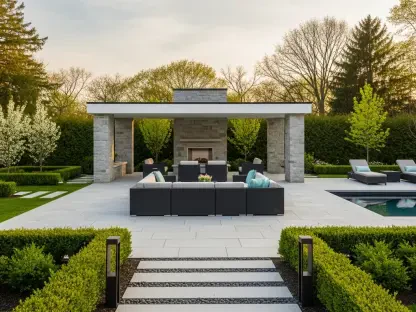
Further enhancing this experiential approach is the integration of functional elements and sophisticated lighting schemes that transform the landscape’s mood and extend its usability. Functional focal points, such as a fire pit built from rugged boulders or a tranquil water feature lined with smooth stones, become natural hubs for social activity and relaxation, their presence fundamentally setting the tone for the entire area. Just as importantly, the use of subtle, integrated lighting is critical for unlocking the landscape’s full potential after sunset. Strategically placed uplights that graze the textured surface of a large rock, or soft path lights that create a gentle glow along a gravel walkway, can completely reinvent the space, turning it into an enchanting and entirely new environment. This thoughtful illumination not only enhances safety and extends the hours the yard can be enjoyed but also adds a layer of drama and mystery, crafting a captivating nighttime atmosphere.
Key Applications in Today’s Yard
Defining Pathways and Borders
Among the most prevalent and impactful applications of rock in modern landscapes is in the creation of deliberate, engaging pathways and impeccably defined borders. Walkways serve as the circulatory system of a yard, and rock offers a versatile palette for their design, accommodating a wide spectrum of styles. These can range from rustic, almost whimsical flagstone paths with irregular stones set organically in gravel, creating a “storybook” journey, to sleek, contemporary walkways featuring clean-lined pavers flanked by a crisp border of contrasting dark or white stones. Regardless of the specific style, the unifying theme is the use of these paths to create an intentional and pleasant journey, guiding visitors through the space in a way that enhances the overall flow and user experience, making every transit a deliberate part of the landscape’s design.
Simultaneously, stone has proven to be the superior material for establishing borders and edging that are both visually sharp and exceptionally durable. Whether it is a soft, curved border of rounded river stones separating a lawn from a garden bed or a crisp, geometric frame of gravel containing a modern patio, these stone boundaries provide essential structure and dramatically reduce long-term maintenance. They act as a clear visual “full stop,” neatly containing different landscape elements like mulch, turf, and plantings, which prevents messy overlap and simplifies tasks like mowing and weeding. This clean delineation gives the entire yard a finished, cohesive, and professional appearance, ensuring that the integrity of the original design is preserved with minimal effort over time.
A Modern Alternative to Mulch and Lawns
Gravel, pebbles, and other small stones have firmly established themselves as a stylish, sophisticated, and highly practical alternative to traditional organic ground covers like wood mulch. Their advantages are numerous and compelling. Unlike wood chips that decompose, fade, and need to be replenished annually, rock ground covers are a permanent, one-time investment that retains its color and form indefinitely. They excel at suppressing weed growth, especially when installed over a quality landscape fabric, and are highly effective at helping the soil retain moisture by reducing evaporation from the sun. This makes them a long-term, low-maintenance solution that provides a clean, uniform, and textured base for garden beds, foundation plantings, and other landscaped areas, freeing homeowners from the cycle of yearly re-mulching.
Expanding upon this utility, rock is increasingly used as a strategic replacement for large, thirsty expanses of traditional turf. This is particularly relevant in regions prone to drought or for properties with small, awkwardly shaped, or hard-to-maintain areas like narrow side yards. A thoughtfully designed rock ground cover transforms these challenging spots into clean, visually appealing features. The uniform texture and neutral color palette of gravel or pebbles create a perfect, gallery-like backdrop that allows the form, color, and texture of feature plants—such as sculptural succulents, vibrant ornamental grasses, and architectural agaves—to stand out with dramatic clarity. This approach not only conserves water and reduces maintenance but also introduces a modern, minimalist aesthetic that is both beautiful and environmentally responsible.
Creating Dramatic Focal Points and Accents
The strategic placement of large boulders and artfully composed rock arrangements is one of the most effective techniques for creating powerful, dramatic focal points that can anchor an entire landscape design. A single, magnificent boulder, selected for its unique shape, color, or texture, can function as a piece of natural, living sculpture. When placed with care, it draws the eye, adds a profound sense of age and permanence to a young garden, and makes a powerful statement that connects the curated landscape to the wild, untamed natural world. These monolithic elements command attention and serve as steadfast anchors around which softer plantings and other design elements can be arranged, providing a clear and compelling center of visual gravity for the entire outdoor space.
Beyond their use as standalone sculptures, collections of rocks are brilliantly employed to construct functional focal points that are both beautiful and useful. A cluster of rugged, heat-resistant boulders can form the rustic and inviting base for a fire pit, creating a natural gathering spot for friends and family. Smooth, water-worn stones can line a tranquil pond or create a cascading waterfall, their presence enhancing the soothing sights and sounds of the water feature. Similarly, stacked stones or rock-filled gabion walls can be used to build striking raised planters, adding vertical dimension and texture to the garden. This technique of using rock to build key features not only adds immense visual interest but also establishes a clear hierarchy of importance within the yard, defining distinct zones for activity and contemplation while reinforcing the landscape’s overall design theme.
A New Foundation for Outdoor Living
Through a thoughtful synthesis of contrast, balance, and flow, designers and homeowners effectively merged aesthetic sophistication with profound practical functionality. The movement demonstrated that the thoughtful application of stone could transform any yard into a beautifully balanced, low-maintenance, and enduringly stylish oasis. This approach was not merely a fleeting trend but represented a fundamental re-evaluation of outdoor spaces, establishing them as intentional, grounded, and timeless extensions of the home. Ultimately, the rise of rock landscaping redefined the very relationship between the built environment and the natural world, proving that stone was no longer just a component of the landscape, but its very foundation.