
The shift in interior color palettes reflects a deep-seated human desire for environments that offer both emotional stability and aesthetic refreshment in an increasingly fast-paced world. While sage green defined much of the early decade with its grounded, earthy presence, a more sophisticated and nuanced successor is currently taking center stage in high-end design circles. Celadon green, a hue characterized by its delicate balance between a muted, stony gray and a vibrant, life-affirming green, is rapidly becoming the defining shade of the current mid-decade era. This specific color draws its name and prestige from ancient Chinese pottery, which was renowned for jade-like glazes that suggested a level of luxury and permanence that modern, fleeting trends often struggle to replicate. By 2026, this color has evolved from a niche architectural choice into a dominant force, bridging the gap between historical reverence and a forward-looking, minimalist aesthetic that feels both fresh and timeless.
The Psychological Appeal of a Modern Neutral
The primary allure of celadon green resides in its remarkable dual nature, as it possesses the rare ability to be simultaneously uplifting and deeply restorative for the occupant. Unlike the heavier, sometimes somber undertones found in traditional forest or olive greens, celadon provides a light-hearted and airy energy that feels inherently revitalizing rather than purely grounding. Designers are now increasingly categorizing this color as a modern neutral, a designation that acknowledges its versatility in replacing the standard whites and beiges that have long dominated residential interiors. This shift is rooted in the psychological comfort that humans derive from the most prevalent color in the natural world, allowing celadon to act as a bridge between the built environment and the organic landscape. It creates a serene, almost ethereal atmosphere that remains unobtrusive while still providing more character than a simple off-white, thus redefining the concept of a safe color choice.
Furthermore, this color functions as a sophisticated canvas that enhances the visual impact of other design elements within a room without competing for the viewer’s attention. In an era where fine art, intricate architectural details, and inherited antique furnishings are being prioritized, celadon provides a quiet, dignified background that allows these pieces to truly shine. The color’s subtle complexity means it reacts uniquely to different lighting conditions, shifting from a cool, icy mint in the morning to a warmer, more sage-like tone as the sun sets. This dynamic quality prevents a space from feeling static or dull, which is a common pitfall of more traditional neutral palettes. By utilizing celadon as a foundational hue, homeowners can achieve a curated look that feels both expansive and intimate, creating a sanctuary that promotes mental clarity and emotional well-being. This balance is particularly valuable in multi-functional living spaces where the need for focus often transitions into a need for relaxation.
Adapting the Shade to Different Architectural Styles
Practical applications of celadon demonstrate its exceptional adaptability across diverse architectural environments, ranging from sun-drenched coastal retreats to dense urban centers. In maritime settings like Palm Beach or the Hamptons, designers frequently employ high-gloss lacquer finishes in this shade to mimic the shimmering, translucent quality of the surrounding ocean. This specific application maximizes the luminosity of the room, allowing the walls to reflect natural light in a way that makes the interior feel like a direct extension of the landscape. When paired with a palette of crisp ivories, muted corals, and soft blush tones, the result is a sophisticated maritime aesthetic that feels intentional rather than stereotypical. The coolness of the celadon balances the warmth of the tropical sun, ensuring that the space remains refreshing even during the hottest months. This approach highlights how a single color can be manipulated through finish and texture to suit a specific geographic context.
In sharp contrast to coastal luxury, celadon has also emerged as a vital tool for transforming the often-harsh environments of industrial urban lofts and converted workspaces. These areas frequently suffer from a lack of natural light or an abundance of cold materials like concrete and steel, which can make them feel clinical or uninviting if not handled correctly. Designers are countering these challenges by embracing total saturation, painting walls, trim, and even built-in cabinetry in a unified, immersive shade of celadon-leaning mint. This monochromatic technique serves to soften industrial edges and create a cohesive, atmospheric backdrop that feels expansive yet cozy. To prevent such a space from feeling overly cool, industry experts recommend introducing warmth through rich brown wood finishes, ebonized furniture, or textiles featuring deep earthy accents like umber and dusty pink. This strategic layering ensures that the green remains the focal point while the environment retains a sense of human-centric warmth.
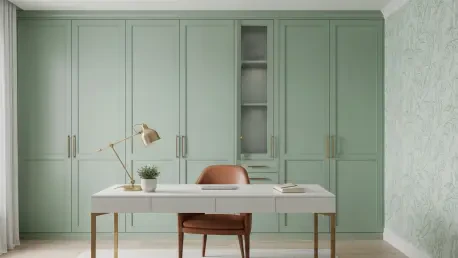
The functional versatility of celadon extends into the realm of the home office, where its association with the freshness of springtime fosters a sense of renewed energy and productivity. Because the color evokes the feeling of new growth and clarity, it is an ideal choice for rooms where creative thinking and sustained focus are paramount requirements. In these contexts, celadon is often applied to cabinetry and door frames, frequently complemented by botanical wallpapers that mirror the organic origins of the hue. This combination creates a year-round spring effect, maintaining a cheerful and inspiring atmosphere regardless of the external weather conditions or the time of year. When styling these productive spaces, designers often suggest pairing the green with crisp whites to maintain a sharp, clean look, or integrating soft brown leather and wood to introduce stability. This nuanced approach to office design acknowledges that the visual environment directly impacts cognitive performance, making celadon a strategic choice for the modern professional.
Curating the Look with Materials and Decor
For those who are hesitant to commit to a full room of green paint, the celadon trend offers numerous entry points through curated decor and high-quality artisanal accessories. Integrating the color through smaller, mobile elements allows for a gradual transition that can still significantly alter the mood of a living space. Vintage ceramic vases featuring a traditional celadon glaze are particularly effective, as their smooth, jade-like surfaces provide a tactile connection to the color’s historical roots. These pieces can instantly elevate a mantel, bookshelf, or coffee table, serving as a sophisticated pop of color that feels both antique and modern. Beyond ceramics, lacquered trays, side lamps, and even small accent chairs provide ways to introduce the shade without overwhelming an existing interior scheme. This modular approach to design reflects a broader trend toward more thoughtful, intentional collecting where every item is chosen for its ability to contribute to a cohesive and tranquil aesthetic environment.
Textiles and tactile surfaces play an equally critical role in integrating celadon into the home, offering a softer way to experience the psychological benefits of the shade. Linen pillows with ruffled edges, mohair throws, and even faux grasscloth wallpapers provide a variety of textures that can make the green feel either rustic or refined depending on the weave. The use of celadon in textiles allows for easy seasonal updates; for instance, a heavy velvet in this shade can provide a cozy, cocoon-like feel in cooler months, while a light-reflecting silk or linen can feel breezy during the summer. By layering different textures in the same hue, designers create a rich, sensorial experience that goes beyond mere visual appeal. This focus on materiality ensures that celadon does not just look like a trend but feels like a deliberate choice that enhances the physical comfort of the home. The interplay of light and texture on these surfaces further emphasizes the color’s unique ability to bridge the gap between nature and the interior.
Setting the Stage for a New Aesthetic Era
As the industry moved toward more nuanced and thoughtful color palettes, celadon established itself as a cornerstone of the modern, nature-connected home. By selecting a shade that sat slightly away from standard mint or sage, designers successfully created interiors that felt unique and hand-selected rather than mass-produced for the general market. This transition marked a significant departure from the more aggressive, saturated greens of the past, favoring an atmosphere of quiet tranquility and intellectual sophistication. The adoption of celadon represented a collective decision to prioritize long-term aesthetic value over fleeting viral trends, resulting in homes that felt more permanent and meaningful. It proved that a single color could fundamentally shift the emotional resonance of a living space, turning ordinary rooms into revitalized sanctuaries. The shift toward this jade-like interior experience signaled a deeper appreciation for the historical and organic connections that color can facilitate within the built environment.
To successfully implement this aesthetic in the coming years, homeowners and professionals prioritized the integration of celadon with high-quality natural materials and strategic lighting. The most effective next steps involved assessing how the color interacted with existing architectural features and selecting finishes that enhanced its inherent luminosity. Rather than simply applying paint to a wall, the most successful implementations treated celadon as a foundational element of a larger, holistic design strategy. This included sourcing authentic vintage ceramics and commissioning custom furniture pieces that utilized the shade in unexpected ways. By focusing on the quality of the materials and the intentionality of the pairings, the design community ensured that celadon remained a relevant and sophisticated choice for the long term. This approach encouraged a more deliberate way of living, where the home environment acted as a source of constant inspiration and calm, firmly rooting the celadon trend in a philosophy of enduring beauty and functional elegance.