
As Toronto navigates the complexities of urban densification and the escalating threats posed by climate change, the transformation of industrial landmarks into resilient community hubs has become a matter of survival rather than mere aesthetic preference. The Evergreen Brick Works 2.0 project represents a pivotal $16 million investment designed to modernize one of the city’s most significant environmental landmarks, ensuring its infrastructure can withstand the demands of the mid-21st century. By the summer of 2026, this overhaul will have addressed critical vulnerabilities in the site’s design while expanding its capacity to serve as a cultural and ecological beacon. This phase marks the first comprehensive update since the facility transitioned from a derelict factory into a public space roughly fifteen years ago. Through a meticulous focus on climate adaptability and social inclusion, the project seeks to establish a new standard for how metropolitan areas can reconcile their industrial pasts with an increasingly volatile environmental future.
Historical Foundation and Industrial Legacy
The site’s significance is deeply rooted in its history as the Don Valley Brick Works, an industrial powerhouse that began operations in 1889 and provided the essential masonry for many of Toronto’s most recognizable neighborhoods. For nearly a century, this location served as a cornerstone of Canadian industry before its eventual decommissioning in the 1980s, which left behind a collection of massive, deteriorating structures. The transition of this land from a private industrial site to a public asset was facilitated by the City of Toronto and the Toronto and Region Conservation Authority, leading to the restoration of the former quarry into a lush garden in the 1990s. By 2002, the remaining buildings received heritage designation, setting the stage for their first major transformation into an environmental center in the early 2010s. This rich legacy ensures that the current upgrades are not merely cosmetic but are instead a continuation of a long-term commitment to urban stewardship.
Modern efforts to revitalize the campus must balance the preservation of these historic industrial ruins with the functional requirements of a contemporary urban park situated in the heart of a ravine system. The current 2.0 initiative recognizes that the original restoration, while successful, required a secondary phase to better integrate the site into the natural flow of the Don Valley. By focusing on the structural integrity of the aging masonry and updating the circulation paths, the project enhances the physical connection between the city’s built environment and its sprawling green corridors. This strategic alignment allows the Brick Works to function as a gateway for residents and tourists alike, offering a unique space where industrial heritage and ecological restoration coexist. The result is a campus that feels like an organic extension of the valley itself rather than an isolated monument to the past, providing a blueprint for the adaptive reuse of industrial sites that are frequently found in flood-prone or environmentally sensitive urban zones.
Cultural Integration and Site Resilience
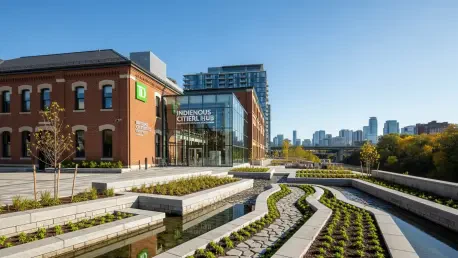
A fundamental component of the 2.0 plan involves the creation of the Ravine Centre and Indigenous Cultural Hub, which serves as a dedicated space for Indigenous-led storytelling, programming, and interpretation. This initiative acknowledges the ancestral connections to the land and ensures that the narrative of the Don Valley is presented through a diverse and inclusive lens. Beyond its cultural impact, this area is undergoing significant technical renovations, including the installation of high-efficiency HVAC systems and the restoration of heritage masonry. These upgrades are designed to increase the longevity of the buildings while providing a comfortable year-round environment for educational activities. By centering Indigenous perspectives within the revitalization process, the project moves beyond traditional park management and fosters a deeper sense of community belonging. This approach ensures that the site remains socially relevant and culturally vibrant, reflecting the diverse demographics of Toronto’s rapidly growing population.
Recognizing that the site is located within a flood-prone ravine, the revitalization prioritizes sophisticated flood mitigation measures that are essential for long-term survival. The project introduces engineered solutions to direct stormwater toward Mud Creek, reducing the risk of damage to the historic structures during extreme weather events. In parallel, the Welcome Centre is being reconfigured to provide a more inclusive and accessible arrival point for visitors, featuring a prominent Welcome Tower that functions as a visual anchor and public art installation. These structural enhancements are paired with redesigned washrooms and reception areas that meet modern universal accessibility standards, ensuring that the campus is welcoming to everyone regardless of physical ability. This dual focus on technical resilience and social inclusivity demonstrates a comprehensive understanding of what it means to future-proof a public institution. By investing in these critical upgrades, the project safeguards the site against both environmental hazards and the risk of social obsolescence.
Driving Toward Net-Zero Innovation
The TD Future Cities Centre is positioned to become a premier example of sustainable urban development through a series of targeted retrofits and the integration of green technologies. By installing roof-mounted photovoltaic panels and advanced building automation systems, the project is pushing this heritage facility toward net-zero emissions. These technological interventions are tied into the site’s existing geothermal infrastructure, creating a highly efficient energy loop that minimizes the environmental footprint of the massive industrial buildings. This transition is significant because it proves that even century-old structures can be adapted to meet the most stringent modern environmental standards. The center serves as a living laboratory for innovation, where architects and urban planners can observe the real-world application of renewable energy systems within a sensitive heritage context. This dedication to high-performance energy goals reinforces the role of the Brick Works as a leader in the global movement toward more sustainable and climate-conscious urban infrastructure.
Beyond the immediate benefits of reduced energy consumption, these retrofits enhance the facility’s role as a versatile venue for events, workshops, and community gatherings. The integration of modern technology allows for better control over the internal environment, making the historic sheds and halls more viable for use during the coldest winter months and the hottest summer days. This increased functionality ensures that the site can generate the necessary revenue to sustain its environmental and educational missions long into the future. By demonstrating how historic preservation and cutting-edge sustainability can work in tandem, the project provides a scalable model for other cities looking to decarbonize their aging building stocks. The success of the TD Future Cities Centre lies in its ability to maintain its architectural identity while simultaneously operating at the peak of modern technical efficiency. This balance is crucial for maintaining public support for heritage conservation in an era where environmental performance is a top priority for developers and policymakers alike.
Enhancing Public Spaces and Natural Play
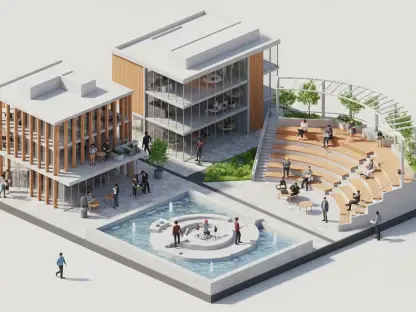
The revitalization strategy extends into the campus’s outdoor realms, specifically focusing on the Children’s Garden and the surrounding public spaces. New pedagogical play environments are being introduced to provide children with immersive, nature-based learning experiences that go beyond the limitations of traditional playgrounds. These areas feature an amphitheater sheltered by a wood canopy and a gathering circle with a fire feature constructed from reclaimed materials, encouraging year-round outdoor engagement. By creating spaces that prioritize sensory interaction with the natural world, the project addresses the growing need for environmental education in an increasingly digital society. These upgrades are designed with modern safety and accessibility standards in mind, ensuring that families from across the city have a safe and stimulating environment to explore. The focus on natural play highlights the project’s commitment to fostering a new generation of environmental stewards who are deeply connected to the local ecosystem.
In the public realm surrounding the buildings, the Tiffany Commons is being modified to better support year-round public events, including the city’s popular farmers’ markets and local small business pop-ups. The plan introduces new seating, shade structures, and flexible areas that can adapt to the changing needs of the community throughout the seasons. Crucially, these aesthetic improvements are integrated with green infrastructure, such as bioswales and rain gardens, which naturally capture and filter stormwater. This approach to landscaping does more than just enhance the beauty of the site; it actively participates in the site’s broader flood mitigation strategy by reducing the volume of runoff entering the local sewer system. By replacing traditional hardscaping with permeable surfaces and native plantings, the project restores ecological function to the paved areas of the campus. This synthesis of public amenity and ecological service ensures that the Brick Works continues to thrive as a vibrant urban commons while contributing to the health of the Don Valley watershed.
Strategic Insights: A New Standard for Cities
The completion of the Evergreen Brick Works 2.0 project established a definitive blueprint for how modern cities can navigate the intersection of heritage preservation and climate adaptation. By viewing the natural constraints of the ravine not as obstacles but as defining features, the design team created a space that works in harmony with the environment. The integration of Indigenous leadership and universal design principles ensured that the revitalization was as much about social resilience as it was about technical performance. This dual-pronged approach is essential for any metropolitan area seeking to maintain the relevance of its public spaces in a rapidly changing world. Developers and city planners should look to this model as a way to maximize the value of existing urban assets, proving that historical significance and modern sustainability are not mutually exclusive. The project demonstrated that thoughtful investment in “soft” community infrastructure can yield significant long-term dividends in terms of public health, social cohesion, and environmental stability.
Reflecting on the successful implementation of these upgrades, the initiative effectively future-proofed the campus against the most pressing challenges of the century. The project successfully combined high-tech energy solutions with nature-based flood management, resulting in a facility that remained operational and safe even during periods of environmental stress. By prioritizing the accessibility of washrooms and circulation paths, the site became a more equitable destination for all residents, regardless of their background or physical mobility. The use of reclaimed materials and the focus on net-zero goals provided a tangible example of the circular economy in action, offering actionable lessons for future urban development projects. Moving forward, the site stands as a resilient model for global cities, illustrating that the path to a sustainable future is paved with the bricks of our industrial past. This investment ensured that the Evergreen Brick Works remained a vital, thriving part of the city’s social and ecological fabric for the next generation of urban explorers and environmental innovators.