
A profound recalibration is underway within the world of interior design, signaling a deliberate turn from the transient allure of mass-produced furnishings toward a more enduring and personal aesthetic for the coming year. As consumers and designers alike grow weary of homogenous, cookie-cutter interiors, a collective yearning for homes with soul, substance, and a unique story has taken root. This movement is not merely about accessorizing with a few old items; it represents a foundational shift where vintage and antique pieces become the very core of modern decorating. The consensus among industry leaders is clear: the inherent uniqueness, superior craftsmanship, and rich patina of found objects provide a level of depth and individuality that newly manufactured goods simply cannot replicate. This is a broader re-evaluation of what makes a house a home, prioritizing intentional curation over impulsive acquisition and fostering a deeper emotional connection to the spaces we inhabit. The home of 2026 is envisioned as a layered narrative, a testament to personal taste curated over time, where every object has a history and contributes to a cohesive, deeply personal whole.
The Embrace of Softer, More Sculptural Forms
A clear departure from the rigid, boxy minimalism that has dominated recent design sensibilities will see the rise of softer, more organic shapes. In 2026, designers are wholeheartedly embracing curvature to introduce a sense of comfort, fluidity, and warmth into interiors. This trend manifests in a wide array of furnishings, from generously proportioned, rounded lounge seating and biomorphic coffee tables to free-form mirrors and sculptural lighting that feel both tactile and welcoming. Anthony Barzilay Freund of 1stDibs identifies this as a move to “humanize a space,” noting that the resurgence of vintage mid-century and post-modern pieces is a key driver of this aesthetic shift. These fluid lines serve to ease the harder edges of a room, allowing the eye to move more gently through the space and creating an immediate sense of welcome. The emotional resonance of these imperfect, expressive forms provides a necessary and deeply human counterbalance to the starkness of previous trends, making rooms feel more approachable and livable. A single, well-chosen piece, such as a rounded armchair or a collection of vintage ceramics, can effectively soothe the geometry of a room and introduce this desired softness without overwhelming the existing decor.
This gravitation toward expressive forms extends to materials and finishing touches, with two key vintage trends taking center stage. Murano glass, long admired for its artistry, is set to become a primary focal point, functioning as both a light source and a sculptural centerpiece. Hand-blown Italian glass pieces, whether in the form of gleaming pendants, colorful chandeliers, or elegant sconces, are being treated as functional art capable of defining an entire room. Design experts point to Murano lighting as a major driver of vintage demand, attributing its popularity to a unique combination of vibrant color, exceptional craftsmanship, and expressive shape. Complementing this is the return of skirted seating, a hallmark of 1940s interiors. Skirted sofas and chairs introduce an intentionally relaxed, romantic, and comfortable counterpoint to the clean lines and exposed legs of more rigid furniture frames. This detail gives upholstery a cozy, personalized quality, serving as an effective method for tempering hard edges without feeling overly precious. It reflects a broader desire for warmth and ease, contributing to a relaxed, lived-in quality that feels both timeless and charmingly familiar.
A Renewed Appreciation for Historical Depth
In what might seem like a design paradox, antiques from the pre-1920s era are becoming indispensable components of thoroughly modern and even maximalist interiors. Far from creating a stuffy or dated atmosphere, these early pieces are being strategically employed to provide structure, gravitas, and a sense of permanence. Hand-carved furniture, patinated woods, and items with strong architectural silhouettes are used to ground and provide a “visual gravity” to schemes that are otherwise rich in color, pattern, and texture. Design experts explain that these older pieces introduce essential visual order, calming a busy scheme and making it feel more intentional and cohesive. Rather than being relegated to the background, a single great antique—such as a large refectory table, an early chest of drawers, or a significant carved armchair—is often used to anchor an entire room. This substantial piece provides a historical foundation, creating a deliberate and impactful contrast against which bolder, more contemporary elements can be layered, enhancing the character of both the old and the new.
This appreciation for historical context is also transforming the use of color. The popular technique of color-drenching—painting walls, trim, ceiling, and even radiators in a single, uniform color—is evolving through a vintage lens. For 2026, this immersive approach is being filtered through sophisticated, historically inspired palettes, signaling a definitive move away from chasing a singular “it” shade. There is a growing confidence with color and a clear shift away from default whites and grays. Instead, the trend favors moody greens, deep burgundy, rich chocolate brown, and classic porcelain blues drawn from archival sources. Design consultants highlight the technique’s spatial power, explaining that it softens and blurs the edges of awkwardly shaped rooms, creating a cocooning and more lived-in feeling. By using these historically rooted shades in a blanket application across multiple surfaces, homeowners can create a high-impact environment that feels both cohesive and deeply personal, wrapping the inhabitant in a rich, continuous field of color.
Reinventing Surfaces with Pattern and Narrative
Floral and botanical motifs are experiencing a sophisticated resurgence, moving far beyond their reputation as simple decorative flourishes to become nuanced, artistic statements deeply rooted in history. This revival encompasses a wide range of styles, from intricate Victorian florals and the organic forms of Arts & Crafts botanicals to the stylized nature prints of the mid-century. The modern application of these patterns is characterized by thoughtful layering and a deep respect for their archival origins, making them feel timeless rather than dated. The enduring appeal of these motifs lies in the softness and emotional connection they bring to a room, often evoking a sense of memory and nostalgia. The key to their successful integration in 2026 is to treat them as one would a piece of artwork. Instead of blanketing an entire room, the focus is on a single, considered application—a wallpapered alcove, a hand-painted botanical mural on a ceiling, or an heirloom chair reupholstered in an archival print. This singular statement piece is then allowed to carry the narrative of the room, providing a focal point of beauty and historical resonance.
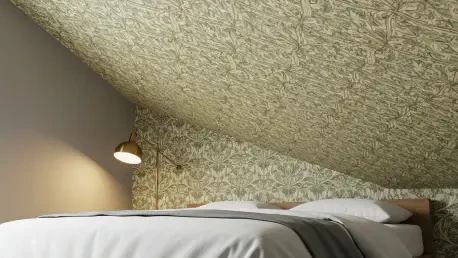
The ceiling, often overlooked and referred to as the “fifth wall,” is being drawn into the design scheme as a primary canvas for expression. The practice of applying wallpaper overhead, particularly vintage prints or archival patterns, is gaining significant popularity as a way to create an enveloping, immersive effect. This technique adds an unexpected layer of intimacy, intrigue, and character, transforming a room from a simple box into a fully realized environment. This approach is particularly transformative in spaces with architectural quirks like sloped ceilings or recessed alcoves. Design experts advocate for this method to make a room feel “extra cozy” or to draw the eye upward and create different spatial effects. Using small-scale patterns, such as 18th- and 19th-century florals or ditsy repeats, can soften awkward angles and make a space feel intentionally intimate and cosseting. These historically scaled designs were often intended for such comprehensive use and sit comfortably overhead without overwhelming the space, adding a final, masterful touch to a room’s design narrative.
The Curated Mix as a Personal Statement
Ultimately, the true power of these emerging vintage trends resided not in a rigid adherence to any single historical period, but in the celebration of their inherent flexibility and the artful mastery of the mix. The most compelling and personal interiors that took shape in 2026 were those that skillfully juxtaposed elements from different eras, creating a dynamic dialogue between the past and the present. It was the thoughtful pairing of a sculptural mid-century Murano glass chandelier with an 18th-century mahogany chest, the layering of historical Arts & Crafts patterns with sleek modern textiles, or allowing a single, characterful antique to command a contemporary room that defined the most successful spaces. This approach transcended mere decoration, becoming a form of personal storytelling where each piece contributed a unique chapter.
The process itself—the deliberate “slow search” and the joy of the “unexpected find”—was celebrated as an integral part of the decorating journey. This encouraged a more intuitive and evolving approach, one that favored personal instinct and emotional connection over fleeting impulses dictated by mass-market trends. Homeowners and designers found that this philosophy fostered homes that were not just aesthetically pleasing, but were deeply reflective of the tastes, stories, and personalities of those who lived within them. The result was a collection of spaces that felt authentic, curated, and imbued with a soul that could only be achieved over time, through a conscious and loving assembly of objects that held meaning. The home became a living archive, a testament to a life well-lived and a style uniquely one’s own.