
In the fiercely competitive landscape of Brooklyn real estate, where every square inch is meticulously planned and monetized, one firm has rapidly carved out a niche by looking skyward. Tier II, a landscape design-build company, has achieved a remarkable ascent in just eight years, transforming from a modest startup founded by a 22-year-old CEO, Tzvi Rauch, and his wife, Liba Miller, into one of the city’s most respected names in urban green infrastructure. Their story is not one of venture capital infusions or aggressive acquisitions but of a disciplined, self-reliant approach that has resonated deeply with New York’s top developers. By focusing on an integrated process and mastering the art of the vertical landscape, the firm has become instrumental in redefining how urban dwellers connect with nature, turning overlooked rooftops and terraces into vibrant, essential living spaces. Their journey offers a compelling blueprint for how a company can achieve significant growth by prioritizing quality, efficiency, and a deep understanding of its market’s evolving needs.
Forging a Foundation Without Outside Capital
At the core of Tier II’s rapid expansion is a business model that consciously eschewed outside capital, a decision that has profoundly shaped its corporate culture and operational strategy. This self-funded path cultivated an environment of extreme accountability and efficiency, where there was zero tolerance for waste or unnecessary delays. Without the cushion of external investment, every project had to be profitable and flawlessly executed to fuel the next. Growth was therefore entirely organic, powered by the strength of client relationships and the development of robust internal systems designed for speed and precision. This financial independence meant that the firm’s reputation was its most valuable asset. Each completed project served as a powerful testament to their ability to deliver on promises, leading to a steady stream of repeat business and referrals from some of New York’s most discerning developers and architects. This disciplined approach ensured that the company grew not just in size, but in capability and trust.
This commitment to self-reliance fostered a hands-on execution style that became a key market differentiator. By funding its own growth, the leadership team remained deeply involved in the day-to-day realities of each project, ensuring that the high standards set at the company’s inception were never compromised. This direct oversight allowed for an agile response to challenges and a level of quality control that is often diluted in larger, more bureaucratic organizations. The firm’s success was built on a simple premise: deliver exceptional results, on time and on budget, and the business will grow. This method proved highly effective, as the firm’s portfolio became its most persuasive marketing tool. Developers, seeing the tangible results of Tier II’s work, recognized the value in a partner that was as financially disciplined and results-oriented as they were. The firm’s ability to scale without sacrificing its core principles is a direct result of this foundational decision to build from within.
The Power of an Integrated Model
A significant competitive advantage for Tier II lies in its integrated design-build model, which seamlessly merges the traditionally separate phases of design and construction. This unification ensures a fluid transition from initial vision to final reality, eliminating the friction and miscommunication that often plague complex projects. From a project’s inception, the firm’s team embeds with clients and architects, bringing a construction-focused mindset to the earliest stages of the design process. This early collaboration is crucial; it ensures that every aesthetic choice is grounded in practicality, every material is vetted for durability, and every design element is planned with installation logistics in mind. This approach prevents the common scenario where beautiful designs prove unbuildable or prohibitively expensive, saving clients both time and money. By having a single point of responsibility, the firm guarantees that the final built environment perfectly mirrors the approved design, fostering a level of trust and reliability that is invaluable in the fast-paced world of urban development.
The practical benefits of this tightly-knit collaboration are substantial, directly addressing the most common pain points in the construction industry. The design-build model inherently reduces project timelines by allowing for overlapping phases and streamlined decision-making. Since the same team is responsible for both designing and building, potential construction challenges are identified and resolved during the design phase, not discovered on-site where they would cause costly delays. This proactive problem-solving guarantees that every design is not only visionary but also fully executable within the established budget. Consequently, Tier II has become a preferred partner for developers who need to move quickly without compromising on quality. The firm’s ability to deliver complex landscape projects with greater speed and cost certainty has cemented its reputation as a reliable executor in an industry where delays and budget overruns are all too common, making their integrated service a powerful draw for high-stakes projects.
Redefining Urban Green Space
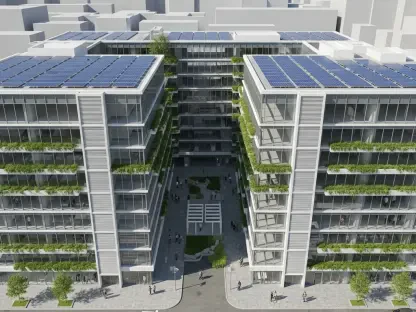
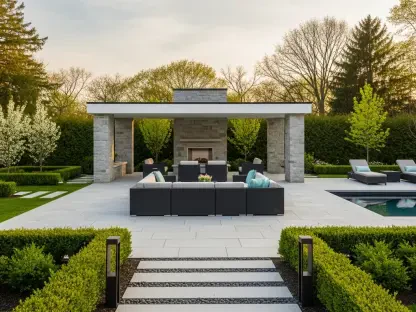
Tier II has successfully capitalized on the growing demand for functional and serene outdoor spaces by specializing in vertical urban landscapes, particularly rooftop terraces and green infrastructure. In a city as dense as New York, where traditional ground-level space is a rare and costly commodity, the firm recognized the immense untapped potential of the city’s rooftops. Since 2020, they have completed over three million square feet of such projects, demonstrating a profound understanding of how to transform sterile, underutilized surfaces into valuable assets. Their work goes beyond simple beautification; it involves sophisticated engineering, horticulture, and design to create spaces that are not only aesthetically pleasing but also highly functional and sustainable. These elevated oases provide residents with a necessary connection to nature, offering a peaceful respite from the relentless energy of the city below and significantly enhancing the quality of urban life.
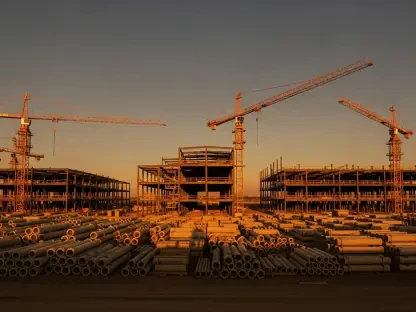
The firm’s expertise in this niche is not merely about adding an amenity; it is about fundamentally enhancing property value and user experience. A well-designed rooftop terrace is no longer considered a luxury but a crucial element that can set a property apart in a competitive market. Tier II’s projects are positioned as integral components of a building’s identity, offering tangible returns on investment for developers through increased property values and desirability. They have mastered the complex logistics of building in a dense metropolitan environment, from crane operations to navigating city regulations, allowing them to execute ambitious designs with precision. By creating these verdant retreats in the sky, the firm has played a pivotal role in shaping a greener, more livable Brooklyn, proving that in the modern city, the future of landscape architecture is increasingly vertical. Their work has solidified the idea that access to nature is not a privilege to be found outside the city, but a right that can be engineered within it.