
The transition from concrete enclosures to flourishing, biodiverse landscapes represents one of the most significant transformations in the history of wildlife conservation and public education. This movement, often described as a landscape-led approach, fundamentally reimagines the role of a zoo from a place of exhibition to a sanctuary of ecological restoration. In modern facilities like the Bristol Zoo Project, the design process begins not with the architectural blueprint of a building, but with a deep understanding of the existing topography, soil health, and native flora. By integrating critically endangered species, such as western lowland gorillas, into meticulously restored woodlands, landscape architects are creating environments that are indistinguishable from natural biomes. This shift is driven by a recognition that the physical environment is the most powerful tool for promoting animal welfare and public engagement. Rather than fitting nature into a human-designed structure, the architecture now recedes, allowing the landscape to dictate the movement of both animals and visitors. This ensures that every tree, slope, and water feature serves a specific biological or psychological purpose for the inhabitants.
The philosophy underpinning these modern habitats treats animals as the primary “clients,” necessitating a departure from traditional human-centric spatial planning. When designing for non-human occupants, architects must consider variables that would be irrelevant in residential or commercial design, such as the weight-bearing capacity of specific tree branches or the sensory impact of various ground textures. This approach naturally leads to a more complex and layered environment that mirrors the unpredictability of the wild. For instance, the conversion of mature English woodland into a simulated Central African forest requires a sophisticated selection of plant species that can withstand the local climate while mimicking the density and verticality of a tropical rainforest. This level of detail ensures that the gorillas have access to the same foraging opportunities and social dynamics they would encounter in their native range. By prioritizing the biological integrity of the space, the design fosters a sense of agency in the animals, allowing them to choose how they interact with their surroundings. This paradigm shift signifies a commitment to creating high-functioning ecosystems that prioritize the dignity and health of the species they protect.
Prioritizing Animal Welfare Through Ecological Simulation
The integration of advanced ecological simulation has fundamentally changed how facilities manage the physiological and psychological health of their residents. Modern landscape design for species like the western lowland gorilla moves beyond aesthetic mimicry to create functional, multi-layered ecosystems that encourage a full spectrum of natural behaviors. In these high-performance habitats, the environment is engineered to provide varied microclimates and diverse terrain, which are essential for the animals’ thermoregulation and physical fitness. For example, the inclusion of complex climbing structures disguised as fallen timber or live canopy trees allows primates to maintain the muscle tone and cognitive engagement necessary for their survival. Furthermore, the strategic placement of hidden foraging stations within the landscape forces the animals to use their natural problem-solving skills to find food, effectively eliminating the lethargy often associated with traditional captive environments. This commitment to biological accuracy ensures that the habitat is not a static display but a dynamic home that evolves with its inhabitants.
Beyond the physical benefits, ecological simulation plays a vital role in the psychological stabilization of endangered species within a managed setting. By recreating the specific acoustic and visual densities of a Central African forest, designers provide gorillas with the privacy and security they require to maintain healthy social structures. In a well-designed habitat, the “flight distance”—the space an animal needs to feel safe from perceived threats—is meticulously calculated and incorporated into the landscape. High-density planting and varied elevations allow individual troop members to retreat from the group or the public eye whenever they choose, reducing stress levels and promoting successful breeding programs. This holistic approach to welfare recognizes that an animal’s environment is the single most important factor in its overall quality of life. As these projects move forward from 2026 to 2028, the focus remains on refining these simulations using real-time data on animal movement and health, ensuring that the landscape continues to meet the evolving needs of the species it serves.
Creating Immersive and Invisible Human Experiences
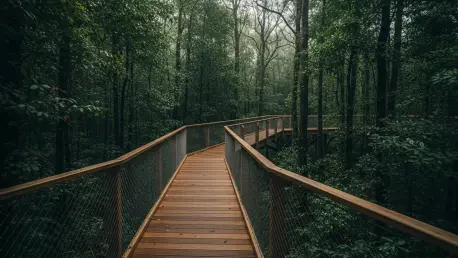
The modern visitor experience is being radically redefined through the concept of atmospheric immersion, which seeks to remove the traditional barriers between the public and the wildlife. Instead of looking “at” an animal across a sterile moat or through a thick glass pane, visitors find themselves walking along winding forest paths that share the same visual and sensory qualities as the animal’s own territory. This design strategy is intended to spark a profound emotional connection by placing humans within the narrative of the ecosystem. As guests move through the Central African forest landscape, they encounter informational nodes and viewing platforms that are carefully blended into the natural surroundings. This lack of clear boundaries fosters a sense of shared space and mutual respect, turning a casual zoo visit into a meaningful exploration of global biodiversity. The goal is to move away from passive observation and toward an active engagement with conservation, where the visitor feels like an uninvited but welcomed guest in the animal’s world.
To achieve this level of immersion without compromising the safety or privacy of the animals, landscape architects employ the “invisible green” aesthetic. This technique involves using specific, calibrated color palettes and finishes on all necessary infrastructure, such as security fences, life-support systems, and maintenance access points. By matching these elements to the deep greens and shadows of the woodland backdrop, the human-made components of the habitat effectively disappear from the viewer’s consciousness. This meticulous attention to visual detail prevents the engineering of the facility from distracting the public from the majesty of the animals and their environment. Moreover, this approach extends to the management of human movement, using natural barriers like dense thickets or rock formations to direct the flow of visitors without the need for intrusive signage or railings. The result is a seamless transition from the entrance of the park into the heart of a simulated wilderness, where the infrastructure is entirely subservient to the ecological story being told.
Strategic Masterplanning and Multidisciplinary Collaboration
The successful implementation of these complex habitats is rarely the result of a single project; it is the outcome of long-term strategic masterplanning that coordinates conservation goals with architectural innovation. These masterplans serve as comprehensive roadmaps that guide the evolution of a zoo over several years, ensuring that every new development contributes to a unified ecological vision. For institutions like the Bristol Zoological Society, this process involves a deep dive into the historical and biological context of the site, allowing designers to enhance existing natural assets rather than replacing them. From 2026 to the end of the decade, these strategic plans will increasingly focus on sustainability, utilizing circular water systems and carbon-neutral construction materials to minimize the environmental footprint of the facility. This high-level coordination ensures that the zoo functions as a cohesive whole, where the gorilla habitat, the visitor center, and the research facilities all work in harmony to support the broader mission of global species preservation.
Executing such a visionary masterplan requires intense collaboration between a diverse range of professionals, including landscape architects, structural engineers, zoologists, and conservation scientists. This multidisciplinary approach is essential for solving the unique challenges of interspecies placemaking, such as ensuring that a high-tension security fence is structurally sound while remaining visually undetectable. Engineers must work closely with biologists to understand the physical strength and behavioral tendencies of the animals to create enclosures that are both secure and enriching. Meanwhile, landscape architects mediate between these technical requirements and the aesthetic goals of the project, ensuring that the final result is a beautiful, functional, and biologically appropriate landscape. This synergy of expertise allows for the creation of spaces that are far more than the sum of their parts, setting a new global standard for how modern society interacts with and protects the natural world. Through these collaborative efforts, the future of zoo design is being written as a story of coexistence, innovation, and unwavering commitment to the survival of the planet’s most vulnerable inhabitants.
The transformation of zoological habitats through landscape-led design has moved beyond the experimental phase and into a new era of standardized excellence in conservation. By placing animal welfare at the center of every architectural decision, these projects have demonstrated that the boundaries between human society and the natural world can be bridged with empathy and technical precision. Moving forward, it is clear that the focus must shift toward scaling these successes by integrating local community involvement and advanced data analytics into the design process. Future projects should prioritize the creation of “living laboratories” where researchers can monitor species health in real-time, using the habitat’s own sensor networks to adjust environmental conditions instantly. For stakeholders in the zoological and architectural communities, the next step involves adopting these immersive, ecologically grounded principles as the baseline for all future developments. By continuing to refine the balance between invisible infrastructure and high-functioning ecosystems, designers will ensure that zoos remain vital, educational, and ethically sound pillars of global conservation efforts for generations to come.