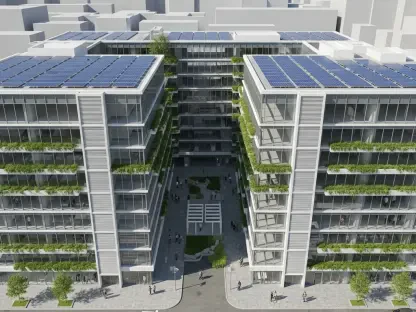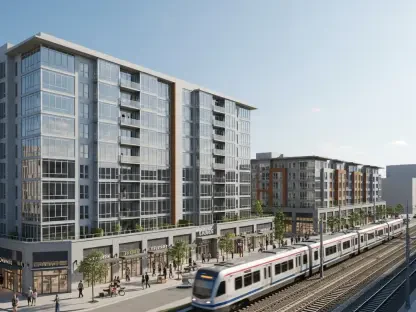

The architectural soul of the modern city is no longer found in repetitive rows of identical cubicles but in the vibrant, chaotic harmony of the mixed-use development. Walking through a contemporary facility, a visitor might pass a high-end yoga studio radiating tranquil warmth, only to turn a corner and encounter the rugged, open-air atmosphere of a craft brewery’s loading dock. This structural diversity is a triumph of urban planning, yet it creates a specialized nightmare for the people tasked with keeping the building comfortable. Facility managers are discovering that the traditional “set it and forget it” approach to climate control is fundamentally broken when applied to spaces that serve five different industries under one roof.
As we navigate the operational demands of 2026, the industry is moving away from the monolithic HVAC designs of the past. The central challenge lies in the “moving target” of occupancy and physics; how does one maintain a consistent environment for a boutique retailer while simultaneously managing industrial-scale efficiency in an adjacent workshop? The answer is a pivot toward decentralized, modular heating strategies. These systems do not just push air through a vent; they adapt to the specific volumetric and thermal needs of each tenant, transforming climate control from a fixed overhead cost into a strategic operational advantage.
The Friction Points of Legacy HVAC in Multi-Purpose Spaces
To understand why flexibility is the new gold standard, one must first recognize the inherent limitations of centralized, forced-air systems when they are forced to perform in modern, non-uniform designs. Centralized systems were originally engineered for predictability—buildings with consistent ceiling heights and steady, predictable heat loads. In a mixed-use facility, this uniformity is a physical impossibility. A single duct network simply cannot balance the air pressure requirements of a ten-foot-tall professional office and a thirty-foot-tall distribution center without massive energy loss and uneven performance.
Beyond the physical dimensions, there is the persistent problem of thermal granularity. Standard HVAC units often lack the precision required to heat specific zones without wasting energy on unoccupied or low-priority areas. This creates a frustrating scenario where high-comfort zones, such as a daycare center or a high-end showroom, dictate the utility costs for the entire complex. When a single thermostat controls a vast area, the system often overworks to meet the needs of one sensitive zone, leading to “thermal bleeding” that costs the property owner thousands in unnecessary fuel and electricity.
Furthermore, the logistical barrier to upgrading these legacy systems is often insurmountable. For an active facility, a major HVAC overhaul typically involves extensive demolition and significant tenant downtime, which can lead to lost revenue and fractured landlord-tenant relationships. Because of these constraints, many managers are trapped in a cycle of expensive patchwork repairs on an outdated central boiler. The shift toward decentralized units offers an escape from this cycle, providing a way to upgrade the building’s infrastructure one zone at a time without disrupting the entire ecosystem.
Strategic Deployment of Decentralized Heating Solutions
Flexible heating relies on a modular approach that utilizes specialized equipment to meet the unique demands of different zones within a single facility. At the heart of this strategy are customizable unit heaters. These compact, wall or ceiling-mounted units offer high-performance forced air for targeted areas and can be configured for horizontal discharge in expansive retail floor plans or vertical discharge in cramped mechanical rooms. By ensuring the hardware adapts to the space rather than the other way around, facility managers gain the ability to provide tailored comfort precisely where it is needed.
The implementation of precision micro-zoning allows managers to create independent thermal “islands.” This means a fitness center can maintain a cool, breathable atmosphere for high-intensity workouts while a neighboring professional suite remains warm and inviting for client meetings. This autonomy drastically reduces overall energy waste, as heat is only generated for the specific square footage in use. Moreover, because these units are often available in both gas and electric configurations, they allow a facility to leverage its existing utility infrastructure without the need for expensive, building-wide service upgrades.
Adaptability is equally critical when considering tenant turnover. In the dynamic market of 2026, a warehouse bay today might become a tech hub or a creative studio by next year. Decentralized heaters provide a future-proof infrastructure that evolves with the property. When a space changes its function, units can be added, moved, or reconfigured with minimal disruption. This scalability ensures that the building’s heating capacity remains aligned with its current commercial reality, preventing the mechanical system from becoming an obstacle to new leasing opportunities.
Infrared Technology for High-Ceiling Efficiency
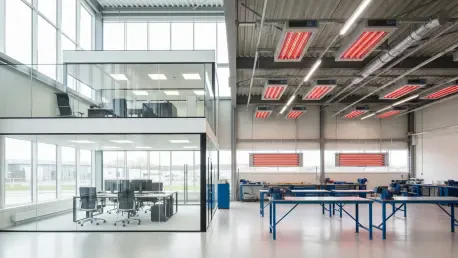
While forced air is excellent for smaller rooms, radiant infrared heaters solve the “stratification” problem common in high-bay areas and loading docks. In traditional systems, warm air naturally rises to the rafters, leaving the actual workspace cold and forcing the furnace to run longer. Infrared energy, however, works like the sun; it warms surfaces and people directly rather than the air between them. This makes it the ideal solution for large, open volumes where traditional heating would simply float away and disappear.
This technology is particularly effective in environments with high air exchange, such as service bays or delivery hubs where doors are frequently opened. Because the floor and machinery act as a “thermal mass” that retains heat, the space recovers its temperature almost instantly once the door is closed. Infrared systems also offer a rapid time-to-comfort, allowing managers to keep heat levels low during unoccupied hours and bring the space up to a comfortable working temperature in minutes, rather than hours.
The Expert Perspective: Operational Agility and Maintenance
Industry engineers emphasize that the benefits of decentralized heating extend far beyond simple temperature regulation into the realm of risk management. In a centralized model, a single mechanical failure in a boiler or main blower can paralyze an entire facility, leading to emergency closures and tenant complaints. Decentralized systems provide built-in redundancy. If one unit heater requires service, the rest of the building remains fully operational, eliminating the chaos of building-wide repairs and allowing maintenance teams to address issues during regular business hours.
This modularity also brings a new level of economic transparency to commercial property management. Independent heating units simplify the complexities of tenant billing, allowing managers to move away from vague square-footage estimates. Instead, they can allocate utility costs based on the actual consumption of each specific unit. This fosters better relationships with commercial tenants, who appreciate paying only for the energy they actually use. Additionally, by heating only active zones, facilities can significantly lower their total energy consumption, helping property owners meet increasingly stringent green building standards and ESG goals.
Implementing a Modular Heating Strategy: A Framework for Facility Managers
Transitioning to a flexible heating model required a calculated approach to ensure long-term ROI and tenant satisfaction. The process began with a comprehensive thermal audit, mapping the facility based on occupancy patterns, ceiling heights, and “high-loss” areas like bay doors. Managers identified which zones required the rapid response of forced air and which benefited most from the steady, floor-level warmth of infrared technology. This data-driven foundation prevented over-specification and ensured that every piece of hardware served a clear purpose.
Integrating these decentralized units with smart building management systems (BMS) allowed for scheduled heating cycles that perfectly aligned with specific tenant hours. This ensured that heat was never wasted on an empty room, further driving down operational costs. When selecting hardware, forward-thinking managers prioritized vertical versatility, choosing units with multiple mounting and discharge options. This foresight ensured that even if a room’s layout changed during a future renovation, the heating equipment remained functional and efficient.
Ultimately, the shift toward flexible heating was not merely a mechanical upgrade but a total reimagining of how a building supports its occupants. By moving away from the rigid constraints of a single central system, facility managers gained the ability to treat each square foot of their property as a unique environment. This transition improved the tenant experience while simultaneously providing the fiscal and operational resilience necessary to thrive in a competitive commercial market. The result was a more sustainable, responsive, and profitable facility that stood ready for whatever the next decade of urban development might bring.