
The global industrial landscape is witnessing a profound departure from traditional drafting methods as specialized Computer-Aided Design software matures into a highly sophisticated, simulation-driven ecosystem. This transition is not merely a change in tools but a fundamental reimagining of how physical objects are conceived, tested, and brought to life in an increasingly digital world. Based on the most recent market trajectories, the sector, which was valued at approximately USD 8.89 billion in 2024, is now firmly on a path to reach a significant milestone of USD 15.0 billion by the year 2035. This growth represents a steady compound annual growth rate of 4.9 percent over the forecast period, reflecting the indispensable nature of digital design in modern production. As we move through 2026, the momentum generated by early-decade investments is becoming apparent, with the market having already surpassed the USD 9.33 billion mark established at the start of 2025. This steady climb signals a decade that will be defined by technological refinement and the deep integration of design software into every facet of the global supply chain.
Core Catalysts and Technological Integration
Artificial Intelligence: The New Design Partner
The integration of Artificial Intelligence and Machine Learning has fundamentally altered the role of the designer from a manual drafter to a high-level curator of possibilities. Generative design algorithms now allow engineers to input specific parameters such as material types, weight constraints, and load-bearing requirements, after which the software proposes hundreds of optimized structural solutions that a human mind might never conceive. This shift is particularly evident in the aerospace sector, where reducing every gram of weight is critical for fuel efficiency and performance. Beyond mere geometry, these AI-driven tools are now capable of performing automated error detection in real-time, catching structural flaws or interference issues long before a single physical component is manufactured. This proactive approach significantly reduces the time and cost associated with iterative prototyping, allowing firms to focus their resources on high-level innovation rather than troubleshooting basic design errors.
Furthermore, the marriage of Machine Learning with historical design data is enabling a more predictive approach to product development. By analyzing thousands of successful past projects, modern CAD platforms can now suggest standard components or materials that have historically performed well under specific environmental conditions. This internal intelligence helps maintain consistency across large-scale engineering teams and ensures that institutional knowledge is preserved and utilized effectively. As these systems become more intuitive, the barrier to entry for complex engineering tasks is lowering, though the demand for specialists who can manage these AI partners is simultaneously rising. The result is a more agile design environment where the distance between a conceptual sketch and a functional, optimized digital model is shorter than ever before, fostering a culture of rapid experimentation that was previously impossible under traditional drafting constraints.
Collaborative Environments: Breaking Down Silos
The transition toward globalized supply chains and the normalization of remote professional environments have necessitated a drastic overhaul of how design data is shared and managed. Cloud-based CAD platforms have emerged as the primary solution to the bottlenecks traditionally associated with siloed, local file-sharing methods, enabling real-time collaboration among engineers located on different continents. These systems function as a single source of truth, ensuring that every stakeholder, from the lead architect to the manufacturing floor manager, is working from the most current version of a design. This level of synchronization is vital for complex projects like semiconductor development or large-scale civil engineering, where even a minor discrepancy between versions can lead to catastrophic failures or millions of dollars in wasted materials. By moving the heavy processing power required for complex rendering to remote servers, these cloud solutions also democratize access to high-end design tools.
Moreover, the seamless integration of CAD with Product Lifecycle Management and Computer-Aided Manufacturing systems is bridging the gap between the digital and physical worlds. In the current 2026 landscape, an engineer can finalize a design in a web-based environment and immediately trigger a simulation that tests the manufacturing feasibility on specific shop-floor equipment. This interconnectedness ensures that sustainability initiatives are not just afterthoughts but are baked into the initial design phase. By utilizing sophisticated software to optimize material usage and simulate the energy consumption of a product over its entire lifespan, companies are now able to meet stringent environmental and governance goals. The ability to visualize the environmental impact of a material choice or a manufacturing process in the early design stages has turned CAD software into a powerful tool for corporate responsibility and resource efficiency across the globe.
Market Segmentation and Deployment Strategies
Application Diversity: Specialized Engineering Tools
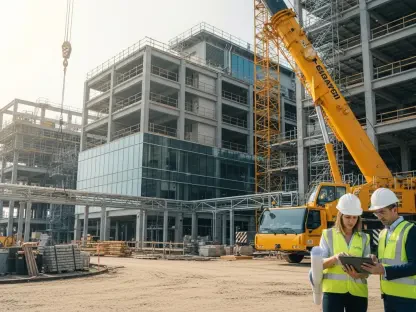
The CAD market is characterized by a high degree of specialization, with different industries requiring bespoke tools to manage their unique engineering challenges. Mechanical design remains the dominant segment, largely due to the rigorous demands of the automotive and industrial machinery sectors. Modern vehicles, whether electric or internal combustion, require thousands of high-precision components that must fit together with microscopic tolerances. Mechanical CAD software provides the framework for these complex assemblies, allowing engineers to perform thermal analysis and stress testing in a virtual environment. In contrast, the architectural and civil engineering sectors are experiencing a surge in growth driven by rapid urbanization and the global push for smarter infrastructure. The widespread adoption of Building Information Modeling has transformed how cities are built, allowing for the creation of detailed digital representations that include not only the physical geometry but also the functional data of a building’s systems.
In the electronics and electrical design space, the complexity of modern consumer devices and the ongoing miniaturization of semiconductors have made advanced CAD tools a prerequisite for survival. Designing a printed circuit board for a modern smartphone requires managing thousands of connections within a space smaller than a business card, a task that would be impossible without sophisticated automated routing and signal integrity analysis. Industrial design also plays a critical role by focusing on the ergonomics and aesthetics that make these complex technologies accessible to the end-user. By balancing the rigid requirements of engineering with the fluid needs of human-centric design, these specialized applications ensure that the final product is both functional and marketable. As we move toward 2035, the lines between these segments are expected to blur, with more integrated platforms offering a holistic view of products that involve mechanical, electronic, and software components working in unison.
Deployment Evolution: On-Premise vs. Cloud Models
Strategic decisions regarding software deployment have become increasingly complex as organizations weigh the benefits of security against the advantages of flexibility. Historically, high-security sectors such as defense, aerospace, and nuclear energy have favored on-premise installations, which provide total control over sensitive intellectual property and do not require constant internet connectivity. For these organizations, the ability to maintain an air-gapped environment is often more important than the cost savings associated with external hosting. However, the maintenance of such systems requires significant internal IT resources and high upfront capital expenditure for hardware capable of handling intensive graphical processing. While these on-premise solutions remain a staple for specialized industries, they are increasingly being supplemented by hybrid models that allow for local design work with cloud-based backup and secondary analysis.
Conversely, the rise of the Software as a Service model has revolutionized the economic landscape for small and medium-sized enterprises. By offering subscription-based access to top-tier design tools, software providers have removed the massive financial barriers that previously prevented smaller firms from competing with industry giants. Cloud-based CAD offers unparalleled scalability, allowing a startup to increase its seat count for a specific project and scale back once the work is complete. Beyond the financial benefits, the cloud model facilitates a faster update cycle, ensuring that users always have access to the latest AI enhancements and security patches without needing to perform manual installations. This shift is particularly evident in the 2026 market, where the speed of innovation often dictates a company’s success. As internet infrastructure continues to improve globally, the reliance on local hardware is diminishing, paving the way for a future where high-fidelity 3D modeling can be performed on almost any device with a screen and a connection.
Industry Adoption and Future Trends
The Rise of Digital Twins: Monitoring the Physical World
One of the most transformative trends currently reshaping the industrial landscape is the widespread implementation of Digital Twin technology. A digital twin is much more than a 3D model; it is a live, virtual replica of a physical asset that stays connected to its real-world counterpart through a continuous stream of sensor data. CAD software provides the foundational geometry and structural definitions for these twins, while integrated IoT platforms feed them real-time information regarding temperature, vibration, and performance metrics. This allows engineers to monitor the health of a jet engine, a manufacturing line, or even an entire power grid from thousands of miles away. By comparing the real-time data against the original design parameters, the software can predict when a component is likely to fail, enabling predictive maintenance that prevents costly downtime and extends the life of the asset.
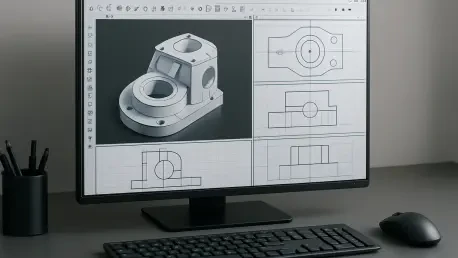
Furthermore, the transition from 2D drafting to 3D modeling has reached a tipping point where the 3D environment is now the primary workspace for almost all new development. This shift is essential for the growth of additive manufacturing, or 3D printing, which requires high-fidelity digital files to produce complex geometries that were previously impossible to manufacture. Virtual testing and simulation have also become more robust, allowing for “crash tests” and environmental stress trials to occur entirely within the digital realm. In the medical field, this level of precision is being used to design customized prosthetics and surgical guides tailored to the specific anatomy of an individual patient. By simulating how a medical device will interact with human tissue before it is ever produced, healthcare providers can ensure higher success rates and better patient outcomes. This convergence of digital twins and virtual prototyping is effectively shortening the feedback loop between design and reality, making the entire product lifecycle more responsive.
Regional Dynamics: Navigating Growth and Constraints
The global expansion of the CAD software market is characterized by distinct regional patterns that reflect broader economic and industrial shifts. North America and Europe continue to function as mature markets, serving as the primary hubs for aerospace and automotive innovation. These regions are the early adopters of the most advanced 3D solutions and AI-integrated platforms, driven by a need to maintain a competitive edge in high-tech manufacturing. However, the most significant growth is currently being observed in the Asia-Pacific region, fueled by the rapid industrialization of China and India. Massive government-led infrastructure projects and the expansion of the consumer electronics sector in this region are creating a voracious demand for both architectural and electronic design tools. As these economies modernize, they are bypassing older technologies in favor of mobile-first and cloud-based CAD solutions, mirroring the digital-first policies seen in parts of the Middle East and South America.
Despite the optimistic growth projections, several strategic challenges remain that could hinder the pace of adoption if left unaddressed. The high cost of specialized software licenses, while mitigated by subscription models, still represents a significant overhead for firms in developing economies. Additionally, there is a growing global shortage of highly skilled engineers who are proficient in the latest simulation and AI-driven features of modern CAD platforms. This talent gap necessitates a continuous investment in training and education to ensure that the workforce can keep pace with the software’s capabilities. Data security also remains a paramount concern, particularly as more intellectual property moves to the cloud. Protecting sensitive design files from industrial espionage and cyberattacks is a top priority for developers and end-users alike. As the industry moves toward its 2035 targets, the ability to balance open collaboration with robust security will be a defining factor in which platforms emerge as the dominant players in the global market.
Strategic Outlook and Implementation
The evolution of the CAD software market has reached a stage where the focus has shifted from the mere creation of geometry to the management of intelligent, data-rich environments. In the past, industry leaders often treated design software as a siloed tool for the engineering department, but the current landscape has proved that CAD is now a central pillar of corporate strategy. Organizations that successfully integrated these tools across their entire value chain found that they could respond much faster to market fluctuations and supply chain disruptions. By utilizing digital twins and cloud-based collaboration, these firms reduced their reliance on physical prototypes, which in turn lowered their carbon footprint and accelerated their time-to-market. The transition to a simulation-first approach allowed for a level of precision that was previously unattainable, ensuring that the final physical product matched the digital intent with near-perfect accuracy.
Looking toward the future, the next logical step for stakeholders involves a deeper commitment to the intersection of sustainability and automated intelligence. The path to a USD 15.0 billion market valuation by 2035 was paved by the realization that digital design is the most effective way to solve the complex challenges of resource scarcity and climate change. Decision-makers should focus on upskilling their workforce to manage AI-driven generative design processes and investing in secure, scalable cloud architectures. The goal is no longer just to draw a product, but to simulate its entire existence before it even exists in the physical world. This shift toward holistic, intelligent design environments has ensured that the CAD industry remains the primary engine for global innovation. Stakeholders who prioritized these technological shifts and embraced the transition from 2D drafting to predictive 3D modeling are now the ones leading the charge in an increasingly competitive and digitally-native industrial world.