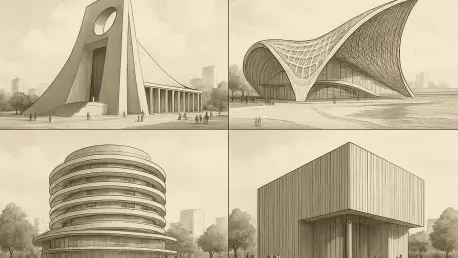

The blueprint of a nation’s future and the character of its cities are often first drawn not by politicians or economists, but by the visionary architects and designers who dare to reimagine the built environment. Across the globe, a series of prestigious competitions is currently challenging the creative community to step forward with groundbreaking ideas that address some of the most pressing issues of our time, from forging national identity through monumental civic spaces to revitalizing urban landscapes and celebrating sustainable materials. These calls for submissions are more than mere contests; they are invitations to shape the physical world in a way that reflects our highest aspirations for community, functionality, and aesthetic harmony. They seek proposals that are deeply rooted in their unique contexts, whether that context is the symbolic heart of a government, the dynamic coastline of a resort city, the academic potential of emerging talent, or the elemental integrity of a single building material. The outcomes will set new standards, inspire future generations, and leave a lasting imprint on our collective culture.
Shaping National Futures and Urban Coastlines
Crafting a National Symbol in South Korea
The very soul of a nation can be expressed through its architecture, and South Korea is seeking to do just that with its new government complex. The “International Master Plan Competition for the National Assembly Sejong Complex” is a monumental undertaking aimed at creating a comprehensive spatial plan that will serve as the foundation for a new administrative heart. This is not merely a request for building designs but a call for a foundational vision that captures the dignity and forward-looking spirit of the nation. The winning master plan will establish the guiding principles and aesthetic standards for every subsequent architectural project on the site, ensuring a cohesive and symbolically powerful environment. Participants are tasked with creating a blueprint that is both functional for governance and resonant on a cultural level, a place that will stand as a testament to the country’s values for centuries to come. The competition emphasizes the need for a design that balances tradition with modernity, creating a civic space that is accessible to the public while maintaining the security and gravitas required of a governmental hub.
Reimagining a Chinese Coastal Destination
On the shores of the South China Sea, another transformative project is taking shape through the “International Competition for Conceptual Planning and Design of Sanya Dadonghai Urban Renewal.” This initiative focuses on the ambitious redevelopment of a popular seaside resort in Sanya, aiming to elevate it into a world-class, mixed-use urban coastal destination. The challenge lies in crafting renewal strategies that are both visionary and intensely practical, capable of revitalizing the area’s economy and enhancing its appeal to residents and tourists alike. Organizers are looking for proposals that seamlessly blend international design perspectives with the unique local characteristics and cultural heritage of Sanya. This requires a delicate touch—one that can introduce modern amenities, improve infrastructure, and create dynamic public spaces without erasing the authentic charm that defines the location. The competition underscores a growing global trend in urban planning: the strategic renewal of existing assets to create more sustainable, vibrant, and economically resilient communities, turning well-trodden destinations into models of innovative coastal urbanism.
Recognizing Talent and Material Innovation
Nurturing the Next Generation of Landscape Architects
The future of environmental design rests in the hands of today’s students, and the “ASLA 2026 Student Awards” program is dedicated to identifying and celebrating the most promising emerging talents in the field. This prestigious platform provides a crucial opportunity for students in landscape architecture to gain recognition for their outstanding work across a wide spectrum of specializations, including design, research, and planning. The awards seek submissions that demonstrate not only a high level of creativity and technical skill but also a thoughtful and sensitive response to context. Jurors will be looking for projects that exhibit a strong command of landscape architectural principles while pushing the boundaries of the discipline. By showcasing excellence at the academic level, the program plays a vital role in fostering innovation and setting high standards for the next generation of professionals who will be tasked with designing the resilient and beautiful public spaces of tomorrow. It serves as a bridge between academia and professional practice, highlighting the fresh perspectives and bold ideas that are essential for the evolution of the field.
Celebrating the Enduring Appeal of Brick
In an age of high-tech composites and smart materials, the “Erich Mendelsohn Award 2026 for Brick Architecture” serves as a powerful reminder of the timeless appeal and surprising versatility of one of humanity’s oldest building materials. This recurring competition invites architects and planners from around the world to submit their most accomplished projects that feature brick as a primary element. The award aims to showcase the full architectural potential of this traditional material, demonstrating its capacity for innovation across a diverse range of categories, from single-family homes to large-scale public buildings. By honoring excellence in brick architecture, the competition highlights how a familiar material can be used to create structures that are both aesthetically stunning and environmentally sustainable. It celebrates the craftsmanship, texture, and durability of brick, encouraging designers to explore its expressive qualities in new and creative ways. The award ultimately champions a design philosophy that values the integrity of materials and their ability to create meaningful, lasting connections between a building and its environment.
A Legacy Cast in Design
These distinct yet thematically linked initiatives ultimately reflected a pivotal moment in the global design landscape. They collectively underscored a profound and necessary shift toward architecture that was not only aesthetically pleasing but also deeply contextual and purposeful. The call for a new South Korean government complex went beyond mere urban planning; it was a quest for a physical embodiment of national identity. Similarly, the revitalization of Sanya’s coastline sought to harmonize global tourism demands with local cultural preservation, proving that development and heritage could coexist. On a different scale, the awards for student work and brick architecture reinforced the foundational pillars of the profession: nurturing future visionaries and honoring the innovative application of timeless materials. Each competition, in its own way, championed a design ethos rooted in specificity—of place, of people, and of material. The solutions and talents that emerged from these calls did more than just answer a brief; they contributed to a richer, more thoughtful global dialogue about what our built environment could and should be.