
Foster + Partners has officially received planning approval from Westminster City Council for a landmark sustainable redevelopment of the office building at 1 St James’s Square, London, a project poised to significantly influence the future of urban renewal. This ambitious undertaking moves away from the carbon-intensive cycle of demolition and new construction, championing a sophisticated “retrofit-first” strategy that meticulously blends the preservation of the existing structure with the integration of advanced, eco-conscious design elements. The core objective is to create a building that not only sets new benchmarks for environmental performance but also prioritizes the health and well-being of its occupants. By focusing on a holistic approach that addresses embodied carbon, operational efficiency, and biophilic design, the project serves as a compelling case study for how aging urban assets can be transformed into paragons of modern sustainability, providing a blueprint for cities worldwide seeking to build a greener, healthier future without erasing their architectural past.
A Hybrid Approach of Retention and Redesign
A cornerstone of the project’s innovative strategy is the decision to retain over 50% of the original building’s structure, a move central to its ambitious environmental goals. This approach directly confronts the critical issue of “embodied carbon”—the significant carbon dioxide emissions associated with the manufacturing, transportation, and installation of new building materials. By reusing the majority of the existing structural frame, the development dramatically reduces the carbon footprint that would have been generated by demolishing the old structure and constructing a new one from scratch. This commitment to structural preservation reflects a profound shift in architectural thinking, prioritizing resource efficiency and circular economy principles. It acknowledges that the most sustainable building is often the one that already exists, and that with intelligent redesign, its lifecycle can be extended to meet the highest contemporary standards of performance and functionality, challenging the long-held industry preference for complete replacement.
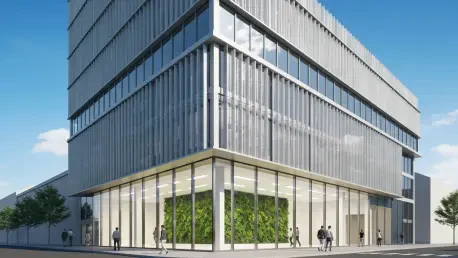
Complementing this retention strategy is a plan for a complete and transformative redesign of the building’s exterior and an intelligent expansion of its usable space. The existing façade is set to be entirely replaced with what Luke Fox, Head of Studio at Foster + Partners, describes as a “breathable façade.” This high-performance building envelope is engineered to enhance natural ventilation, optimize thermal efficiency, and meticulously control solar gain, thereby giving the building a “brand-new lease of life” in both its aesthetic appeal and its operational functionality. Furthermore, the project includes a vertical expansion with the addition of two new levels at the top. These new floors are not merely for creating additional office space but are integral to the project’s comprehensive green-space initiatives. They will house beautifully landscaped terraces, providing occupants with direct access to valuable outdoor amenity spaces—a rare and highly sought-after feature in the dense urban fabric of central London, which also contributes to the building’s ecological and well-being credentials.
Pursuing the Pinnacle of Sustainability Certifications
The redevelopment of 1 St James’s Square is defined by its unwavering pursuit of the highest possible standards in sustainable building design and operation. The firm is not merely aiming to comply with existing regulations but is committed to exceeding them, targeting a trio of prestigious, internationally recognized certifications that represent the pinnacle of green building excellence. The development plans to surpass the Greater London Authority’s (GLA) established targets for both embodied and operational energy, demonstrating a deep commitment to minimizing the building’s environmental impact throughout its entire lifecycle. Achieving a BREEAM (Building Research Establishment Environmental Assessment Method) “Outstanding” rating is a primary objective. This is the highest possible classification within the BREEAM framework, signifying an exemplary level of performance across a wide spectrum of sustainability metrics, including energy and water use, health and well-being, pollution, transport, materials, waste, and ecology, setting a new market standard.
Further solidifying its position as a leader in sustainable design, the project is also targeting a NABERS 5.5-star rating. The National Australian Built Environment Rating System (NABERS) is highly regarded globally for its rigorous focus on measuring and verifying a building’s actual, in-use operational performance, rather than relying solely on its design potential. A 5.5-star rating (out of a possible 6) indicates market-leading energy efficiency and a remarkably low operational carbon footprint, providing tangible proof of the building’s day-to-day performance. The third major goal is to secure WELL Platinum certification from the WELL Building Standard, the leading global framework for creating spaces that advance human health and well-being. The Platinum level is the highest certification available, indicating that the building provides an outstanding interior environment that supports the health of its occupants across critical categories such as air quality, water, light, nourishment, fitness, and mental comfort, ensuring the building is as good for people as it is for the planet.
Integrating Green Infrastructure and Advanced Technology
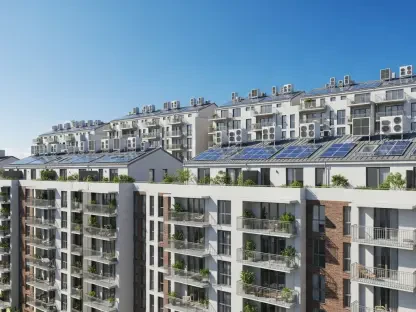
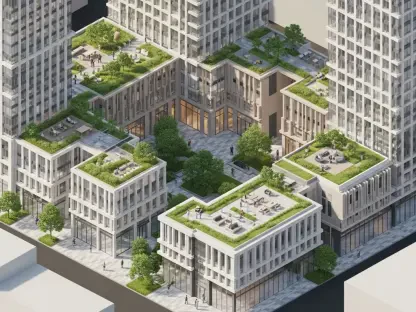
To meet these ambitious sustainability goals, the design masterfully incorporates a range of specific green technologies and biophilic design elements that are seamlessly integrated into the building’s fabric. The plans explicitly include the creation of a green roof and multiple landscaped terraces, which are intended to “enhance biodiversity” by creating new and valuable habitats for native plants and wildlife within a dense urban environment. These features offer more than just ecological benefits; they also provide significant functional advantages, such as improved thermal insulation for the building, which reduces heating and cooling demands, and effective stormwater management, which helps mitigate urban runoff. Moreover, these green spaces create valuable outdoor amenity areas for occupants, offering places for respite and connection with nature, which is proven to improve productivity and well-being, demonstrating a design that is both environmentally restorative and human-centric.
The project’s commitment to sustainability is further reinforced by the integration of state-of-the-art technology aimed at minimizing its operational footprint. A key component of the energy strategy is the installation of photovoltaic panels, which will facilitate on-site renewable energy generation. This measure will significantly reduce the building’s dependence on the conventional electrical grid, thereby lowering its overall operational carbon emissions and contributing to London’s broader energy goals. In addition, the design incorporates advanced solar control measures, which are likely to be integrated within the new high-performance façade. These intelligent systems will manage the amount of solar heat entering the building, a critical function that minimizes the need for energy-intensive artificial cooling during warmer months. This proactive approach to managing solar gain contributes significantly to the building’s operational efficiency and is a key factor in achieving the targeted NABERS 5.5-star rating for in-use energy performance.
A Blueprint for Future Urban Renewal
The approval granted for the 1 St James’s Square redevelopment marked a significant milestone, solidifying a project that served as a powerful model of sustainable urban regeneration. By artfully blending structural preservation with cutting-edge technology and a holistic focus on both environmental and human health, Foster + Partners positioned the building to not only meet but to redefine the highest standards of sustainability in commercial architecture. The project’s success demonstrated a clear and viable path away from the carbon-intensive cycle of demolition and new construction, championing instead an intelligent, forward-thinking retrofitting approach. It synthesized multiple, often separate, sustainability philosophies into a single, cohesive design that simultaneously addressed embodied carbon through structural retention, operational carbon through high-performance systems, ecological impact through integrated green infrastructure, and human well-being through its pursuit of the WELL Platinum standard, ultimately creating a new paradigm for the future of city development.