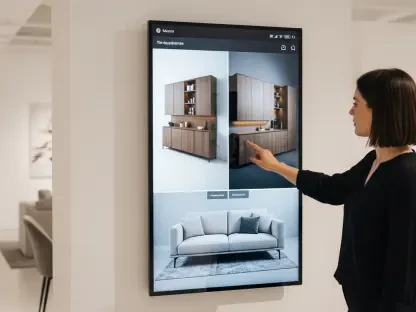

The digital landscape of the current year has fundamentally altered how homeowners and professionals approach the concept of a dream home, often blurring the lines between achievable reality and filtered perfection. A common scenario involves a DIY enthusiast attempting to replicate a moody, dark green library seen on a viral reel, only to find that the specific pigment looks muddy and suffocating in a room with limited natural light. This disconnect highlights a growing tension within the design world, where the pursuit of an “Instagrammable” aesthetic can lead to environments that look stunning in a square frame but fail to function as comfortable living spaces. As these high-contrast visuals proliferate across social feeds, the industry faces a critical crossroads: does this constant stream of imagery empower individuals to take creative risks, or does it enforce a narrow, repetitive standard of beauty that discourages genuine architectural and decorative innovation?
The Homogenization of Modern Aesthetics
The Repetition of Trends: The Turnstyle Effect
The concept of a “turnstyle” effect in interior design suggests that specific colors, furniture silhouettes, and textile patterns are recycled with such frequency that they eventually lose their inherent value and become mediocre. Designer Jacob Laws has noted that this constant repetition of certain trends can be perceived as an insult to clients who seek a unique and personalized environment. When a professional prioritizes easily duplicatable designs over innovative or bespoke work, the result is often a diluted version of creativity that caters to the lowest common denominator of social media popularity. This cycle creates a landscape where the same mid-century modern credenza or olive-green cabinetry appears in thousands of homes, regardless of the architectural context or the specific needs of the inhabitants. By favoring what is “safe” and proven to garner likes, designers risk abandoning the adventurous spirit that has historically driven the industry forward into new and unexplored territories.
The Erosion of Individuality: Maintaining a Personal Point of View
Paloma Contreras highlights the necessity of maintaining discernment amidst the constant barrage of curated imagery that floods modern digital feeds every single day. While the platform serves as a powerful fountain of information, it remains remarkably easy for individuals to lose their unique point of view when they are perpetually exposed to a narrow definition of what constitutes a beautiful space. The pressure to conform to high-gloss standards can lead to a psychological fatigue where homeowners feel their personal tastes are inadequate if they do not align with the current algorithm-driven aesthetic. This phenomenon suggests that instead of fostering diverse creative expressions, the digital environment might be narrowing the window of acceptable design. To combat this, successful professionals emphasize that a room should be a reflection of the person living within it, rather than a carbon copy of a viral post that was staged for a specific lighting condition and a specific moment in time.
Digital Literacy and the Evolution of Influence
Global Connectivity: A Catalyst for Creative Growth
Despite the valid concerns regarding homogeneity, experts like J.P. Horton and KD Reid view the current digital landscape as an invaluable resource for professional growth and global networking. The ability to discover obscure vendors, niche artisans, and historical references from across the world has never been more accessible than it is today. This interconnectedness allows designers to source unique materials and collaborate with craftspeople who were previously invisible to the mainstream market. Furthermore, the platform exposes a broad audience to diverse historical movements and contemporary works that might otherwise remain hidden within the confines of exclusive design galleries or expensive print publications. By democratizing access to high-level visual information, the industry has seen a surge in awareness regarding different cultural perspectives on living spaces. This exposure encourages a more nuanced understanding of how global influences can be integrated into local projects, ultimately enriching the creative palette available.
Reality vs. The Vignette: Developing Visual Literacy
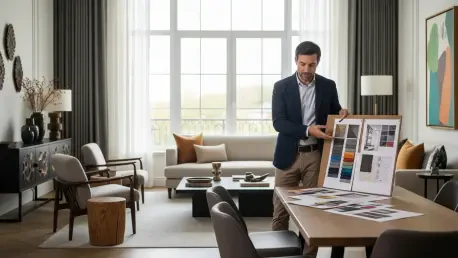
Annie Elliott suggests that most contemporary users have developed a significant level of digital literacy, allowing them to distinguish between a highly styled “vignette” and the functional reality of daily life. This maturity in consumption means that people are increasingly aware that a filtered photograph of a white linen sofa in a minimalist living room does not account for the presence of children, pets, or the general clutter of existence. Understanding this distinction is crucial because it prevents the frustration that arises when a physical space fails to mirror the impossible perfection of a digital rendering. Rather than being “ruined” by these images, the field of interior design is evolving into a more transparent dialogue between the ideal and the practical. Clients are now more likely to use these platforms as a starting point for conversation rather than a literal blueprint for their homes. This shift acknowledges that while an image can inspire a mood or a color palette, the actual execution must prioritize the comfort and utility of the human experience.
Cultivating Authenticity in a Digital Age
The responsibility for maintaining creative integrity shifted toward the individual user, who had to cultivate a critical eye to ensure that digital inspiration translated authentically into personal spaces. It became clear that the most successful implementations of digital trends occurred when homeowners used the technology to enhance their own instincts rather than replace them. Moving forward, the industry prioritized the integration of technology with tangible, lived-in experiences, emphasizing that a home’s primary function was to serve its residents rather than an online audience. Designers who thrived in this environment were those who balanced the convenience of rapid trend cycles with the enduring principles of scale, light, and texture. By treating social platforms as a tool for exploration rather than a strict set of rules, the design community ensured that originality remained the cornerstone of the profession. Ultimately, the synthesis of digital connectivity and human-centric design provided a robust framework for creating spaces that were both visually compelling and deeply personal.