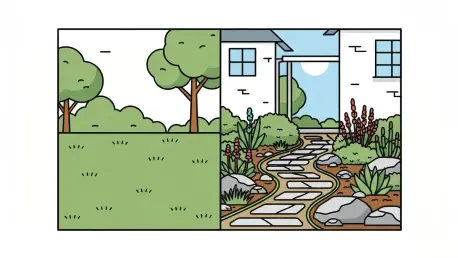

The quintessential American lawn, a vast expanse of uniform green turf, is increasingly being challenged by a more ecologically conscious and vibrant alternative that prioritizes biodiversity over manicured perfection. A recent project undertaken by a determined couple perfectly illustrates this paradigm shift, as they documented the remarkable conversion of their barren, uninspired front yard into a thriving haven for pollinators. Their journey, which began with soil as hard as a brick, showcases the profound impact that thoughtful landscaping can have not only on a home’s curb appeal but also on the local ecosystem. This transformation serves as a compelling example of how residential spaces can be reimagined to support environmental health, moving away from sterile monocultures toward dynamic, life-sustaining gardens that buzz with activity. The project highlights a growing movement among homeowners who are trading demanding, resource-intensive lawns for sustainable landscapes that give back to nature.
1. From Barren Ground to Blooming Oasis
The journey from a lifeless patch of dirt to a flourishing garden began with the most fundamental and challenging step: reviving the soil. This arduous task of soil rehabilitation was a necessary precursor to any planting, setting the stage for a healthy and sustainable ecosystem. Once the ground was prepared, the couple moved to the design phase, carefully selecting a diverse array of pollinator-friendly plants. Their choices were both strategic and functional, incorporating edible species such as rosemary, fig, and pomegranate trees, which would provide for both the homeowners and local wildlife. This thoughtful curation ensures the garden is a source of beauty and sustenance. To support the new plantings and conserve resources, they integrated essential infrastructure, including a layer of protective mulch to retain moisture and a highly efficient drip irrigation system to deliver water directly to the plant roots. This comprehensive approach demonstrates a commitment to creating a garden that is not only beautiful but also resilient and environmentally responsible.
The culmination of their efforts was a dramatic visual and ecological shift, transforming a once-neglected space into something both the homeowners and local pollinators could enjoy from their deck. This personal satisfaction was mirrored by a wave of positive public reception when the couple shared their project online, with many commenters expressing awe at the stunning results. The garden, featuring creative touches like flowers artfully spilling from a tipped-over pot, was lauded as “absolutely beautiful” and a “dream” landscape. This enthusiastic response underscores a broader public appreciation for naturalistic, life-filled gardens over sterile, traditional lawns. The homeowners’ experience of watching pollinators “whiz by” highlights the immediate and tangible rewards of their work, turning their property into an active, engaging part of the local ecosystem. Their story serves as powerful inspiration, demonstrating that even a small plot of land can be converted into a vibrant sanctuary that brings joy and supports biodiversity.
2. The Ecological Imperative of Native Landscaping
The growing trend toward native landscaping is rooted in practicality as much as it is in ecological principle, offering tangible benefits that extend beyond aesthetics. Plants native to a specific region are intrinsically adapted to the local climate, soil conditions, and rainfall patterns. Consequently, they require significantly less maintenance, water, and fertilizer than non-native species, allowing homeowners to save considerable time and money while reducing their environmental footprint. This natural resilience means native plants are more likely to thrive without extensive intervention. Furthermore, this approach directly counters the well-documented problems associated with monoculture landscaping, such as the ubiquitous grass lawn. Monocultures are notoriously vulnerable to pests and diseases, which can quickly devastate an entire area. In contrast, a diverse garden of native plants creates a more robust ecosystem, as many of these species naturally deter unwanted pests, fostering a balanced and self-sustaining environment that reduces the need for chemical pesticides.
Beyond individual yards, the collective impact of adopting native plant species contributes significantly to broader environmental health and resilience. One of the most critical, yet often overlooked, benefits is their role in effective stormwater management. Many native plants possess deep and extensive root systems that far surpass those of typical turfgrass. These roots anchor the soil, preventing erosion, and create channels that dramatically increase the ground’s capacity to absorb rainwater. This natural filtration system reduces stormwater runoff, which in turn helps to prevent flooding and the pollution of local waterways. Moreover, native plants are the cornerstone of local food webs. They provide essential food sources, such as nectar, pollen, and seeds, as well as critical habitat for a wide array of wildlife, including butterflies, bees, birds, and other pollinators. By supporting these species, native gardens play a crucial role in protecting our food supply, as pollinators are responsible for the reproduction of a vast majority of the world’s flowering plants, including many of our essential agricultural crops.
3. A Blueprint for Your Own Transformation
The couple’s successful project served as a powerful testament to the feasibility and beauty of rewilding residential spaces, offering a clear blueprint for others to follow. Their experience demonstrated that transforming a yard began with accessible, foundational knowledge. The first logical step for any aspiring gardener was to identify their specific agricultural hardiness zone, a simple process that determines which plants are most likely to thrive in their local climate. Armed with this information, homeowners could then confidently explore a wide range of native alternatives to traditional lawn grasses. Options such as hardy buffalo grass, resilient clover, or a vibrant tapestry of regional wildflowers presented not only an ecological upgrade but also a visually dynamic alternative. This approach shifted the focus from a one-size-fits-all lawn to a customized, regionally appropriate landscape that celebrated local flora and created a unique sense of place. The project became a source of inspiration, proving that a thoughtful plan could yield a beautiful, low-maintenance, and ecologically valuable garden.