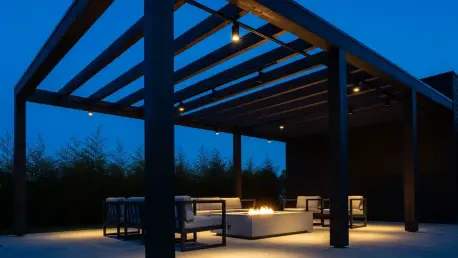

The seamless integration of high-end architectural aesthetics into the rugged demands of outdoor environments has long remained a significant hurdle for designers seeking a unified visual language across residential and commercial properties. For decades, the flexible nature of track lighting was confined to the climate-controlled safety of interiors, while exterior illumination relied on static, labor-intensive fixtures that offered little room for adjustment or creative evolution after the initial installation. However, the introduction of the Outdoor X platform by the WAC Group represents a fundamental shift in this paradigm by bringing the modularity and precision of interior track systems to the open air. By utilizing a low-voltage architecture, this system allows for a level of customization previously reserved for art galleries and modern living rooms, enabling property owners to highlight specific architectural features or landscape elements with surgical precision. This development successfully bridged a historical gap in the lighting industry.
Engineering Durability for Complex Environments
Engineering a track system capable of surviving the elements required more than a mere cosmetic upgrade to existing interior hardware. The Outdoor X system was purpose-built to maintain performance in diverse climates, featuring an IP-66 rating that ensures total protection against dust ingress and high-pressure water jets from any direction. This robust engineering was matched by a modular design philosophy that included field-cuttable track sections and flexible connectors, allowing the system to traverse complex geometries such as curved pergolas or multi-angled facades. At the heart of this versatility were the X-10 Luminaires, which provided highly adjustable beam angles ranging from 20 to 70 degrees. These units delivered up to 630 lumens at 12 watts, maintaining a high color rendering index of 90 at static temperatures of 2700K or 3000K. This ensured that the warm, inviting atmosphere of a luxury interior could be replicated in an outdoor lounge without compromising on durability or technical standards.
Implementation Strategies: Next Steps for Designers
The widespread availability of this technology through established dealer networks marked a turning point for how designers approached exterior layering. Instead of viewing outdoor lighting as a secondary concern, professionals began treating facades and pathways with the same architectural depth once reserved for master suites. Stakeholders effectively leveraged the compatibility of the system with third-party control protocols to create dynamic lighting scenes that responded to changing social needs or seasonal shifts. Future projects sought to maximize this potential by integrating the track systems into the very bones of the structure during the early drafting phases, rather than treating them as post-construction additions. To achieve the best results, it was recommended that installers prioritize the use of high CRI luminaires to ensure color consistency across both indoor and outdoor zones. By shifting toward these adaptable, low-voltage platforms, the industry solidified a new standard where flexibility and high design finally met the rigorous demands of the natural world.