
Across the Australian continent, a new era of urban identity is poised to be unveiled as the year 2026 marks the culmination of numerous ambitious architectural endeavors that will redefine city skylines and community spaces. A wave of significant investment in public infrastructure, cultural enrichment, and urban revitalization is giving rise to a collection of landmark projects that move beyond mere functionality to become statements of intent. These are not isolated developments but rather key components of a nationwide push to create more connected, sustainable, and culturally resonant urban environments. From sprawling cultural centers designed as community anchors to transformative university campuses that blur the lines between academia and the public realm, these structures represent a forward-looking vision for the nation’s major cities, signaling a decisive step toward a future where architecture actively fosters community, celebrates heritage, and embraces innovation.
A Renaissance in Cultural and Artistic Venues
New Landmarks for the Arts
In Western Sydney, the Powerhouse Parramatta is rapidly taking shape, its distinctive latticed exterior becoming a new focal point on the riverfront. Designed by Moreau Kusunoki and Genton, this monumental institution is set to become a nexus of art, science, and design, offering a vast 18,000 square meters of exhibition and public space. The structure’s intricate facade is more than an aesthetic choice; it is engineered for climatic performance, creating a dynamic interplay of light and shadow within its expansive interiors. The project’s master plan emphasizes a deep integration with the surrounding landscape, connecting the museum’s activities with newly developed parklands and public promenades along the Parramatta River. Further north, Brisbane’s cultural precinct is anticipating the debut of the Glasshouse Theatre at the Queensland Performing Arts Centre. A collaboration between Snøhetta and Blight Rayner Architecture, the theater’s design is a direct homage to its environment, featuring a stunning, rippled glass facade that evokes the gentle movement of the nearby Brisbane River, promising to be a beacon of performance art in the heart of the city.
Spaces for Culture and Conservation
In the Northern Territory, Darwin will welcome the Larrakia Cultural Centre, a project of profound local significance designed by Rossi Architects and Susan Dugdale and Associates. This institution will serve as a vital repository and showcase for the culture, history, and language of the Larrakia people, the traditional owners of the Darwin region. Its most striking feature is a dramatic roof structure, meticulously designed to evoke the form of an ancestral bird in flight, creating a powerful symbol of heritage and connection to country that will be visible from across the city. Meanwhile, in the nation’s capital, the Australian National Botanic Gardens is preparing to unveil the Ian Potter National Conservatory. Conceived by Chrofi and McGregor Coxall as a “hovering cube,” this innovative structure will house a collection of rare and threatened native flora. Its design pushes the boundaries of sustainable architecture, utilizing a layered, translucent skin that not only protects the delicate ecosystem within but also harnesses solar energy, effectively functioning as a living, breathing component of the gardens it serves.
Forging Urban Hubs for Education and Commerce
University Campuses as City Catalysts
Perth’s city center is on the cusp of a major transformation with the impending opening of Edith Cowan University’s new ECU City campus. This project, brought to life by Lyons and Silver Thomas Hanley, is strategically designed to be more than an educational facility; it is envisioned as a vibrant urban hub that will inject new life into the central business district. A dynamic digital facade will serve as a canvas for public art and information, while a network of activated laneways and publicly accessible venues, including performance spaces and galleries, will encourage constant interaction between students, faculty, and the wider community. In a similar vein, the University of Tasmania is enhancing its Hobart campus with The Forest, a landmark $131 million sustainable restoration project. Led by Woods Bagot, the initiative breathes new life into the historic domed Forestry building, prominently featuring a mass timber framework that champions environmental responsibility. The design prioritizes the use of repurposed materials, demonstrating a commitment to circular economy principles while creating a warm, inviting, and modern learning environment.
Revitalizing City Centers Through Mixed Use Design
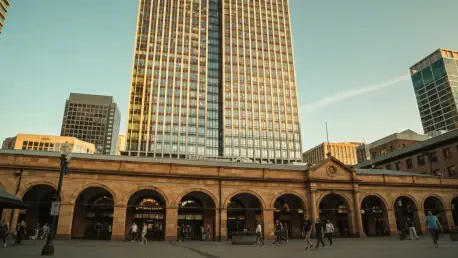
The legacy firm Woods Bagot is also at the helm of two other significant urban renewal projects set to redefine their respective cityscapes. In South Australia, the $400 million Adelaide Central Market Arcade redevelopment represents a masterful blend of heritage preservation and modern commercial ambition. The project carefully restores the historic arches of the beloved market facade while seamlessly integrating a new 35-story mixed-use tower that will house residential, office, and hotel spaces, creating a vertically integrated community hub. This sensitive approach ensures the market’s character endures while intensifying the use of a key city block. On Victoria’s coast, the Nyaal Banyul Geelong Convention and Event Centre is emerging as a cornerstone of the city’s waterfront revitalization. The development is a comprehensive urban intervention, featuring a state-of-the-art, 1,000-seat venue, a hotel, and an expansive public plaza designed to host community gatherings and events, fundamentally reshaping Geelong’s relationship with its waterfront and positioning it as a premier destination for business and tourism.
The Legacy of a Landmark Year
The completion of these diverse projects in 2026 ultimately marked a pivotal moment in the evolution of Australian urbanism. A clear emphasis on sustainability was solidified, with the widespread adoption of mass timber, innovative solar design, and the repurposing of materials transitioning from niche concepts to mainstream practice. The designs demonstrated a profound respect for local context, drawing inspiration from natural landscapes and embedding deep cultural narratives into the built environment. Furthermore, a new standard for public engagement was established, as activated streetscapes, open plazas, and accessible community venues became integral components of major developments. This period, characterized by architectural excellence often sourced through international competition, left a lasting imprint on the nation’s cities, fostering a legacy of design that was not only visually striking but also deeply connected to community, environment, and heritage.