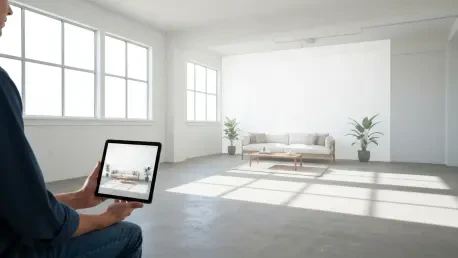

The traditionally complex, time-consuming world of home building and interior design is undergoing a radical transformation, one driven by the potent capabilities of artificial intelligence. What once required years of specialized expertise, prohibitively expensive software, and weeks of painstaking effort is now becoming an instantaneous, accessible, and highly creative “one-click” experience for professionals and homeowners alike. A new ecosystem of synergistic AI tools is rapidly emerging, where one platform acts as a digital architect to generate structurally sound layouts from simple commands, while another serves as a virtual interior artist to furnish and decorate those spaces with photorealistic detail. This integrated approach provides a complete, end-to-end solution that empowers a new generation of creators to bring their most ambitious visions to life with unprecedented speed, ease, and creative freedom, fundamentally shifting the landscape of architectural and interior design.
The New Era of Instant Creativity
The One-Click Revolution
The core of this new movement lies in the radical simplification and profound acceleration of the entire design workflow. For decades, home planning has been notoriously bogged down by systemic delays, from the meticulous process of manual sketching and complex computer-aided design (CAD) software to the lengthy rendering times required for even basic visualizations. The “one-click” paradigm directly confronts and dismantles these long-standing bottlenecks by replacing arduous manual labor and significant technical barriers with sophisticated, smart automation. Instead of painstakingly drawing plans over days or iterating on a single design concept over weeks, users can now generate professional-quality layouts and photo-realistic interior images in a matter of seconds. This paradigm shift effectively allows the AI to shoulder the burden of the most tedious and technical aspects of design, allowing human creativity to flourish without the traditional constraints of time, budget, or technical proficiency.
This innovative approach marks a definitive move away from manually intensive and technically demanding processes toward an era of intelligent, computer-assisted systems. These platforms handle the heavy lifting of spatial analysis, intricate design refinement, and high-fidelity visualization, freeing users to focus on the purely creative elements of their projects. The AI analyzes textual prompts or existing images to understand spatial requirements and aesthetic goals, then applies complex algorithms trained on vast datasets of architectural and design principles to generate viable, attractive outcomes. This rapid generation capability allows for an unparalleled level of iteration; where a designer might have previously explored two or three options, they can now visualize dozens in the same amount of time. The result is a more dynamic, fluid, and exploratory design process, where the best possible solution can be discovered and refined with remarkable efficiency, transforming the very nature of how spaces are conceived and brought to life.
Design for Everyone
A significant trend emerging from this technological shift is the profound democratization of the design process, making sophisticated architectural and interior design tools accessible to individuals with absolutely no prior experience or technical training. Historically, the field has been protected by intimidating hurdles, including the steep learning curves of complex software, the need for a deep understanding of color theory and spatial principles, and the constant worry of making costly, inaccurate measurements. New AI-powered tools are systematically removing these barriers by providing a highly intuitive user interface and, crucially, immediate visual feedback. This instant response loop encourages experimentation and deep personalization, as users can see the direct results of their ideas in real time. This frictionless environment empowers them to explore countless design variations for a single room in minutes—a process that would be prohibitively expensive and time-consuming using traditional methods—thereby turning what was once a stressful and intimidating task into an enjoyable and deeply creative journey of self-expression.
This newfound accessibility fosters a powerful sense of creative empowerment. By providing a risk-free digital sandbox, the technology removes the inherent fear of making a “wrong” or irreversible decision, which has long been a source of anxiety for homeowners and novice designers. Users can freely experiment with bold color palettes, unconventional furniture arrangements, and diverse stylistic themes without any real-world consequences or financial commitment. This ability to visualize and refine ideas effortlessly transforms the entire design process from a high-stakes endeavor into an exciting journey of discovery. Abstract inspiration, often gathered from disparate sources, can be quickly translated into tangible, refinable images. This seamless conversion of thought to visualization not only builds confidence but also allows for a much more personal and authentic design outcome, ensuring that the final space is a true reflection of the user’s unique taste and lifestyle.
A Synergistic AI Ecosystem
The AI Architect Building the Foundation
A truly comprehensive and effective AI design solution requires a dual-component system, starting with the foundational role of the AI architect. Specialized tools in this category focus exclusively on the structural and functional aspects of a home, serving as the logical backbone for any project. The primary function of this AI is to generate intelligent, accurate, and practical floor plans from simple, conversational text prompts. For example, a user might input a command as straightforward as “a three-bedroom house with an open kitchen living area and a large balcony.” Leveraging sophisticated deep learning models trained on vast datasets of architectural designs, building codes, and best practices, the system intelligently deciphers these requirements. It understands inherent spatial logic, applies standard room dimensions, and ensures that practical circulation patterns are established, translating the user’s abstract request into a coherent and, most importantly, buildable layout almost instantaneously.
This architectural AI goes far beyond simple line drawing; it embodies a fundamental understanding of how a physical space functions. When generating a layout, it considers crucial factors like the logical relationships between rooms—placing the dining area near the kitchen, for example—and the natural flow of movement throughout the home to avoid awkward transitions or wasted space. The algorithms are designed to optimize for efficiency, livability, and structural soundness, ensuring that the generated plans are not just aesthetically pleasing but also grounded in real-world architectural principles. This initial step is absolutely critical, as it provides a solid and well-considered framework upon which all subsequent interior design decisions can be built. By automating the creation of this foundational blueprint, the AI architect lays the groundwork for a successful design, handling the complex spatial problem-solving so that the user can focus on the more creative aspects of bringing the home to life.
The AI Artist Bringing Spaces to Life
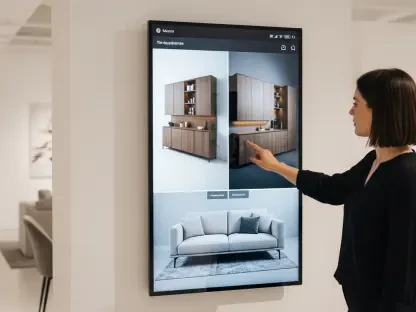
Complementing the structural precision of the AI architect is the creative flair of the AI artist, a tool designed to handle the aesthetic and visual dimensions of interior design. This component breathes life into the architectural framework, transforming empty layouts into fully realized, beautifully decorated living spaces. It primarily operates through two powerful and distinct modalities. The first is an advanced image-to-image transformation capability, which functions as a highly effective virtual staging or digital makeover tool. Users can upload a photograph of an existing room, and the AI will analyze its contents, structure, and lighting to apply entirely new styles, change wall colors, replace furniture, and even alter the flooring to match a desired aesthetic. The second modality is text-to-image generation, where users can simply describe a room using stylistic keywords—such as “modern Scandinavian living room with a fireplace,” “Japandi minimalist bedroom,” or “glamorous Art Deco dining area”—and the AI generates a complete, fully decorated visual representation from scratch, complete with appropriate furnishings, lighting, and decor.
Further enhancing its utility, the AI artist is not merely a passive generator but an interactive design partner. These platforms are increasingly enhanced with sophisticated editing features that offer users granular control over the final design, bridging the gap between automated creation and hands-on personalization. After an initial image is generated, users can manually enter an editing mode to add, move, or replace individual pieces of furniture, experimenting with different layouts until the arrangement feels perfect. They can also modify key surfaces like floors and ceilings, testing various materials from hardwood to polished concrete with a single click. This level of interactive control is crucial, as it allows for the fine-tuning necessary to meet specific tastes and practical requirements. It transforms the AI from a simple image generator into a dynamic and responsive design canvas, empowering users to refine every detail and ensure the final visualization perfectly aligns with their vision.
The Future of Personalized Living
Beyond Style AI That Understands Your Life
As this technology advanced, its systems evolved far beyond simple stylistic prompts to become more intelligent, predictive, and deeply personalized. The next generation of home design AI integrated a concept known as “smart lifestyle recognition,” a sophisticated capability that allowed it to learn and understand a user’s specific habits, daily routines, and even family dynamics. Instead of merely responding to aesthetic keywords like “modern” or “industrial,” the AI could analyze subtle data inputs to make proactive and highly relevant design suggestions. For instance, it could recommend an open-concept layout with durable, easy-to-clean surfaces for a family with young children, or suggest a dedicated home office with optimal lighting and soundproofing for a remote worker. This evolution marked a pivotal shift from designing a house to designing a home that was truly responsive to the needs of its inhabitants, creating spaces that were not just beautiful but also highly functional and intuitively suited to the user’s way of life.
This deeper level of personalization led to the creation of environments that actively enhanced the well-being and efficiency of their residents. The AI’s ability to understand a user’s life meant it could optimize everything from kitchen layouts for a passionate home cook to bedroom configurations that promoted better sleep hygiene. It could propose a lighting scheme that aligned with a person’s natural circadian rhythms or suggest furniture arrangements that fostered social interaction for a family that loved to entertain. This represented a fundamental change in the design paradigm: the home was no longer a static container for life but a dynamic environment that adapted to its occupants. The focus shifted from a purely aesthetic-driven process to one centered on user-centric, predictive design, which ultimately delivered living spaces that felt more comfortable, supportive, and perfectly aligned with the nuanced realities of daily existence.
The Path to Fully Automated Home Creation
The ultimate trajectory of this development culminated in a single, all-encompassing AI that managed every facet of home creation. The design process became hyper-personalized to an unprecedented degree, with the system capable of generating a complete, unique home design based on an individual’s combined aesthetic preferences, lifestyle data, and practical needs in mere seconds. This powerful tool moved far beyond just architectural layouts and interior decor. It integrated a host of other critical considerations into its generative process, creating a truly holistic plan. When a user input their requirements, the AI simultaneously evaluated structural integrity, optimized for energy efficiency based on the local climate, and even suggested sustainable and cost-effective building materials. This integrated approach streamlined the entire workflow, from initial concept to a fully detailed, construction-ready blueprint.
This advanced, futuristic tool effectively became a one-stop, fully automated design experience, fundamentally redefining the path to creating a new home. What had once been a fragmented and often contentious process involving multiple professionals—architects, interior designers, structural engineers, and energy consultants—was now unified within a single, intelligent platform. The system could produce comprehensive documentation, including detailed floor plans, electrical and plumbing schematics, and realistic 3D visualizations, all while ensuring that every element was cohesive and optimized. This revolution in home creation made bespoke, high-quality design accessible to a broader audience than ever before, marking the final step in the journey from a complex, multi-stage process to an instant, integrated, and deeply personal reality, all brought to life through the power of a single click.