
A powerful partnership between determined local residents and a new generation of designers is charting a new course for one of Las Vegas’s most historically significant yet deeply troubled public spaces. For years, the 3.5-acre Huntridge Circle Park has stood as a fenced-off monument to urban decay, a source of crime and blight rather than community pride. Now, a grassroots initiative organized by the “Friends of Huntridge Park” has joined forces with third-year landscape architecture students from the University of Nevada, Las Vegas (UNLV) to imagine a vibrant future for the dormant green space. This collaboration is not merely an academic exercise; it is a strategic effort to generate tangible, inspiring redesign concepts that can galvanize public support, attract investment, and ultimately reclaim the park for the neighborhood it was always meant to serve. The innovative student visions are serving as powerful catalysts, sparking a city-wide conversation about the park’s immense potential to become a cultural hub and a vital community asset once more.
A Legacy of Neglect and a Newfound Resolve
Huntridge Circle Park embodies a stark contradiction, possessing a rich history as a centerpiece of a post-World War II planned community while simultaneously suffering from decades of severe neglect and crime. This almond-shaped green space, a key feature of the neighborhood developed in the 1940s and ’50s, became a flashpoint for urban decay. Its history is marked by a series of closures, beginning with a police raid in 1971. A more recent closure in 2006 followed a fatal stabbing between two homeless men, and the park did not fully reopen until 2013. The final closure in 2018 was prompted by a heinous crime where a man with a violent record, known to frequent the park, broke into a nearby home and brutally attacked an 80-year-old woman. Even when accessible, the park was a constant source of concern for residents, who reported issues ranging from theft and public intoxication to the discovery of discarded needles and knives. This pervasive environment of danger and blight rendered the park unusable and unsafe, betraying its original purpose as a place for community gathering and recreation.
In the face of this persistent decline and institutional inaction, the residents of the Huntridge neighborhood have forged a proactive path forward, refusing to accept the park’s derelict state as a permanent reality. Rather than waiting for a top-down municipal solution that might never materialize, they formed the “Friends of Huntridge Park” to spearhead a grassroots reclamation effort. This community-led initiative is strategically pursuing a public-private partnership, with the ambitious long-term goal of assuming responsibility for the park’s operations, maintenance, and programming. This approach signifies a fundamental shift toward community empowerment, placing the park’s future directly in the hands of those who have the greatest stake in its success. By collaborating with UNLV students, the group has amplified its efforts, leveraging fresh creative energy to generate compelling visions that can capture the public’s imagination and demonstrate the tangible possibilities for a revitalized, safe, and welcoming community hub.
Visionary Concepts for a Transformed Space
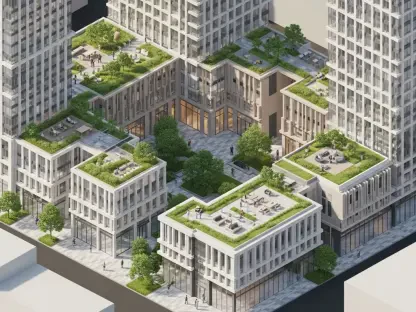
The conceptual designs presented by the UNLV students at Las Vegas City Hall function as powerful tools for inspiration, offering diverse and thoughtful solutions to the park’s long-standing challenges. One standout concept, titled “Vitality” by student Kamil Calmese, reimagines the park through an extended metaphor of a living, breathing organism that sustains the community. Under this creative framework, various park features are assigned functional roles analogous to human organs. A central triangular amphitheater, for example, is envisioned as the park’s “liver,” serving to filter and distribute cultural nutrients in the form of live performances and community events. Designated areas for vendor stalls and local markets would act as the “spleen,” strategically bolstering the neighborhood’s social and economic immune system. Furthermore, a network of interconnected pathways and bridges would serve as the “veins,” ensuring a constant and healthy flow of people and activity throughout the entire space, restoring the park’s vital importance as an integrated part of the community’s lifeblood.
Other students presented equally compelling visions that addressed the park’s complex history with both creativity and pragmatism. Axel Cruz-Gomez developed a concept rooted in the region’s desert geology, seeking to connect the park not just to its immediate surroundings but to the broader identity of Las Vegas. His plan incorporates natural stone for pathways and strategically places large boulders to serve as seating. This design choice is both aesthetically striking and deeply practical; the boulders provide necessary seating but are intentionally not comfortable enough to encourage loitering or the establishment of long-term encampments, a design solution that directly confronts the park’s documented history with homelessness and crime. Meanwhile, Janet Castillo’s vision focuses on creating a grand and welcoming landmark. She proposed a dramatic, angular tunnel feature at the park’s southern entrance, incorporating a spiral motif to symbolize the dynamic nature of life. Her design includes a central plaza shaded by a canopy of strawberry and Texas olive trees, with vibrant colors provided by flowers like red birds of paradise and Mexican petunias, transforming the park into a distinct cultural destination.
A Confluence of Opportunity and Aspiration
The timing of this community-driven initiative is particularly opportune, as it aligns with several other significant revitalization projects poised to transform the surrounding area. According to Freddy Godinez, co-founder of the Friends of Huntridge Park, the park’s redesign is perfectly positioned to capitalize on the momentum generated by two concurrent developments: the planned renovation of the historic but long-shuttered Huntridge Theater and the massive $378 million Maryland Parkway Bus Rapid Transit project. The latter is set to overhaul the entire arterial road with new bus infrastructure, wider sidewalks, enhanced lighting, and more greenery. This large-scale urban renewal creates a powerful synergistic effect, establishing an environment where a revitalized park could not only succeed but thrive. This sentiment was echoed by City Councilwoman Olivia Diaz, who noted the city’s desire for a redesign that respects the vintage feel of the historic neighborhood while simultaneously acknowledging that Las Vegas is a city in constant evolution, capable of blending its past with a progressive future.
This combination of passionate local advocacy and fresh academic creativity had established a tangible and well-supported movement to reclaim Huntridge Circle Park. The community’s aspirations were ambitious, as articulated by co-founder Randy Mendre, who drew a direct parallel to the High Line in New York City. That project saw a derelict elevated railway, once slated for demolition, saved by citizen visionaries and transformed into a world-famous linear park that revitalized its entire neighborhood. This powerful comparison encapsulated the ultimate goal for the Las Vegas park: to transform a long-standing symbol of urban decay into a celebrated model of community-driven renewal. The collaborative effort aimed not just to reopen a gate but to create a cultural cornerstone for generations to come, proving that with vision and determination, a community could indeed reclaim its public spaces and redefine its future.