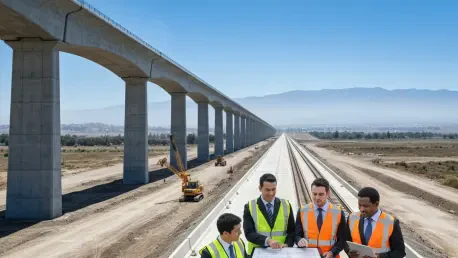

After nearly two decades of political turbulence and financial shortfalls, California’s ambitious high-speed rail project is betting its entire future on the one resource it has long avoided: private capital. The landmark initiative, envisioned as a futuristic spine connecting the state’s economic hubs, now stands at a critical turning point. Its survival no longer hinges on political goodwill from Washington but on its ability to attract and leverage private-sector innovation and financing.
This strategic pivot raises a fundamental question for a project that has become synonymous with delays and budget overruns: Can this new model succeed where decades of public funding have struggled? The California High-Speed Rail Authority is gambling that the answer is yes, charting a new course that could either finally deliver on a long-delayed dream or become its final, cautionary chapter.
The Troubled History of a Grand Vision
The vision was grand and overwhelmingly popular when voters approved it nearly two decades ago: a sleek, modern train whisking passengers between San Francisco and Los Angeles in under three hours. However, the journey from ballot box approval to physical reality has been fraught with persistent challenges. The project quickly became a case study in infrastructure woes, bogged down by significant construction delays that pushed timelines back year after year.
Compounding these delays were massive cost overruns that saw the initial budget balloon to staggering figures, shaking public and political confidence. Internal management issues and a volatile relationship with the federal government further complicated progress. With no operational segments yet completed, the project’s history is defined more by its struggles than its successes, leaving a legacy of skepticism that its new leadership must now overcome.
The Shift Towards a Public-Private Partnership
In response to this turbulent history, the California High-Speed Rail Authority has initiated a fundamental strategic pivot. The new cornerstone of the project’s financial future is no longer a hopeful reliance on inconsistent federal grants but an active and aggressive pursuit of private capital. This represents a seismic shift in thinking, moving the project from a traditional public works model to a more dynamic public-private partnership.
This change is not merely a financial maneuver but a philosophical one. The Authority is signaling its intent to operate more like a business, seeking partners who can bring not only funding but also efficiency, expertise, and a clear-eyed focus on delivery. By inviting the private sector to the table, California hopes to inject a new sense of urgency and discipline into the nation’s most ambitious infrastructure undertaking.
Breaking from an Unreliable Federal Partner
The decision to actively court private investment was catalyzed by a deep-seated frustration with the federal government. This sentiment was crystallized in December, when the Authority dropped its lawsuit against the Trump administration over previously terminated grants. An Authority spokesperson characterized the federal government as an untrustworthy partner, arguing that its burdensome requirements often increase costs and create inefficiencies without adding tangible value to the project.
This volatile relationship has been a constant drag on progress. While the Biden administration provided a significant $3.07 billion grant, the preceding administration had not only attempted to cancel other grants but also successfully terminated $4 billion in unspent funds in 2025. This history of financial whiplash, with funding levels fluctuating dramatically between presidencies, made long-term planning nearly impossible and underscored the need for a more stable and reliable source of capital.
Actively Courting Private Investors
With its sights set firmly on the private sector, the Authority is moving swiftly to turn interest into investment. CEO Ian Choudri, who took the helm in August 2024, has spent the past year in confidential discussions with private financiers, laying the groundwork for this new chapter. The initial signs have been promising; a Request for Expressions of Interest generated an enthusiastic response from 30 different entities, confirming a strong market appetite for the project.
Building on this momentum, the Authority issued a formal Request for Qualifications on December 19, 2025. This step aims to select a qualified private partner to formally evaluate investment opportunities and help structure a viable partnership model. The move from informal talks to a formal selection process marks a critical milestone, transforming the abstract concept of private investment into a concrete and actionable plan.
Generating New Revenue Streams
Beyond attracting direct investment, the Authority is also focused on building its own financial resilience. A key part of this strategy involves commercializing its vast assets to create independent and recurring revenue streams. Leadership plans to leverage the project’s extensive real estate holdings and its valuable right-of-way access for new commercial ventures.
One of the most promising opportunities lies in developing fiber-optic corridors along the rail line, a move that would generate income while also expanding broadband infrastructure in the state. By thinking creatively about its assets, the Authority aims to develop a diversified funding base that reduces its dependency on any single source of capital and provides a financial cushion for the decades of work that lie ahead.
The New Financial Model: State Funds and Private Innovation
The project’s future rests on a hybrid financial model designed to blend the best of the public and private sectors. The foundation of this model is a stable, long-term commitment from the state of California, which has dedicated $1 billion annually to the project through 2045 from its cap-and-invest program. This consistent stream of public funding provides the financial bedrock needed to attract serious private partners.
The Authority’s leadership believes that combining this reliable state investment with private-sector capital, innovation, and best practices is the key to success. This synergy is expected to maximize the value of California’s investment, introduce new efficiencies, and ultimately accelerate the delivery of a fully operational high-speed rail system. The goal is to create a partnership where public funds de-risk the project for private investors, while private expertise ensures it is built on time and on budget.
Current Progress on the Ground
Even as this high-level financial restructuring unfolds, tangible progress continues on the ground in California’s Central Valley. The Authority is actively pushing forward with construction, demonstrating to potential investors that the project is a real and ongoing enterprise. The focus remains on completing the initial 119-mile segment between Merced and Bakersfield, which will serve as the backbone of the future statewide system.
A recent milestone underscoring this continued momentum was the issuance of a request for proposals to build the track, signals, and electrical systems for this inaugural line. This critical step moves the project from civil engineering works to the complex systems integration required for a modern high-speed rail line. By continuing to build, the Authority aims to show that its new financial strategy is paired with an unwavering commitment to construction and delivery.
Reflection and Broader Impacts
Reflection
This new public-private model presents a compelling path forward, but it is not without significant challenges and risks. The potential strengths are clear: an infusion of private capital could close the daunting $6.5 billion funding gap for the initial segment, while private-sector expertise could bring much-needed efficiency and project management discipline. This could finally create the financial stability that has long eluded the project.
However, the Authority must overcome the project’s tarnished reputation to attract the right partners on favorable terms. Structuring a deal that protects the public interest while offering a sufficient return to investors will be a delicate balancing act. The sheer scale of the required investment remains a formidable hurdle, and the success of this pivot will depend on whether private financiers are truly convinced that the project has turned a corner.
Broader Impact
The implications of California’s strategic shift extend far beyond the state’s borders. If successful, this public-private partnership could set a new precedent for how major infrastructure projects are funded and executed across the United States. For a nation struggling with aging infrastructure and limited public funds, the California high-speed rail project is now a national test case for a new way of building big things.
A successful outcome could inspire other states and the federal government to more readily embrace private investment for ambitious transportation, energy, and water projects. Conversely, a failure could reinforce skepticism about the viability of such large-scale undertakings and the role of private capital within them. In essence, California is not just trying to build a train; it is attempting to redefine the future of American infrastructure development.
A Final Chance to Get on Track
The narrative of California’s high-speed rail project was one of a grand vision mired in a troubled, federally dependent past. The Authority’s decisive pivot toward private investment and steadfast state commitment marked a fundamental break from that history. It was a high-stakes gamble, trading the unpredictability of federal politics for the calculated risks of the private market.
Ultimately, this strategic redirection represented the project’s best and perhaps final chance to deliver on the decades-old promise made to California’s voters. The journey ahead was still long and uncertain, but for the first time in years, the project’s fate was firmly in California’s own hands, dependent on its ability to forge a new and resilient coalition of public will and private capital.