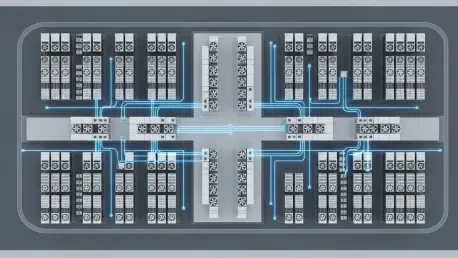

The transformation of a decommissioned aluminum smelter into a massive 480-megawatt digital engine represents one of the most ambitious industrial pivots in modern engineering history. In Hawesville, Kentucky, the silence of a former industrial giant is being replaced by the hum of high-density servers as Fluor and TeraWulf embark on a $4 billion venture. This project is not merely about construction; it is a calculated response to the global bottleneck in power availability and the insatiable demand for artificial intelligence processing.
Analyzing the Strategic Transition: From Industrial Legacy to High-Density Digital Infrastructure
The conversion of the Hawesville brownfield site marks a definitive shift from the heavy manufacturing era to the age of high-tech data processing. Historically, aluminum smelting required immense, consistent electrical loads, leaving behind a robust power infrastructure that is now perfectly suited for hyperscale data centers. By repurposing this 250-acre footprint, the project bypasses the typical “greenfield” obstacles, such as the lack of existing high-voltage transmission lines.
However, the transition is not without its hurdles. Meeting a 480-megawatt demand while adhering to a rapid deployment timeline requires a sophisticated engineering approach. The partnership between Fluor and TeraWulf is testing whether large-scale industrial contractors can effectively pivot their massive labor forces and supply chains to meet the specific, hyper-fast requirements of the digital world. If successful, this project will likely serve as the definitive blueprint for future hyperscale developments across North America.
The Socioeconomic and Industrial Context: The Kentucky Data Center Project
Revitalizing “Rust Belt” infrastructure has become a primary strategy for developers looking to support the cloud computing era. Kentucky’s geographical position offers a unique combination of available land and proximity to major Midwest metropolitan centers. This location provides the low-latency connectivity required for real-time AI applications while offering a more favorable regulatory and energy environment than traditional tech hubs like Northern Virginia.
Furthermore, the project addresses the critical issue of grid congestion. By utilizing a site with pre-existing industrial power assets, TeraWulf can bypass the years-long waiting lists for new grid connections that currently stall projects in other regions. This ability to “plug and play” into an existing high-capacity node is what makes the Kentucky hub a focal point for investors and policy makers interested in domestic technological sovereignty.
Research Methodology, Findings, and Implications
Methodology: Engineering the Transition
The research into this development highlights the “limited notice to proceed” framework, which allows Fluor’s North American Data Center Execution Hub to begin master planning and early engineering before the final ground-breaking. This methodology prioritizes front-end loading, where every logistical variable—from specialized cooling systems to modular power units—is accounted for before massive capital is deployed. The site selection itself was a core part of the methodology, focusing on the 250-acre footprint and its unique industrial heritage.
Findings: The Speed-to-Market Advantage
The primary finding of this investigation is the overwhelming speed-to-market advantage gained by repurposing brownfield sites. The research indicates that the existing high-voltage infrastructure at the Hawesville site could shave up to two years off the standard development cycle for a facility of this magnitude. Additionally, the $3 billion to $4 billion investment is identified as a cornerstone for Fluor’s financial trajectory, signaling a shift in the firm’s portfolio toward technology-driven infrastructure.
Implications: A Shift in Infrastructure Priorities
The implications for the construction industry are profound. Firms are increasingly moving away from general contracting toward specialized, tech-heavy infrastructure roles that require deep expertise in energy management and thermal engineering. On a broader scale, this project suggests a theoretical shift in urban planning, where “power-first” development becomes the primary driver of regional economic growth, overshadowing traditional factors like labor proximity or logistical transport routes.
Reflection and Future Directions
Reflection: Logistical Realities and Risk Mitigation
Reflecting on the project’s early stages reveals the complexities of remediating a former smelter, where environmental concerns must be balanced with the precision required for digital infrastructure. The integration of Fluor’s disciplined engineering with TeraWulf’s development expertise served to mitigate the high risks associated with energy-intensive projects. However, the initial scope could have potentially benefited from a deeper integration of local labor training programs to ensure the long-term maintenance of such a specialized facility.
Future Directions: Catalyzing Secondary Growth
Looking ahead, this hub could act as a catalyst for a secondary boom in modular nuclear energy and advanced grid upgrades. As the demand for 480 MW and larger capacities grows, the industry must investigate how to replicate this success in other underserved industrial regions. Research should also focus on the long-term sustainability of the brownfield-to-data-center model, specifically regarding how to maintain these facilities as available industrial sites with adequate power become increasingly scarce.
The Benchmark: A New Era in Digital Infrastructure Construction
The Fluor-TeraWulf partnership established a new standard for how the digital landscape of the late 2020s will be built. By successfully converting a legacy industrial asset into a high-value digital node, the project demonstrated that the solution to the global power crunch lies in the intelligent reuse of existing resources. It positioned Kentucky as a central pillar in the North American data ecosystem, proving that strategic site selection and sophisticated engineering could overcome even the most daunting energy challenges. Future developers were left with a clear roadmap for balancing rapid technological expansion with the realities of modern infrastructure limitations.