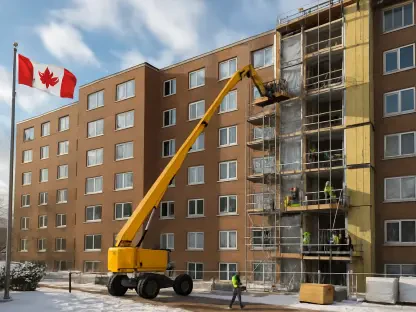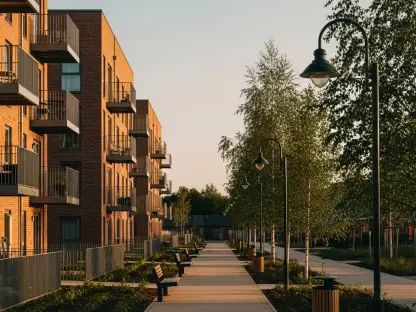

While many developers are tapping the brakes in the face of rising interest rates and prohibitive insurance costs, one prominent build-to-rent firm is leaning into the headwinds with a major expansion. Southern Impression Homes has announced the simultaneous launch of seven new build-to-rent (BTR) communities across Florida, a move that starkly contrasts with the cautious sentiment prevailing in the real estate sector. This ambitious undertaking, which will introduce over 1,300 new rental units to high-growth metropolitan areas, signals a calculated strategy rooted in financial strength and operational flexibility. The new developments are strategically located in key markets, including The Eleanor in Daytona (266 units), Oak Isle in Gainesville (120 units), 12 Oaks in Orlando (166 units), Hamilton Oaks in Tampa (224 units), Silver River Landing in Ocala (204 units), Canvas in Wildwood (226 units), and Gentle Woods in Jacksonville (108 units). This aggressive push raises a critical question: what underpins the company’s confidence to build at scale when others are retreating, and how is it positioning itself to thrive in a challenging economic climate? The answer lies in a unique combination of a versatile business model and a powerful corporate partnership.
A Versatile Approach to Development
A key element of the firm’s growth strategy is its remarkably adaptable approach to project delivery, which is meticulously tailored to meet the specific needs and risk profiles of its institutional investors. This flexibility is showcased through two distinct operational models. For its communities in Ocala and Jacksonville, the company is employing a merchant build program, a streamlined process where it develops and builds the properties with the intention of selling them to an investor upon completion. This model appeals to partners seeking a turnkey asset without the complexities of the development process. In contrast, for its larger projects in Daytona, Gainesville, Orlando, Tampa, and Wildwood, the firm is leveraging its full-service general contracting platform. This allows institutional clients to retain ownership throughout the construction phase while benefiting from the builder’s expertise, scale, and integrated supply chain. By offering these varied structures, the company can cater to a wider spectrum of investment strategies, ensuring it remains an attractive partner regardless of an investor’s preferred level of involvement or exit timeline.
Further cementing its position as a preferred partner, the company distinguishes itself by not only serving as a builder and contractor but also as a co-investor. This is particularly evident in the Orlando and Tampa developments, where Southern Impression Homes is co-investing its own capital alongside its clients. According to company President and CEO Chris Funk, this willingness to act as an equity partner is a fundamental differentiator in today’s market. It creates a powerful alignment of interests, demonstrating a shared commitment to the project’s success and a deeper level of partnership that goes beyond a simple fee-for-service arrangement. By sharing in the risk, the firm signals immense confidence in its projects and its ability to deliver value. This approach builds a profound level of trust with institutional partners, who see the builder’s financial stake as a guarantee of quality, efficiency, and a mutual dedication to achieving long-term profitability in a complex and often unpredictable economic landscape.
The Foundation of Corporate Strength
The firm’s ability to undertake such a significant expansion in a constricted market is largely underwritten by a transformative corporate event. The 2023 acquisition by Sumitomo Forestry, which secured an 80% ownership stake in the company, provided a massive infusion of capital and stability. This partnership armed Southern Impression Homes with a robust balance sheet and access to the global resources of a major international corporation. While many competitors have been forced to halt projects due to financing challenges and escalating costs, this builder has been able to leverage its newfound financial might to push forward. The backing of Sumitomo Forestry provides the necessary liquidity to navigate market fluctuations and secure land and materials advantageously. This financial fortitude is the bedrock of its current growth, enabling it to pursue large-scale projects and maintain momentum at a time when capital has become increasingly scarce for other developers in the sector.
The strategic advantages of the acquisition extend beyond mere financial backing into tangible operational benefits. The company’s enhanced scale and strengthened balance sheet have allowed it to negotiate more competitive supplier agreements and achieve stabilized pricing on materials, insulating its projects from the worst of the inflationary pressures affecting the construction industry. This has reinforced its capacity to function as a vertically integrated, turnkey solution for institutional investors, controlling more of the development lifecycle and offering greater cost certainty. This operational resilience is perfectly timed to meet the unabated demand for purpose-built rental housing across the Sun Belt. With significant population and employer growth continuing to fuel the need for quality rental options in states like Florida, the company is strategically positioned to capitalize on a market where demand consistently outpaces supply, turning a period of broad economic uncertainty into an opportunity for targeted, strategic expansion.
A Blueprint for National Growth
The company’s calculated expansion across Florida provided a clear illustration of a strategy built on adaptability, deep partnerships, and formidable financial strength. The firm successfully navigated a challenging economic climate not by retreating but by leveraging its unique ability to function as a builder, contractor, and equity partner, a multifaceted approach that aligned its interests directly with those of its institutional clients. Its success was not merely a reaction to market conditions but a deliberate execution of a well-funded plan, made possible by the pivotal acquisition by Sumitomo Forestry. This partnership unlocked the capital and global resources necessary to insulate the company from market volatility and secure a competitive edge. This strategic foundation allowed the builder to confidently expand its footprint, recognizing that the persistent demand for rental housing in high-growth regions represented a significant opportunity. The Florida projects were not an end in themselves but rather a crucial part of a larger, more ambitious vision for national growth, with similar developments already underway in Georgia, North Carolina, and Texas.