
With extensive experience in design, architecture, and construction, Luca Calaraili has a unique perspective on the forces shaping our urban landscapes. He specializes in the application of innovative technologies and tools to drive progress in infrastructure development. Today, we delve into the evolving landscape of public transit in the United States, exploring the significant shift from costly light rail projects to more agile bus rapid transit systems. We’ll examine the financial and logistical reasons behind this trend, compare the American approach to the rapid rail expansion in Canada, and discuss what these choices mean for the future of mobility in our cities.
Many cities are opting for bus rapid transit, citing high costs for light rail. What specific financial hurdles make light rail so difficult to implement in the U.S., and what long-term performance trade-offs do cities accept with bus systems?
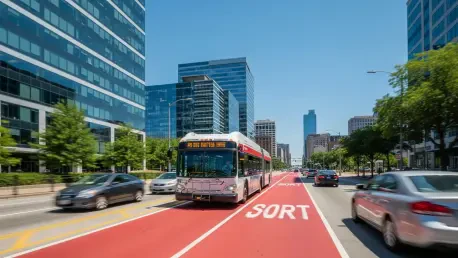
That’s the central tension we’re seeing play out across the country. Over the last decade, there’s been a significant reorientation in how cities approach transit investment. The core issue is that light rail has become prohibitively expensive for many American municipalities. They simply aren’t finding a mechanism to bring those costs down. This isn’t just about the price of steel or labor; it involves complex land acquisition, utility relocation, and lengthy environmental reviews that can inflate budgets to unsustainable levels. In response, cities are making a pragmatic choice for bus-based systems. A city like Baton Rouge, for instance, is moving forward with a 9.3-mile arterial rapid transit line. It’s a smart way to connect the north and south sides of the city to downtown without the massive capital outlay of rail. The trade-off, however, is in perceived permanence and capacity. Rail lines feel like a permanent commitment to a corridor, which tends to attract more significant private investment and development. While BRT is highly effective, it may not catalyze the same level of long-term economic transformation.
With about 94 miles of new transit projected to open this year compared to over 160 last year, what are the primary reasons for this slowdown? Please elaborate on how this trend might impact a city’s long-term mobility and economic development goals.
The drop from over 160 miles to just 94 is certainly striking, but it reflects that larger strategic shift away from massive, mileage-heavy rail projects. The slowdown is a direct consequence of the cost challenges we just discussed. When a city chooses a 3.1-mile BRT line like Atlanta’s instead of a 15-mile light rail extension, the total mileage added to the national inventory is naturally going to be lower, even if the project is incredibly valuable for that community. This trend could absolutely impact long-term goals. While bus systems are more flexible and faster to implement, they often don’t provide the same leap in capacity as heavy rail. For a rapidly growing metropolis, a network of bus lines might solve today’s congestion but may not be sufficient to handle the population of tomorrow. It risks putting cities in a position where they are constantly playing catch-up with their infrastructure rather than building ahead of the curve, which can stifle economic growth and limit mobility for residents.
This year’s projects range from arterial rapid transit in Baton Rouge to streetcars in Orange County. For a mid-sized city evaluating its options, what are the key steps and criteria for deciding between these different types of transit?
For any city, the process must begin with a very clear-eyed assessment of goals and resources. First, what is the core problem you’re trying to solve? Are you connecting major job centers, like the 4-mile streetcar linking Santa Ana and Garden Grove in Orange County? Or are you improving service along a congested commercial corridor? The answer dictates the type of solution you need. Second, a city has to conduct a thorough analysis of the physical environment. Do you have the right-of-way to create dedicated lanes for a true BRT system, or will you need to use existing traffic lanes for an arterial rapid transit system with signal priority? This physical reality is a major constraint. Finally, and most critically, is the financial analysis. The decision often comes down to what a city can realistically afford to build and operate. A city might dream of light rail, but if the budget only allows for ART, then that’s the path forward. The key is to make that system as effective as possible and, ideally, design it in a way that it could be upgraded to a higher-capacity mode in the future.
Canadian cities like Montreal and Toronto are rapidly expanding their rail networks, a trend not seen in the U.S. What fundamental policy or funding differences account for this divergence, and what specific, practical lessons could American cities learn from the Canadian approach?
It’s a stark contrast, and it’s something we should be paying close attention to. When you see the pace of rail construction in Montreal, Ottawa, and Toronto, you realize that Canada is acting more like the rest of the world’s developed nations in this regard. This divergence really comes down to a more consistent, long-term commitment from higher levels of government. In Canada, there is often a more streamlined partnership between federal, provincial, and municipal governments to fund and execute these massive, city-shaping projects. In the U.S., funding can be far more uncertain, subject to political shifts and annual budget battles, which makes it incredibly difficult to plan and finance a project that might take a decade or more to complete. The most important lesson American cities can learn is the power of a unified, long-term vision. The Canadian approach treats major transit projects as essential national and regional infrastructure, not just local amenities. Adopting a more stable, programmatic funding structure at the federal and state levels would empower American cities to think bigger and build the transformative rail systems they need.
What is your forecast for fixed-guideway transit development in the U.S. over the next five to ten years?
My forecast is that we will see the current trend continue and likely accelerate. The pragmatism of bus rapid transit and arterial rapid transit is undeniable for most American cities, given the financial realities. We’ll see a wave of these projects—they are quicker to deliver, more flexible, and far less expensive. However, I do believe we’ll still see a handful of ambitious light rail projects move forward in our largest, wealthiest metro areas, like the extension we’re seeing in Seattle. These will be the exceptions that prove the rule. The critical challenge for the U.S. will be whether we can innovate on the delivery and financing of rail to bring costs down. If we can’t solve that puzzle, we risk creating a two-tiered system: a few cities with world-class rail and the rest relying on bus systems that, while valuable, may not be enough to meet the mobility demands of the future.