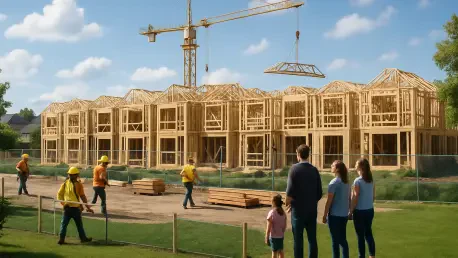

As I sit down with Luca Calarailli, a seasoned expert in construction with a deep-rooted passion for design, architecture, and cutting-edge technology, we dive into the latest trends shaping the real estate and building sectors. With his extensive experience, Luca offers a unique perspective on the surge in residential building consents, the shifting preferences in housing types, and the challenges facing non-residential projects. Our conversation explores the driving forces behind a 23.5% jump in new dwelling approvals in October, the ongoing decline in retirement village consents, and the broader implications for the construction industry as we look toward the future.
What do you think is fueling the remarkable 23.5% increase in residential building consents in October, with 3,520 new dwellings approved, and are there any standout regions or projects that capture this momentum?
I’m thrilled to see this uptick, and I believe it’s largely driven by a combination of pent-up demand and more favorable economic conditions, like lower interest rates in some areas, which are encouraging developers to move forward. The 23.5% jump from last October signals a confidence in the market that we haven’t seen in a while, especially after some sluggish years. I recently visited a development site in a growing suburban area where they’re breaking ground on a mix of standalone houses and townhouses, and the energy there was palpable—contractors buzzing, families driving by to peek at future homes. That project alone added over 100 consents to the local tally, showing how regional growth hubs are absorbing much of this surge. It’s not just numbers on a page; it’s the sound of hammers and the smell of fresh timber that really brings this trend to life for me.
Looking at the annual figures, with 35,552 new dwelling consents issued in the 12 months to October, up 6.2% year-on-year, what are the key factors behind this growth, and how does it stack up against historical peaks like the 50,252 consents in 2022?
The 6.2% annual growth reflects a steady recovery, though we’re still a far cry from the 2022 peak of 50,252 consents when the market was red-hot. I’d point to policy adjustments, like streamlined permitting processes in some regions, and a renewed focus on housing shortages as major drivers—governments and developers are finally aligning on the urgency. Back in 2022, I worked with a team on a massive urban infill project, and we were pushing consents through at lightning speed because the demand was insatiable; now, the pace feels more measured, almost cautious, as financing remains tighter. We’re also seeing more strategic planning, with developers targeting mid-range housing rather than luxury builds, which helps sustain this growth even if it’s slower than the peak. Honestly, standing on those 2022 sites felt like being in a race against time—today, it’s more like a steady marathon, and I think that’s healthier for the industry long-term.
Standalone houses and townhouses are dominating consents with 16,183 and 15,484 respectively in the October year. What’s making these housing types more popular than apartments or retirement units, and can you share a specific development that showcases this trend?
Standalone houses and townhouses are resonating with buyers because they strike a balance between space and affordability, especially for families and first-time homeowners who crave a backyard or a bit of privacy. Apartments, while efficient, often feel less personal, and retirement units are facing their own set of challenges, which we’ll get to. I recently consulted on a townhouse development in a commuter belt area, where 80 units were consented in a single phase—families were drawn to the community feel and the price point, which was about 20% lower per square foot than nearby apartments. Walking through the site, you could sense the appeal: kids playing in shared green spaces, neighbors chatting over fences. These types of homes are meeting a visceral need for connection and ownership that high-rises often can’t match, and developers are capitalizing on that sentiment with designs that feel both modern and grounded.
Retirement village units have seen a steep 30.4% decline in consents over the past year, marking three years of drops. What obstacles are contributing to this trend, and how are developers or communities adapting to this challenge?
This ongoing decline of 30.4% in retirement village consents is a real concern, and it stems from a mix of funding hurdles and shifting demographics. Many developers I’ve spoken with are finding it tough to secure financing for these projects because the return on investment is slower compared to family housing, and there’s a perception that demand isn’t as strong as it once was, with some seniors opting to age in place. I remember touring a half-finished retirement complex last year where construction stalled—only 10 out of 50 planned units were built before the funding dried up, and the empty lots were a stark reminder of the financial risk. Communities are responding by pivoting to mixed-use developments that incorporate senior-friendly features into broader housing projects, while some developers are lobbying for government incentives to offset costs. It’s a complex issue, and the silence on those abandoned sites speaks louder than any statistic about the struggle to adapt.
Non-residential consents, like those for shops and schools, have dropped by 4.7% to $8.891 billion in the year to October 2025, contrasting with residential growth. What’s behind this decline, and can you walk us through a specific case or market insight that sheds light on the bigger picture?
The 4.7% drop in non-residential consents to $8.891 billion reflects a cautious approach to commercial and institutional projects, driven by economic uncertainty and tighter budgets for public infrastructure like schools or hospitals. Unlike residential, where individual demand fuels growth, non-residential projects often rely on corporate or government funding, both of which have been scaled back as priorities shift. I recall a project for a community center that I was involved with last year—initially, it had full funding and ambitious plans, but midway through the consent process, budget cuts slashed the scope by 30%, and the vibe on the planning calls turned from excitement to frustration. Step by step, we saw delays in approvals, reduced square footage, and even cheaper materials proposed just to keep it alive. This trend ripples out, impacting local economies that depend on commercial builds for jobs, and it’s a stark contrast to the residential boom where personal investment keeps the momentum alive.
What’s your forecast for the construction industry, especially balancing residential growth with non-residential challenges, as we head into the next year?
Looking ahead, I’m cautiously optimistic about residential growth continuing into next year, especially with consents already showing a 6.2% annual uptick—we might even inch closer to the 40,000 mark if economic conditions hold steady. However, non-residential projects will likely face headwinds unless there’s a significant policy shift or infusion of public funding, and I worry about the lag in community infrastructure that could result. I envision a year where developers get creative, perhaps blending residential and small-scale commercial spaces to offset risks, much like a hybrid project I saw recently that combined condos with ground-floor retail. The challenge will be striking a balance, ensuring we don’t overbuild homes at the expense of schools or shops that communities desperately need. It’s going to be a tightrope walk, but with the right collaboration between policymakers and builders, I believe we can build a more resilient industry.