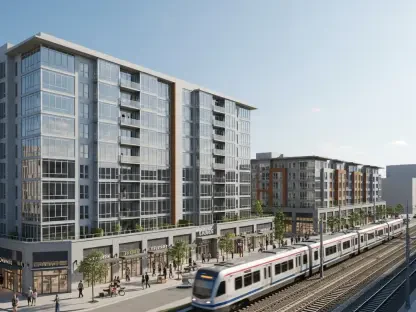

In the increasingly competitive Build-to-Rent landscape, a significant transformation is redefining what it takes to attract and secure long-term residents, shifting the focus away from a property’s physical attributes to the nuanced quality of its human interactions. Recent comprehensive industry analysis, based on over 1,500 in-person mystery-shopped viewings across the United Kingdom, reveals a compelling trend: while the aesthetic and functional quality of buildings and apartments remains exceptionally high, this is no longer the primary factor that sets top-performing operators apart. The data, gathered from over 100 distinct schemes and 38 operators, shows that the overall industry leasing benchmark score has climbed from 70% in 2022 to a more robust 78% in 2025. This improvement is not attributed to a wave of property renovations or amenity upgrades but rather to incremental yet crucial enhancements in service delivery throughout the entire leasing journey, from the initial online inquiry to the final follow-up call after a viewing. The market has matured to a point where high-quality physical assets are an expected baseline, forcing operators to find a new competitive edge.
The Human Element in Leasing Performance
The most reliable predictor of leasing success has evolved from property specifications to the consistency and quality of staff engagement before, during, and after viewings. Research uncovers a sharp contrast between operators in their follow-up processes, with proactive and personalized communication proving far more effective than passive waiting. The simple act of a thoughtful follow-up can significantly influence a prospective tenant’s decision, creating a sense of being valued that a state-of-the-art gym cannot replicate on its own. Furthermore, the perceived value for money offered during the viewing is heavily influenced by the leasing agent’s ability to articulate the benefits of the community, the management’s commitment to service, and the overall living experience. This human-centric approach is where leading operators are creating substantial distance from their competitors. By investing in training and empowering their on-site teams, they are transforming the leasing process from a transactional encounter into a relationship-building opportunity, which is proving to be the most critical factor in a saturated market.
This service-oriented model extends across various rental sectors, including Single Family Housing and Co-Living, though the Build-to-Rent and Purpose-Built Student Accommodation (PBSA) sectors continue to lead in delivering a superior viewing experience. The common thread is the recognition that today’s renter is more discerning and places a high premium on trust and reliability. This is particularly relevant in light of forthcoming legislation like the Renters’ Rights Act, which introduces stronger tenant protections and open-ended tenancies. These regulatory changes are fundamentally altering the dynamic of the property viewing. It is no longer just a tour; it is now an “offer conversation” where transparency is paramount. Prospective residents are not just evaluating the physical space but are also assessing the professionalism and integrity of the management team they will be dealing with for the foreseeable future. In this new paradigm, operators who prioritize building trust from the very first interaction are better positioned for long-term success and resident retention.
A Strategic Shift Toward Service Excellence
The industry’s evolution underscored a clear directive for operators: the path to sustained leasing velocity was paved not with more elaborate amenities but with superior human service. It was concluded that while the physical presentation of assets had reached a high, standardized benchmark averaging a 91% quality score, this very consistency rendered it a less effective differentiator. The focus, therefore, had to pivot to the intangible aspects of the resident experience, beginning with the leasing journey. Operators who recognized this shift and invested in comprehensive training for their on-site teams reaped significant rewards. The data demonstrated that consistent, empathetic, and professional engagement at every touchpoint—from the initial inquiry to post-viewing follow-up—was the definitive factor that separated the market leaders from the rest. This strategic realignment reflected a maturing market where the definition of “premium” had expanded beyond physical design to encompass the reliability and quality of human interaction, which ultimately fostered the trust necessary for long-term tenancy.