
After navigating a period of significant economic volatility characterized by unpredictable demand and rising costs, the global commercial real estate sector is entering a new phase of stabilization, supported by steady growth and more favorable interest rate environments. This apparent calm, however, belies a profound structural transformation taking place beneath the surface. The industry is being reshaped by a convergence of powerful economic, technological, and social forces that are compelling stakeholders—from global investors to local developers—to abandon reactive, short-term tactics. In their place, a new strategic imperative has emerged, demanding a holistic and integrated approach to creating and sustaining property value in an increasingly complex and interconnected market.
Economic Realities Reshaping Strategy
The Primacy of Cost and Efficiency
An unwavering focus on operational efficiency has become the cornerstone of commercial real estate strategy, driven by a persistently high-cost environment that shows little sign of abating. Borrowing costs, though stabilizing, remain significantly elevated compared to the pre-pandemic era, putting constant pressure on investment returns and development viability. This financial strain is compounded by persistent labor shortages that continue to drive up wages for both construction and building management, while the expenses associated with materials and fit-outs offer minimal relief. In this landscape, cost control has transitioned from a best practice to a fundamental necessity for survival and success. Asset owners are responding by implementing rigorous capital expenditure plans and prioritizing proactive maintenance schedules, recognizing that preventing major issues is far more cost-effective than addressing them after the fact. This disciplined approach extends to every facet of asset management, from renegotiating vendor contracts to optimizing energy consumption.
For corporate occupiers, the pressure to enhance efficiency is equally intense, leading to a comprehensive reevaluation of their real estate footprints. The widespread adoption of hybrid work models is compelling organizations to scrutinize their spatial needs with unprecedented detail, leading to optimized layouts that reduce underutilized areas and support flexible work patterns. Many are also outsourcing non-essential functions to specialized providers and aggressively deploying smart building technologies to actively monitor and reduce daily operating expenses, from lighting and HVAC to security and janitorial services. However, a critical balance must be struck. Overly aggressive cost-cutting measures risk compromising the workplace experience, which can hinder employee productivity, diminish brand appeal, and ultimately erode the long-term value and competitiveness of a property. The most successful strategies are those that find an equilibrium between fiscal prudence and strategic investment in the quality of the built environment.
The Growing Scarcity of High-Quality Assets
The commercial real estate market is grappling with a significant and worsening imbalance between the supply of and demand for modern, high-quality spaces. A combination of elevated financing costs and lingering economic uncertainty has dramatically slowed the pace of new construction, causing development pipelines to shrink to multi-decade lows, particularly within the office sectors of North America and Europe. This supply constriction is creating a fiercely competitive leasing landscape in global gateway cities like Tokyo, New York, and London. As leasing activity continues to recover, occupiers are finding themselves in a position where they must compete more aggressively for a shrinking pool of premium, amenity-rich properties. This heightened competition is exerting significant upward pressure on rents for these top-tier assets, creating a clear divide in market performance between the best buildings and the rest of the pack.
This dynamic also provides a significant advantage to slightly older but still high-quality “Class A” buildings as demand inevitably spills over from the premium segment. In this supply-constrained environment, the retrofitting and repositioning of aging buildings is emerging as a critical and financially astute strategy for investors and developers. Rather than undertaking lengthy and costly ground-up development projects, many are choosing to modernize existing structures. Retrofitting offers a faster and more sustainable path to bringing high-quality space to the market, providing a lower embodied carbon footprint and, when combined with sophisticated energy upgrades, delivering superior financial returns. This approach not only addresses the immediate shortage of premium space but also aligns with growing investor and occupier demand for sustainable and environmentally responsible properties, making it a cornerstone of forward-thinking asset management.
The Human and Digital Transformation
Experience as the New Currency of Value
A fundamental paradigm shift is occurring across the industry, firmly establishing that the intrinsic value of a commercial property is increasingly defined not by its physical attributes alone but by the quality of the experience it offers its occupants. This powerful trend cuts across all major asset classes, including office, retail, and residential properties, reflecting a profound change in user expectations. The modern tenant, employee, and consumer now demand environments that actively support their well-being, offer a high degree of personalization, and provide seamless convenience through deep digital integration. Buildings that fail to meet these evolving expectations now face a growing and significant risk of “experience-driven obsolescence,” becoming less desirable and less valuable regardless of their physical location or structural quality. This means that a prime address is no longer sufficient to guarantee success.
Features that were once considered optional perks or luxury add-ons are now critical determinants of an asset’s overall performance and long-term value. People-centric design principles, a carefully curated mix of amenities, dedicated wellness facilities, and robust digital connectivity have become table stakes for attracting and retaining high-quality tenants. Research has substantiated this trend, showing that office buildings situated in vibrant, mixed-use lifestyle districts that blend work, life, and leisure command significant rental premiums over their counterparts in more traditional, isolated business parks. This reflects a clear market preference for holistic environments. The core message is not that people are rejecting the office or physical retail, but rather that they are decisively rejecting the outdated, uninspiring, and low-quality experiences that many older, unimproved buildings continue to provide.
A Strategic Reckoning for Artificial Intelligence
After a period of widespread and enthusiastic experimentation with artificial intelligence throughout 2025, the commercial real estate industry is now confronting a significant “reality check.” Many organizations that eagerly launched numerous AI pilot programs across a wide range of functions—from portfolio analytics and energy management to predictive maintenance and risk modeling—are now struggling to demonstrate a meaningful return on their investments. This phase of “pilot fatigue” is forcing companies to move beyond superficial adoption and grapple with the deeper challenges of implementation. The core barriers to success are becoming increasingly clear and are primarily threefold: fragmented and siloed data systems that prevent the effective training of AI models, a pronounced shortage of specialized digital talent capable of managing and scaling complex AI initiatives, and weak change management practices that fail to properly integrate new technologies into established corporate workflows.
This challenging phase is pushing companies toward a critical strategic crossroads where a decision must be made. They must either make a significant and sustained commitment of capital, talent, and organizational focus to build a scalable, data-driven AI strategy, or they will be forced to abandon their fragmented and underperforming initiatives. The outcome of this decision will have profound competitive implications. A widening performance gap is predicted to emerge between the technologically advanced firms that successfully integrate AI into their core business models and the laggards who fail to move beyond the experimental stage. For the leaders, AI will become a powerful engine for unlocking new efficiencies, enhancing decision-making, and creating superior user experiences. For those left behind, the failure to harness this transformative technology will represent a significant and potentially insurmountable competitive disadvantage.
Redefining Assets and Access
The Convergence of Buildings and Energy Grids
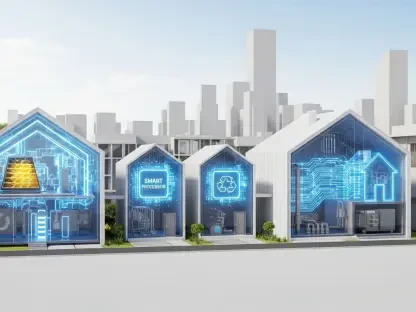
Energy management is undergoing a rapid and fundamental transition, evolving from a simple operational line item to a central and defining element of real estate strategy and competitiveness. This critical shift is being propelled by the growing and unprecedented strain on global power grids, which is caused by the soaring electricity demand from the proliferation of data centers and the broader electrification of transportation and building systems. This strain is leading to increased price volatility and growing concerns about the reliability of the power supply, making energy management a significant financial and operational risk for asset owners and occupiers. In response to these pressures, modern commercial buildings are evolving from being passive consumers of energy into active, intelligent participants in the broader power ecosystem, fundamentally changing their relationship with the grid.
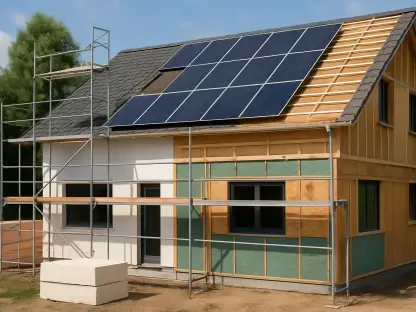
Technologies such as onsite power generation, most notably through solar panels, along with advanced battery storage systems and sophisticated, AI-driven energy management platforms, are becoming increasingly common and essential. Assets that successfully integrate these advanced energy solutions are able to do more than just mitigate their exposure to rising utility costs and the risks of grid instability. They can also unlock entirely new revenue streams, such as selling excess power back to the grid during peak demand periods or participating in demand-response programs. Consequently, a property’s energy strategy is becoming directly and inextricably linked to its overall valuation, its appeal to sophisticated tenants, and its long-term financial performance. A building that is energy-independent and efficient is now considered a more resilient and valuable asset in an increasingly uncertain world.
The Democratization of CRE Investment
The traditionally exclusive world of commercial real estate investment, long dominated by large institutions and ultra-high-net-worth individuals, is gradually becoming more accessible to a much broader audience. This “democratization” of the asset class is being driven by a powerful confluence of factors, including regulatory changes that are lowering investment thresholds, continuous technological innovation that is creating new investment vehicles, and the sustained growth of private wealth on a global scale. As more individuals accumulate capital, the demand for stable, income-generating assets like real estate is projected to rise, further accelerating this trend toward more inclusive and accessible investment opportunities. This shift is poised to fundamentally alter the composition of capital flowing into the sector and change how assets are owned and traded.
New financial structures and digital platforms are emerging to facilitate this transformative trend. The industry is seeing growing traction in the use of blockchain-based tokenization, a technology that allows for the creation of digital shares, or tokens, representing ownership in a physical asset. This process makes it possible to divide a high-value property into countless smaller, more affordable units. Alongside tokenization, fractional investment models are enabling smaller investors to acquire a direct stake in high-value commercial properties that would have previously been far beyond their reach. These innovations are not only lowering the financial barrier to entry but also increasing liquidity in what has historically been a highly illiquid market. As the global pool of private capital continues to expand, these new pathways to investment are expected to become increasingly mainstream.
A Blueprint for an Integrated Future
The defining narrative for commercial real estate in 2026 was one of profound integration. It became clear that success was no longer achievable through excellence in a single area but depended entirely on an organization’s ability to skillfully weave together the disparate forces of cost pressure, user experience, technological maturity, and energy performance into a cohesive and unified asset strategy. The most competitive firms recognized that these were not independent challenges to be solved in silos but were deeply interconnected dynamics that shaped a new market reality. For investors, this meant viewing operational efficiency, digital adoption, and human-centric design as inseparable components of value creation. For occupiers, real estate was leveraged as a strategic platform to enhance productivity and attract top talent. Ultimately, the firms that adapted decisively to this interconnected landscape were the ones that defined the future of the industry.