
A recent Ashland Planning Commission hearing presented a stark contrast in development outcomes, with one residential project sailing through approval while a major commercial redevelopment was abruptly halted. This tale of two projects, one on Scenic Drive and the other on Ashland Street, vividly illustrates the complex web of factors that determine success in modern urban planning. The discussions surrounding both proposals brought to light the recurring challenges inherent in Ashland’s growth: navigating difficult environmental terrain, meticulously applying intricate land use laws, and balancing the ambitions of developers with the feedback of public bodies and local citizens. By examining the divergent paths these two proposals took, a clearer picture emerges of the critical ingredients—from procedural diligence to community engagement—that separate a project that progresses smoothly from one that falters at the first hurdle, offering valuable lessons for future development in the city.
A Blueprint for Navigating Constraints
The residential subdivision proposed for a challenging lot along Scenic Drive faced formidable natural obstacles from the outset, serving as a textbook case of development on difficult land. The property, situated above the iconic Lithia Park, is defined by its severe topography, with some areas featuring slopes that exceed a 35% gradient, creating a precipitous drop-off. These steep grades rendered standard building practices impractical and forced the city to waive its typical requirement for street trees along the sidewalk. Furthermore, ensuring access to the proposed lots demanded a sophisticated engineering solution, involving up to ten feet of fill material and the construction of a large retaining wall to stabilize the driveway. Adding to the complexity was the presence of several large trees, making vegetation preservation a central theme of the review. The initial proposal necessitated the removal of ten trees, seven of which were designated as “significant,” but this plan was refined following crucial input from Ashland’s Tree Management Advisory Committee, which successfully argued for the preservation of two of these vital trees.
The project’s ultimate success hinged on the applicant’s strategic and flexible approach to these numerous constraints. Rather than attempting to force a standard design onto an atypical site, the developers utilized the Performance Standards Option (PSO), a specialized provision in Ashland’s code. The PSO is designed to grant developers relief from rigid standards—such as prescribed lot sizes and building setbacks—when properties present unique challenges like difficult terrain or sensitive habitats. This enabled a development plan that could work with the land’s natural features rather than against them. The applicant’s representative aptly described the property as “tricky,” underscoring the complex calculations required not only for construction but also for assessing solar and shading impacts on neighboring homes. Critically, this technical diligence was matched by proactive community engagement. A well-attended neighborhood meeting was held before the formal hearing, addressing potential concerns early on and fostering goodwill, which culminated in a complete absence of public opposition during the commission’s review, paving the way for a smooth approval.
Procedural Pitfalls and Policy Puzzles
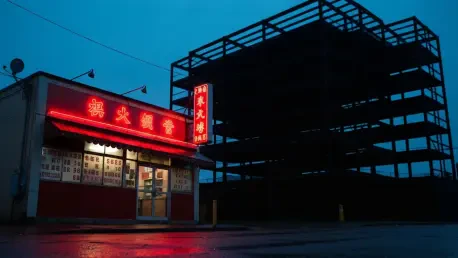
In sharp contrast to the smooth proceedings for the Scenic Drive subdivision, the proposal for a major commercial redevelopment at 2262 and 2270 Ashland Street was stopped in its tracks by a critical administrative mistake. The ambitious plan involves demolishing the existing structures—the former Allergy & Asthma Center and the long-operating Yuan Yuan Chinese restaurant—to construct two new two-story, 10,000-square-foot commercial buildings. However, the project’s merits could not even be debated due to what a city planner described as an “embarrassing” oversight. The legally required public notice for the hearing had failed to include any mention of the planned removal of six or seven trees from the site. This procedural flaw rendered the hearing illegitimate for any final action, legally compelling the Planning Commission to postpone the matter. This incident served as a stark reminder that in the world of land use planning, even the most promising projects can be derailed by a failure to adhere to the fundamental, non-negotiable requirements of public process.
When discussions did commence on a preliminary basis, they quickly uncovered a significant policy challenge that promises to complicate the project’s future. This development is the first to be evaluated under Ashland’s newly adopted Climate Friendly Area (CFA) framework along Ashland Street. The CFA is a state-mandated program designed to encourage denser, mixed-use development that promotes walking, biking, and transit, thereby reducing car dependency. The developers expressed an interest in including four apartments on the second floor of one of the buildings, but this desire ran directly into the CFA’s high-density housing mandate. Under the new rules, introducing a residential component would require a minimum of 21 apartments, likely forcing a much larger, four-story building design. To navigate this impasse, the development team is considering a potential “loophole” in a separate state law that permits the conversion of vacant commercial spaces into residential units. This strategy, which one commissioner bluntly termed a loophole, involves getting the two-story commercial project approved as planned and then later converting parts of it to housing, effectively bypassing the CFA’s density goals.
The Human Element in Urban Redevelopment
Shifting the focus from bureaucratic procedure and complex zoning policy, public commentary introduced a deeply human dimension to the Ashland Street redevelopment. The discussion was dominated by heartfelt concerns over the impending displacement of the Yuan Yuan Chinese restaurant, an establishment that has been a fixture in the community for two decades. Local residents spoke in support of the business, highlighting not only its long history but also its unique role as one of the few late-night dining options available in the area. They directly appealed to both the commission and the developer to consider a formal relocation plan or offer financial compensation to the restaurant’s owners to help them continue operating. This public feedback underscored a crucial aspect of urban development: projects are not merely about structures and land use, but also about the cultural and social fabric of a neighborhood. In response, the applicant acknowledged the restaurant’s community significance and mentioned the possibility that Yuan Yuan could lease a space in one of the new buildings, leaving the door open for a solution that honors both progress and heritage.
Lessons in Development Dynamics
The hearing’s divergent outcomes provided a clear lesson on the multifaceted nature of successful development. It demonstrated that technical proficiency in engineering and architecture, while essential, was insufficient on its own. The Scenic Drive project thrived because its proponents paired technical solutions with regulatory savvy and a genuine commitment to public dialogue, effectively de-risking the proposal before it ever reached the commission. In contrast, the Ashland Street project, despite its potential to improve the streetscape, was delayed by a preventable procedural error and now faces a complex web of policy debates and community concerns. The proceedings underscored that the path to approval in a community like Ashland is paved not just with compliant blueprints, but with meticulous administrative diligence and a sensitive understanding of a project’s impact on the existing social landscape. The real foundation for success was laid long before any physical construction began.