
The rapid transformation of the American demographic landscape has funneled an unprecedented amount of capital into the Sun Belt, where job growth and favorable climates continue to attract thousands of new residents every month. This persistent inward migration creates a complex logistical challenge for developers who must balance the immediate need for housing with the long-term requirement for high-quality asset management. RKW Residential has recently stepped into this breach, announcing a strategic expansion of its portfolio that adds 578 new units across the Southeastern United States, specifically targeting high-demand pockets in North Carolina, Alabama, and Mississippi. This growth is not merely a matter of increasing unit counts but represents a sophisticated alignment with institutional investment partners who seek specialized expertise in navigating the nuances of secondary and tertiary markets. By securing management assignments for properties that vary from suburban townhomes to upscale coastal apartments, the firm is cementing its role as a critical intermediary in the regional housing ecosystem.
Strategic Shifts in Regional Asset Management
The Rise of Build-to-Rent Communities
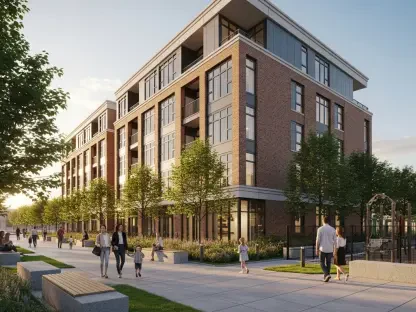
The traditional American dream of homeownership is undergoing a fundamental shift as economic pressures and lifestyle preferences drive a surge in demand for the build-to-rent sector. In Pineville, North Carolina, RKW has taken over the management of ABODE at Miller Farm, a community of 98 townhomes designed specifically for those who crave the spatial benefits of a single-family house without the associated burdens of a mortgage or exterior maintenance. These three-bedroom layouts offer a middle ground for young families and transitioning professionals who require more room than a standard apartment can provide but prefer the flexibility of a lease. Located on the periphery of the Charlotte metropolitan area, this property addresses a critical gap in the market by offering suburban amenities like pickleball courts and resort-style pools. The management strategy here focuses on creating a seamless residential experience that mimics the stability of a neighborhood while utilizing professional property services to ensure the long-term appreciation of the physical asset.
Managing a build-to-rent community requires a different operational mindset compared to traditional high-rise apartments, as the physical footprint is more spread out and the expectations for “home-like” service are significantly higher. RKW’s approach involves integrating private maintenance services and curated lifestyle programming that fosters a sense of belonging among residents who might otherwise feel transient in a rental environment. This model is particularly effective in high-growth corridors where housing affordability has become a hurdle, allowing residents to enjoy a high standard of living in a desirable zip code. By proving the viability of this model at Miller Farm, the firm demonstrates its ability to scale operations according to specific architectural formats. The success of these projects often hinges on the ability to maintain a pristine aesthetic and high resident retention, which in turn provides the investment partners with a predictable and stable cash flow in a volatile economic climate.
Penetrating Secondary and Tertiary Markets
While major metropolitan hubs often receive the lion’s share of media attention, RKW is finding significant opportunities in secondary markets where multifamily fundamentals remain exceptionally strong and competition is slightly less saturated. The firm has strengthened its existing relationship with Quadrant Communities by assuming management of two prominent properties under “The Edison” brand, located in Foley, Alabama, and Oxford, Mississippi. The Edison at the Shores in Foley caters to the growing demand for upscale living near the Gulf Coast, a region that has seen a consistent influx of retirees and remote workers seeking a coastal lifestyle. Meanwhile, The Edison at Colonnade Crossing in Oxford serves a diverse demographic ranging from university-affiliated professionals to local service providers. These 240-unit developments are strategically placed to capture the “spillover” growth from larger cities, providing modern interiors and comprehensive amenity packages that were previously only available in major urban centers.
Expanding into these specific geographies allows a management firm to establish a dominant local presence and leverage regional economies of scale in staffing and vendor relationships. In markets like Oxford or Foley, the quality of property management can be a significant differentiator, as the local supply of high-end rental housing is often limited compared to larger cities. RKW utilizes data-driven management techniques to optimize leasing velocity, ensuring that these assets reach stabilization quickly and maintain high occupancy rates even as new supply enters the market. The ability to navigate the unique cultural and economic landscapes of these smaller towns is a hallmark of a mature operator. By focusing on asset value enhancement through modern interior upgrades and high-touch resident engagement, the firm ensures that these properties remain competitive and desirable. This geographic diversification acts as a hedge against localized economic downturns, providing a more balanced and resilient portfolio for the firm and its institutional partners.
Operational Excellence and Performance Metrics
Data-Driven Management and Resident Satisfaction
The core of any successful expansion in the multifamily sector is the ability to maintain consistent service quality across a geographically dispersed portfolio of properties. RKW has positioned itself as a leader in this regard, as evidenced by its high industry rankings and its top-five position in the J Turner Research ORA Power Ranking, a metric that evaluates online reputation and resident feedback. This focus on resident satisfaction is not just a marketing tool; it is a primary driver of financial performance, as higher satisfaction scores typically correlate with lower turnover rates and reduced marketing costs. By implementing a performance-driven strategy that prioritizes operational consistency, the firm ensures that every new property added to the portfolio meets a high standard of excellence from day one. This involves rigorous training for on-site staff and the deployment of advanced property management software that allows for real-time monitoring of maintenance requests, leasing leads, and financial health.
Furthermore, the firm utilizes sophisticated data analytics to understand market trends and resident preferences, allowing for more informed decision-making regarding capital improvements and amenity offerings. In a competitive landscape like the Sun Belt, where new developments are constantly coming online, the ability to pivot strategies based on real-time data is a significant advantage. This might involve adjusting rental rates to match local demand or introducing new technology-driven amenities, such as smart home features or high-speed fiber internet, to attract tech-savvy renters. The confidence shown by investment partners like Edgewater Ventures and Quadrant Communities is a direct result of RKW’s track record in delivering measurable results. By stabilizing new developments and optimizing the resident experience, the firm effectively mitigates the risks associated with rapid expansion. This commitment to transparency and performance ensures that the firm remains a preferred partner for institutional investors looking to deploy capital in the Southeast.
Future Outlook for Sun Belt Portfolio Growth
As the Southeast continues to outpace other regions in terms of economic development and population growth, the demand for professional third-party management will only intensify. RKW’s recent acquisitions in North Carolina, Alabama, and Mississippi are likely just the beginning of a larger trend toward institutionalizing the rental market in these states. The move toward specialized housing types, such as the build-to-rent townhomes in Pineville, suggests that future growth will be defined by a diversity of product types rather than a one-size-fits-all approach. Investors are increasingly looking for operators who can manage the complexities of different asset classes while maintaining a cohesive brand identity and high level of service. The current momentum suggests that the firm will continue to seek out strategic partnerships that allow for rapid scaling in high-barrier-to-entry submarkets. This forward-looking approach ensures that the firm is well-positioned to capitalize on the ongoing demographic shifts that are reshaping the American real estate market.
In the coming years, the success of multifamily operators in the Sun Belt was determined by their ability to adapt to changing resident needs and evolving economic conditions. RKW Residential successfully demonstrated that a focus on operational consistency, data-driven decision-making, and resident engagement could yield significant dividends in even the most competitive environments. For stakeholders and industry observers, the takeaway is clear: the future of property management lies in the ability to combine local market expertise with institutional-grade reporting and technology. To maintain this trajectory, firms should prioritize the integration of sustainable practices and advanced property tech to further enhance asset value. Looking ahead, the focus must remain on fostering deep relationships with investment partners and residents alike, ensuring that the growth of the portfolio is matched by a commitment to quality and community building that transcends simple unit counts.