
In a decisive move that signals a potential shift in Vancouver’s long-term urban development strategy, the city council has unanimously approved a mixed-use residential and industrial tower on land previously safeguarded exclusively for industrial purposes. This approval, which directly overrode the formal recommendations of the city’s professional planning staff, has ignited a fierce debate about the delicate balance between addressing the pressing housing crisis and preserving the finite industrial land base essential for a diverse and resilient local economy. The decision has been characterized by planning experts as a significant departure from decades of established policy, raising critical questions about the precedent it sets for the future of land use in a city grappling with competing priorities. The council’s action highlights a growing tension between political will, driven by market pressures and the demand for housing, and the data-driven advice of urban planning professionals tasked with ensuring the city’s sustainable growth.
A Controversial Approval and its Backstory
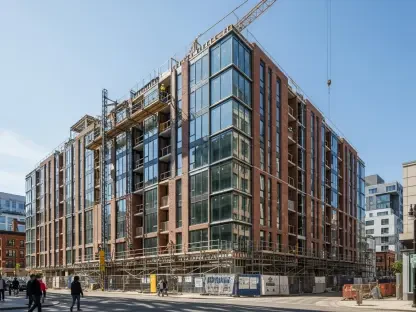
The project at the heart of this decision is a 25-story tower proposed by Strand Development, slated for 320 West 2nd Avenue within the Mount Pleasant industrial zone. The building is designed with a hybrid model, featuring 200 market rental homes in its upper floors while reserving the lower three levels for industrial use. The council’s unanimous vote to approve the project was particularly noteworthy, as it was made despite some councillors publicly stating they “struggled with the decision.” This move did not happen in a vacuum; it is seen by many observers as the direct consequence of a directive issued the previous year. That initiative, championed by ABC Vancouver Mayor Ken Sim, instructed city staff to begin investigating the feasibility of permitting residential development in certain industrial areas. For some local planning experts, this latest approval was a “disappointing validation” of fears that emerged at that time, suggesting that the city’s foundational policies protecting industrial land were being deliberately undermined. The council’s action is described as a “rare decision” precisely because it represents a direct contradiction of the explicit recommendations put forth by its own expert staff.
The journey of the developer, Strand Development, provides essential context for understanding the pressures that led to this contentious outcome. The company, led by CEO Mike Mackay, had initially secured a building permit in 2021 for a conventional industrial office building on the property and had even commenced excavation work in 2023. However, the project was derailed by the dramatic shift in the post-COVID-19 economic landscape, which created a “struggling office market.” Mackay described the profound lack of commercial interest in the planned office space as “absolutely crickets,” a stark reality that compelled the company to “go back to the drawing board” and devise a new, more viable plan. In 2024, Strand proposed the innovative mixed-use concept, arguing for its viability by highlighting the site’s strategic location near a rapid transit station and its position across from existing residential towers. Voicing frustration with the municipal process, Mackay noted a perception of bureaucratic inertia, which ultimately led the developer to seek a direct hearing before the city council to “let the cards fall where they may” and receive a definitive political decision.
The Clash Between Policy and Politics
The professional city planning staff presented a case of firm opposition, rooted in long-standing municipal policy designed to protect a finite and critical resource. Their formal recommendation against the project was unequivocal, based on several key arguments. First, the proposal was a clear contravention of the site’s existing zoning, which strictly prohibits residential use. More fundamentally, staff argued that “the inclusion of housing is incompatible with the goal of preserving industrial and employment land in the city.” To underscore this point, their report highlighted a critical imbalance in Vancouver’s land distribution: approximately 90% of the city’s land is zoned for residential use, while a mere 6% is designated for industrial purposes. This stark statistic formed the basis of their argument for the strategic importance of protecting the small fraction of land that supports essential urban industries and provides vital employment. Instead of a simple approval, the staff presented the council with three carefully considered alternative options: their preferred course was to refer the application back for consideration within a broader, ongoing study of the city’s five industrial areas; the second was an outright rejection; and the third was an approval conditional upon a formal re-designation of the land by the Metro Vancouver board, a process involving regional oversight.
Rather than selecting any of the three paths laid out by its professional staff, the council, led by a motion from ABC Councillor Sarah Kirby-Yung, opted to forge a fourth, unconventional option. This involved invoking a little-known and seldom-used provision known as the “municipal flexibility clause.” This clause is particularly significant because it empowers the council to unilaterally change the designated use of industrial properties of a certain size without requiring the formal approval of the Metro Vancouver regional board. The rarity of this maneuver was underscored by Kirby-Yung herself, who commented that she could not recall the clause being utilized during her two terms on council. She defended the decision by framing it as the council exercising its “discretion in a very unique and exceptional circumstance for this one specific project.” To mitigate fears that this would open the floodgates for similar applications, Kirby-Yung’s amendment included specific language directing staff “to not recommend further use of the municipal flexibility clause” for such rezonings until the comprehensive study on the Mount Pleasant industrial area is completed, an explicit attempt to signal that this approval was an exception, not the new rule.
Broader Implications and Expert Concerns
Despite the council’s efforts to frame the decision as a contained, one-off exception, the move was met with “alarm and bewilderment” from seasoned urban planning professionals who fear its long-term consequences. Christina DeMarco, a former planner with both the City of Vancouver and Metro Vancouver, delivered a sharp critique, labeling the council’s action as “reckless and short-sighted.” Her analysis identified several major risks stemming from the decision. She asserted that the council had effectively dismantled a policy for protecting industrial land that had been a cornerstone of the city’s planning framework for three decades. Furthermore, she argued that the approval “will send out the signal that industrial land is up for grabs for residential developers,” a message that could trigger a wave of land speculation. Such activity would likely drive up property values in industrial zones, making it prohibitively expensive for genuine industrial businesses—which are essential for a “well-functioning city”—to operate, thereby displacing them. DeMarco also cautioned that while Strand’s project includes industrial space, the types of activities possible in the lower levels of a residential tower would be “severely limited” due to inherent conflicts with the homes above, such as noise, operating hours, and emissions. The council’s action was ultimately characterized as a “risky experiment” that could set off a “chain reaction of more rezonings to come,” regardless of the stated intention to contain the precedent.