
A transformative urban development initiative is set to reshape a key section of downtown Vancouver’s Northeast False Creek, delivering a substantial number of non-market homes and essential community services through a landmark public-private partnership. This ambitious project addresses the city’s critical need for affordable housing by creating 673 new social housing units across three new buildings, which will also integrate a modern firehall and a new childcare center. The initiative represents a multi-faceted approach to urban renewal, creating a vibrant and supportive neighborhood designed to serve hundreds of new and existing residents for decades to come.
A New Community Hub Emerges
The Centerpiece at 95 Nelson Street
The cornerstone of this comprehensive development is a 28-story, mixed-use tower located at 95 Nelson Street, a project that embodies the initiative’s core goals of integrating housing with vital community services. This flagship building will contain 283 social housing units, managed under a sophisticated mixed-income model designed to foster a diverse and inclusive community. A significant portion of these units will have rents set at subsidized rates for households with incomes at or below the BC Housing threshold, while other units will be offered at below-market rates, and a smaller number will be available at the shelter rate. Demonstrating a strong commitment to accommodating families in the urban core, a notoriously difficult market, nearly 40% of the homes—a total of 117 units—will feature multiple bedrooms. The non-profit housing operator for this building will be the Brightside Community Homes Foundation, an organization renowned for its long history of providing safe and affordable homes for low-income seniors, families, and individuals with disabilities.
The operational strategy for the 95 Nelson Street tower underscores a commitment to long-term affordability and community stability in a rapidly gentrifying downtown landscape. The stewardship of the Brightside Community Homes Foundation ensures that the housing will be managed with a focus on resident well-being rather than profit. The foundation’s CEO, William Azaroff, who recently declared his intention to seek the OneCity Vancouver mayoral nomination for the 2026 municipal election, lauded the project as a monumental achievement for bringing genuinely affordable homes to the neighborhood. By blending different rental tiers within a single building, the project aims to create a socially integrated environment, avoiding the stigmatization often associated with traditional social housing projects. This mixed-income approach not only provides a sustainable financial model for the building’s operation but also promotes a more resilient and diverse community, reflecting the broader social fabric of Vancouver itself and setting a precedent for future urban housing developments.
Integrating Essential Services and Culture
Beyond its significant housing component, the tower at 95 Nelson Street is conceived as a fully integrated community asset, designed to serve the broader public and enrich the cultural landscape of the neighborhood. A major public service component is the inclusion of a new, expanded facility for Firehall 8, which will replace the current small and outdated station located at 895 Hamilton Street. This modern facility will feature four large fire truck bays fronting Beatty Street, along with state-of-the-art training areas for Vancouver Fire Rescue Services personnel. Its strategic location and enhanced capacity will significantly improve emergency response times and public safety in the dense, rapidly growing downtown core. This integration of critical public infrastructure within a residential development showcases an innovative approach to land use, maximizing the value of a prime urban site to meet multiple civic priorities simultaneously and efficiently, ensuring the new neighborhood is not only well-housed but also well-protected.
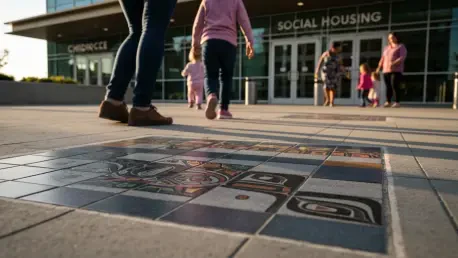
Further cementing its role as a community hub, the development incorporates a much-needed childcare center with capacity for 44 children, which will be operated by the established Vancouver Society of Children’s Centres. This facility will provide essential support for families living in the new building and the surrounding area. In a meaningful gesture of cultural recognition and reconciliation, the project also includes a significant artistic component. The City of Vancouver has put out a call for artists from the host Musqueam, Squamish, and Tsleil-Waututh First Nations to create unique designs for the building’s three primary entrances. Selected artists will design distinct ground-surface artworks for the social housing entrance, the firehall entrance, and the childcare entrance. The final designs will be produced as durable graphic tiles and permanently installed, weaving Indigenous art and storytelling into the daily life of the building. This thoughtful integration of art and culture ensures that the new development honors the history and heritage of the land upon which it is built.
Expanding the Housing Portfolio
More Homes Across Two Additional Sites
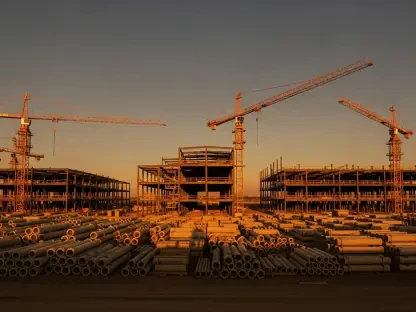
Complementing the landmark tower at 95 Nelson Street are two other significant housing projects that broaden the scope and impact of this ambitious initiative. Construction is also underway on a 29-story tower at 1050 Expo Boulevard, strategically situated on a triangular former surface parking lot near the Cambie Street Bridge. This tower will be the largest of the three in terms of housing capacity, providing 299 social housing units and making a substantial dent in the city’s affordable housing deficit. The development of this site also includes a thoughtful reconfiguration of the adjacent road network, replacing a segment of the median on Pacific and Expo Boulevards with a new traffic-signal-controlled intersection. This infrastructure upgrade will improve traffic flow and pedestrian safety in the area, demonstrating how the project’s benefits extend beyond its property lines to enhance the surrounding public realm. Designed by Public Architecture, this building adds a distinct architectural presence to the evolving False Creek skyline.
The third component of this comprehensive housing strategy is a smaller, seven-story mid-rise building located at 450 Pacific Street. This project will add an additional 91 social housing units to the neighborhood, offering a different scale and living environment compared to the two high-rise towers. Its more modest height is designed to create a sensitive transition to the surrounding urban fabric. Like the Expo Boulevard tower, this building is also a creation of Public Architecture, ensuring a cohesive design language across the new developments. Together, these three distinct sites—the mixed-use hub at 95 Nelson, the large residential tower at 1050 Expo, and the intimate mid-rise at 450 Pacific—represent a holistic and multi-pronged approach to urban development. They collectively deliver a major infusion of non-market housing into one of Vancouver’s most desirable and expensive areas, creating a diverse portfolio of housing options to meet a wide range of community needs.
Dedicated Operators for Diverse Communities
A key element of this initiative’s success is the thoughtful pairing of each new building with a dedicated non-profit operator, ensuring that the housing is managed with expertise and tailored to the specific needs of its resident communities. While Brightside will manage the flagship tower at 95 Nelson, the 299-unit building at 1050 Expo Boulevard will be operated by the B.C. Indigenous Housing Society. This partnership is crucial for providing culturally appropriate and supportive housing for Indigenous individuals and families, a community that is disproportionately affected by the housing crisis in Vancouver. The society’s specialized knowledge and community-centered approach will help create a safe, welcoming, and culturally rich environment where residents can thrive. By dedicating the largest of the three buildings to this purpose, the project makes a powerful statement about the city’s commitment to reconciliation and to addressing the unique housing challenges faced by the urban Indigenous population.
Similarly, the 91-unit mid-rise at 450 Pacific Street will be operated by the Entre Nous Femmes Housing Society, an organization that focuses primarily on serving low-income and vulnerable women and their families. This society provides not just affordable housing but also a network of support and resources aimed at empowering its residents and fostering a safe, stable community. By entrusting the management of this building to an organization with deep expertise in supporting women and children, the project ensures that this housing will become a true sanctuary for those fleeing difficult circumstances or struggling with economic instability. This specialized approach, applied across all three sites, moves beyond a simple “one-size-fits-all” model of social housing. It instead fosters the creation of distinct, supportive micro-communities, each managed by an operator equipped to understand and respond to the unique needs of its residents, thereby maximizing the positive social impact of the development.
The Foundation of the Project
A Landmark Public-Private Agreement
This entire multi-faceted initiative was made possible not through direct public land purchase, but through a comprehensive and innovative land transfer agreement between the City of Vancouver and local developer Concord Pacific. The developer made two critical contributions that served as the financial bedrock for the projects. The first was a direct cash payment of $110 million to the City, a sum that has been specifically allocated to help fund the planned demolition of the nearby Dunsmuir and Georgia viaducts and the creation of a new, more integrated street network. This strategic allocation links the housing development to a much larger, transformative city-building project. The second, and equally significant, contribution was Concord Pacific’s decision to waive the City’s option price on the three development sites. This in-kind contribution was valued at an impressive $121 million, effectively transferring prime downtown land to the City for public benefit at no cost. This landmark partnership allowed the city to unlock immense value and dedicate it entirely to public good.
This public-private partnership represents a sophisticated model for urban development, leveraging private sector resources to achieve major public policy goals. According to Matt Meehan, Senior Vice-President of Concord Pacific, the agreement is the culmination of a long-standing collaborative relationship with the city. He noted that public realms, including parks, community facilities, and these new housing sites, constitute half of the over 200-acre Concord Pacific Place lands. He expressed the developer’s satisfaction that their cash contribution would directly facilitate the viaduct removal, a crucial step in completing the final neighborhood of the original Expo lands master plan. This perspective highlights the mutual benefits of the arrangement: the city gains land and funding for critical housing and infrastructure, while the developer sees the completion of a master-planned community it began decades ago, enhancing the value and livability of the entire area for all residents.
Collaborative Funding and Project Timeline
While the land was secured through the partnership with Concord Pacific, the construction of the buildings is a collaborative financial effort involving multiple levels of government and non-profit organizations. The combined value of the financing for all three projects totals $196 million, sourced from a blend of direct government funding, low-cost loans, and various municipal contributions. The 95 Nelson Street project serves as a clear example of this multi-layered funding model. The City of Vancouver is contributing $47.2 million through a combination of direct funding, waivers of development fees, and the in-kind value of the land. Concurrently, the provincial government, through its agency BC Housing, is providing a substantial $44.8 million in capital funding. Furthermore, the province has committed to an ongoing annual operating subsidy of $5 million for the building, ensuring its long-term financial viability and affordability for residents for years to come.
This collaborative approach has earned praise from civic leaders, with Vancouver Mayor Ken Sim lauding the project as a “big win for Vancouverites.” He emphasized that the delivery of hundreds of non-market homes, along with essential childcare spaces and a modern firehall, was a direct result of effective and creative partnerships between the city, the province, the private sector, and dedicated non-profit operators. With construction now officially underway at all three sites, the city has a clear timeline for the delivery of these vital community assets. The mid-rise building at 450 Pacific Street is scheduled for completion in 2028. The two larger high-rise towers, located at 95 Nelson Street and 1050 Expo Boulevard, are projected to be finished and ready for occupancy in 2029. This timeline marks a concrete path forward, transforming a vision of a more inclusive downtown into a tangible reality within the decade.
A New Model for Urban Growth
The comprehensive development in Northeast False Creek stood as a testament to what could be achieved through strategic collaboration. The initiative successfully addressed several of the city’s most pressing challenges simultaneously by creating a multifaceted solution. It unlocked land in a high-value area to deliver 673 urgently needed social housing units, a feat accomplished by leveraging a private developer’s contribution to fund another major civic infrastructure project—the removal of aging viaducts. This intricate financial and logistical arrangement provided a powerful template for future urban renewal projects.
The projects were designed not merely as residential buildings but as integrated community hubs that fostered a holistic vision for the neighborhood. The inclusion of a new Firehall 8, a 44-space childcare center, and a profound commitment to incorporating Indigenous art demonstrated a forward-thinking approach that prioritized public safety, family services, and cultural recognition alongside housing affordability. The model, driven by a robust partnership between the City of Vancouver, the Province of British Columbia, a private developer, and a network of specialized non-profit operators, ultimately served as a significant and replicable example of how to tackle complex urban challenges in a growing, modern city.