
The highly anticipated 2025 boom in the United States homebuilding industry has given way to a stark and challenging reality, as a convergence of persistent high interest rates, disruptive federal policy shifts, and unfulfilled promises of deregulation has cast a significant chill over the market. This unexpected downturn reverses the optimistic momentum seen at the close of the previous year, forcing builders to navigate an environment of dampened buyer demand, escalating operational costs, and pervasive uncertainty. While niche segments such as townhouses and custom-built homes are demonstrating some resilience, the broader sector is contending with a significant slowdown that is reshaping business strategies and tempering expectations for the foreseeable future.
The Great Reversal from Boom to Bust
The overarching trend for 2025 is a sharp contraction in new construction, a development that directly contradicts the industry’s buoyant forecasts. The National Association of Home Builders (NAHB) now projects a substantial 7 percent decline in single-family construction starts compared to the previous year, a slump that has also hit the rental market hard, with starts for new homes built specifically for rent plummeting by 16 percent mid-year. This downturn has compelled builders to adopt more aggressive sales tactics, frequently offering a range of incentives and perks to entice hesitant buyers. Reflecting this challenging landscape, a closely watched industry sentiment survey has remained consistently in negative territory throughout the year. Robert Dietz, chief economist at the NAHB, confirmed that the industry’s initial expectations for 2025 were overly optimistic and failed to materialize as the year unfolded, highlighting the deep chasm between early-year hopes and the current market reality.
This disappointment is particularly acute when measured against the backdrop of 2024, which concluded on a relatively high note with 1.01 million single-family starts, representing a healthy 6.5 percent increase from 2023. A wave of homes that began construction during the post-pandemic period finally reached completion, boosting inventory for both buyers and renters. This positive momentum, combined with the return of President Donald Trump to the White House, fueled a widespread belief that 2025 would usher in an era of accelerated growth. Builders had pinned their hopes on the new administration rolling back environmental and permitting regulations, such as a key rule restricting construction near certain wetlands, which they argue significantly slow down development. They also anticipated that broader economic growth and cooling inflation would prompt the Federal Reserve to continue lowering its benchmark interest rate, thereby reducing mortgage rates for consumers and invigorating demand.
Economic Realities and Policy Headwinds
While some of those economic hopes partially materialized, with the U.S. economy experiencing its fastest growth in two years during the third quarter, the most critical factors for the housing market failed to align. The anticipated deregulation has not yet occurred, and the Federal Reserve’s monetary policy has proven to be more conservative than the industry had hoped. Despite three small cuts to its benchmark rate in 2025, the central bank remains divided on how to address stubborn inflation and a softening labor market, with only one further cut tentatively planned for the following year. This cautious approach has offered little significant relief to prospective homebuyers. As of last week, the average 30-year fixed mortgage rate stood at 6.18 percent. Although this marks an improvement from the 6.85 percent rate recorded at the same time last year, it remains a formidable barrier for a large segment of potential buyers, keeping them on the sidelines of the market.
Adding to the financial pressure of high borrowing costs, the administration’s policies on trade and immigration have introduced significant operational challenges for builders. According to NAHB surveys, a clear majority of builders—60 percent—report that their suppliers have either already increased prices for materials or plan to do so, citing new tariffs as the primary reason. Greg Hardwick, president of an Orlando-area contracting firm, noted that suppliers often use the “anticipation” of tariffs to justify price hikes, even when they cannot directly tie the increase to a specific policy, adding another layer of cost uncertainty. Simultaneously, a nationwide crackdown on immigration has severely constrained the labor supply. With foreign-born workers comprising approximately one-third of the construction workforce, mass detentions and deportations have created acute labor shortages. Hardwick described how these policies have had a direct ripple effect on his projects, leading to delays when crews were unable to show up because they were too short-staffed.
Navigating the New Market Dynamics
For many builders, the primary obstacle remains the prohibitive cost of financing. Jeff Jacob, president of a custom home builder near Denver, identified interest rates as the single most critical factor influencing the market, with construction loans for his projects now hovering above 7 percent. This financial pressure is fundamentally reshaping his business model. He has observed clients putting projects on hold and has ceased building speculative homes—those without a buyer already secured—due to weak demand. A notable shift in his client base reveals that about half of his current buyers are purchasing homes with all cash, indicating that the active market is increasingly dominated by wealthier individuals who are less sensitive to interest rate fluctuations. This trend suggests a growing affordability gap that sidelines conventional buyers who rely on financing, further concentrating market activity at the higher end.
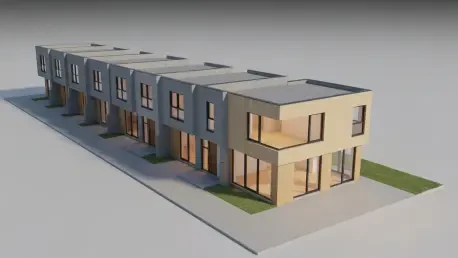
Despite the widespread slowdown, there were a few bright spots in the market. The construction of townhouses, for instance, showed notable growth, accounting for over 18 percent of all single-family starts in the second quarter as they offered a more affordable entry point for first-time buyers. Additionally, the custom home building sector, where a home is built on land already owned by the client, saw a 4 percent increase, likely driven by affluent customers whose wealth insulated them from high borrowing costs. As the industry looked toward the new year, projections offered a glimmer of hope for a modest recovery, with some forecasts suggesting a slight increase in existing-home sales and a rise in total mortgage origination volume. In certain markets like Nashville, the recent surge in new construction already provided some relief, with builders offering substantial incentives, such as temporary mortgage rate buydowns, to move inventory. This created a unique dynamic where new homes were sometimes cheaper than existing ones, helping to draw cautious buyers back. However, a fundamental lack of confidence in the economy’s direction continued to give many potential buyers pause.