
The resilience of the United Kingdom’s property sector is being tested as geopolitical instability and shifting monetary policies redefine the boundaries of traditional investment strategies within the global landscape. Throughout 2026, the industry has encountered a series of external pressures that have necessitated what experts describe as an enforced re-set of market expectations. While the previous years were characterized by rapid fluctuations, the current environment demands a more calculated approach to asset acquisition and development. Geopolitical tensions, particularly those emanating from the Middle East, continue to cast a shadow over supply chains, impacting the movement of essential commodities. This volatility has not merely disrupted logistics but has fundamentally altered the cost-benefit analysis for major infrastructure projects across the country. Stakeholders are now prioritizing stability over speculative growth, seeking to insulate their portfolios from the unpredictable nature of international conflicts and the subsequent economic ripples.
Economic Obstacles: Rising Costs and Monetary Policy
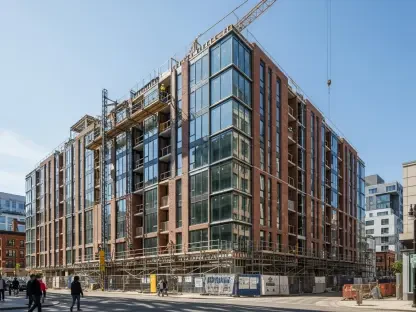
Construction activity across major urban centers like Manchester and Birmingham is currently grappling with the escalating prices of energy-intensive materials, including steel and cement. These essential components have seen their production costs spike as a direct consequence of rising oil prices, which remain sensitive to international supply disruptions. For developers, this means that margins are being squeezed to historical lows, often forcing high-profile residential and commercial projects into an indefinite holding pattern. The inability to predict terminal costs with accuracy has led to a cautious atmosphere where many firms are opting to delay groundbreaking ceremonies until pricing stabilizes. This trend is particularly evident in the high-end residential sector, where bespoke finishes and complex architectural requirements leave little room for budgetary overruns. Consequently, the pipeline of new inventory is beginning to contract, potentially setting the stage for future supply shortages if these inflationary pressures persist.
Central banks are playing a pivotal role in shaping the current trajectory of the market as they weigh the necessity of curbing persistent inflation against the risk of stifling economic growth. Current indicators suggest that interest rates may remain at these elevated levels for a longer duration than many analysts had initially forecasted at the start of the year. This higher-for-longer environment has naturally bred a sense of risk aversion among institutional investors, who are now more selective about where they deploy their capital. The cost of financing has become a primary hurdle, making debt-heavy acquisitions significantly less attractive compared to the low-rate era of the early 2020s. As a result, there is a visible, albeit temporary, slowdown in the speed of capital deployment as the market waits for more definitive signals from monetary authorities. This period of stagnation is serving as a filter, separating highly leveraged entities from those with robust balance sheets and sustainable long-term strategies.
Market Durability: Transaction Values and Global Investment
Despite the prevailing headwinds, the underlying strength of the British real estate sector was clearly demonstrated by the performance metrics recorded during the previous calendar year. In 2025, even as the total number of individual transactions remained somewhat stagnant, the cumulative value of global deals rose by a significant 12 percent. This discrepancy indicates that while there are fewer buyers in the market, those who are active are focusing on high-value, high-quality assets that offer long-term security. The final quarter of 2025 saw a double-digit year-on-year increase in commercial trading within the UK, suggesting that the market possesses a remarkable capacity for recovery. This momentum has carried over into 2026, with professional investors increasingly looking past immediate volatility to identify undervalued opportunities in the industrial and logistics sectors. The focus has shifted from high-volume trading to strategic accumulation of prime real estate that can withstand economic cycles.
London continued to serve as a primary magnet for international capital, maintaining its status as a safe haven for investors seeking to diversify their holdings away from more volatile regions. The city’s legal framework, transparency, and liquid market provided a level of security that few other global metropolises could match in the current climate. Forward-thinking firms responded to these shifts by integrating advanced technology, such as artificial intelligence, to streamline data collection and enhance the accuracy of financial reporting. By utilizing machine learning algorithms, property managers predicted maintenance needs and optimized energy consumption to meet modern standards. The implementation of formal in-office policies by major corporate entities also drove a renewed demand for high-quality spaces that supported hybrid working models. Ultimately, success in this era was found through operational flexibility and the adoption of green building standards. These strategic moves transformed systemic challenges into catalysts for sustainable value creation.