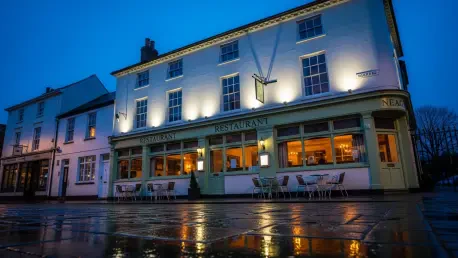

The delicate challenge of maintaining commercial vibrancy while safeguarding architectural heritage presents a constant dilemma for businesses operating within historically significant downtown areas, where every renovation must be carefully weighed against its potential impact on a location’s unique character. In Andover, a prominent local business has stepped forward with a detailed proposal that seeks to navigate this very issue, aiming to refresh its public-facing identity through a series of meticulous repairs and sensitive upgrades to its historically designated Grade II-listed building. The permit application submitted by Tycoon, a Chinese restaurant located at 90 High Street, outlines a project focused not on reinvention but on revitalization, providing a compelling case study in how modern enterprises can invest in the long-term stewardship of the historic buildings they occupy. This initiative, filed with the Test Valley Borough Council, emphasizes preservation over redevelopment, proposing a suite of enhancements designed to address structural wear while respecting the building’s integral role within the Andover Historic District and its storied streetscape, thereby reinforcing its commitment to the community it serves.
A Blueprint for Preservation
Adhering to Heritage and Policy
The permit application submitted for the Tycoon restaurant is deeply rooted in a philosophy of conservation, meticulously aligning its objectives with the stringent requirements governing Grade II-listed buildings and properties within a designated historic district. Central to the proposal is the explicit commitment that all planned work is designed to preserve and enhance the building’s historical and architectural integrity, rather than alter its fundamental character or use. The heritage statement underscores that the project’s scope is confined to essential maintenance and cosmetic improvements, ensuring the external façades remain structurally untouched and their visual contribution to the historic street scene is upheld. This approach is not merely a matter of preference but a strategic adherence to the policies outlined in the 2016 Test Valley Borough Local Plan, which prioritizes the protection of the area’s unique heritage assets. By framing the project as a necessary upkeep initiative, the application seeks to demonstrate that commercial viability and historical preservation are not mutually exclusive but can coexist harmoniously when undertaken with sensitivity and respect for the established guidelines that protect such important landmarks.
The proposal carefully articulates that the planned interventions will have no detrimental effect on the surrounding historic environment, including adjacent listed properties, reinforcing a consensus that thoughtful maintenance is a critical component of responsible stewardship. This commitment is crucial for gaining approval from the Test Valley Borough Council, which is tasked with ensuring that any development within the historic district contributes positively to its overall character. The application goes to great lengths to provide assurances that the project will retain the building’s existing footprint and visual profile, thereby avoiding any disruption to the cohesive architectural narrative of Andover’s High Street. By championing a repair-and-refresh strategy, Tycoon positions itself as a guardian of a piece of local history, investing in its long-term durability and aesthetic appeal. The detailed documentation, including the planning and heritage statement, serves as a comprehensive argument that the proposed facelift is not only beneficial for the business but also serves the public interest by securing the future of a significant local building for generations to come.
Detailing the Proposed Renovations
The specific work detailed in the listed building consent application focuses on the front and side elevations of the property, targeting areas that have succumbed to natural wear and tear over time. A significant portion of the project involves the careful replacement of decayed timber components, including soffits, fascia boards, and bargeboards, which are essential for both the building’s structural integrity and its traditional appearance. This extends to the second-floor windows, where two timber casement units are slated for replacement with new, historically appropriate counterparts. The existing storefront, a key feature of the building’s public-facing identity, will be retained but is scheduled for comprehensive repair and redecoration. To ensure a seamless visual transition and respect the established aesthetic, the restaurant will maintain its current white and pale green color scheme, a palette that has become familiar to local residents and visitors. This careful attention to detail ensures that the building’s character remains consistent, even as it undergoes necessary structural improvements that will extend its lifespan and enhance its overall condition.
Beyond the structural and cosmetic timber work, the application addresses several functional and aesthetic elements of the building’s exterior. The plan includes replacing outdated or inefficient rainwater goods, such as gutters and downspouts, with new systems that will provide better protection against water damage while fitting discreetly within the building’s architectural style. Additionally, the two existing fascia signs on the storefront are set to be replaced with like-for-like alternatives. These new signs will be crafted to closely match the profiles, materials, and lettering of the current ones, ensuring continuity in branding and visual appeal without introducing jarring modern elements. This aspect of the proposal highlights a commitment to subtlety, where the goal is to refresh and renew rather than to radically transform. Every proposed change is justified within the context of preserving the building’s historic value, making a compelling case that the upgrades are not only necessary for the restaurant’s operation but are also executed in a manner that honors its place within the Andover Historic District.
Modernizing with Sensitivity
An Updated Approach to Lighting
A notable evolution in the building’s aesthetic involves a strategic overhaul of its exterior lighting system, a change designed to enhance the property’s evening presence while minimizing visual intrusion. The current wall-mounted lights, which can create harsh spots and an uneven distribution of light, are slated for removal under the new plan. In their place, the proposal calls for the installation of recessed downlights positioned at the soffit level. This modern approach to architectural lighting is justified in the application as a method for providing “softer lighting” that casts a more gentle and uniform glow across the façade. Such a system is considered more appropriate for a Grade II-listed building, as it shifts the focus away from the light fixtures themselves and onto the architectural details they are meant to illuminate. By embedding the lights within the structure, the project aims to reduce the visual clutter on the building’s exterior, aligning with the conservation principle of making modern additions as unobtrusive as possible, thereby preserving the historic sightlines of the street.
This transition to recessed soffit lighting reflects a contemporary understanding of heritage-sensitive design, where technological advancements are leveraged to better complement historical structures. The proposed downlights offer greater control over light spill and intensity, preventing the kind of light pollution that can detract from the ambiance of a historic district. The softer, more directed illumination will not only highlight the building’s features in a more flattering manner but also contribute to a more pleasant and cohesive nighttime atmosphere along the High Street. The planning statement posits that this change will have a significantly lower visual impact compared to the existing fixtures, making it a clear enhancement that respects the sensitive historical context. This particular upgrade serves as a prime example of how the entire project balances the practical needs of a modern business—such as visibility and security—with an overarching commitment to preserving the unique character and aesthetic integrity of Andover’s downtown, ensuring the restaurant remains a welcoming yet respectful feature of the local landscape.
A Legacy Preserved
The comprehensive maintenance initiative undertaken by Tycoon ultimately represented a deliberate investment in the preservation of a key historic asset within Andover’s downtown. By meticulously combining essential repairs with aesthetically sensitive upgrades, the project successfully reinforced the building’s historical value while ensuring its continued viability. The thoughtful approach, which prioritized retaining the original façades and adhering to established color schemes, demonstrated a profound respect for the property’s role within the Andover Historic District. The final outcome was a refreshed and structurally sound building that continued to contribute positively to the historic street scene, its appearance enhanced without compromising its architectural integrity. The approval and completion of these projects allowed the restaurant to solidify its position not just as a business, but as a dedicated custodian of a piece of local heritage. The project was approved on January 2, and after its determination deadline of January 27 passed, the work commenced, leaving a lasting positive mark on the community.