
With a deep background in design, architecture, and the technological frontier of construction, Luca Calaraili is uniquely positioned to discuss the industry’s next evolution. Today, he unpacks the strategy behind a major general contractor’s move to launch its own equipment and site services firm, a decision poised to reshape project delivery. The conversation explores the practical benefits of centralizing equipment rental, the power of integrating this service with offsite manufacturing and supply chain management, and how technology like AI is set to optimize the entire process, offering a glimpse into a more efficient future for the entire construction sector.
First Equipment Company was initially proven on large-scale advanced technology projects. What specific efficiencies or productivity gains did you observe on those jobs that convinced you to expand this model nationwide to over 40,000 trade partners? Could you share a specific anecdote from one of those projects?
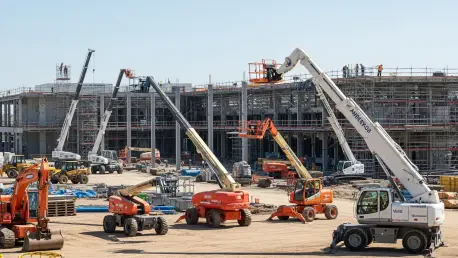
On those massive data center projects, the complexity is just staggering. You have hundreds of moving parts, and a single delay can have a domino effect that costs a fortune. What we saw was a dramatic reduction in friction. Instead of having five different trade partners trying to coordinate rentals from five different vendors, we had a single, integrated source. I remember one specific instance on a project in late 2025 where we had a critical lift scheduled. The old way, we might have had a crane from one company and a specialized telehandler from another, with separate delivery windows. With our model, both pieces of equipment arrived on the same truck, perfectly timed, because the logistics were handled centrally. That single coordinated drop saved the crew hours of waiting, and that’s the kind of productivity gain that, when multiplied across a billion-dollar project, becomes a game-changer. Seeing that seamless flow firsthand is what made it clear this had to be scaled up.
You aim to provide a “consistent, streamlined equipment experience.” In practical terms, what does this mean for a trade contractor on a job site? Walk me through how their process for sourcing everything from heavy machinery to office trailers will differ when using your service versus traditional methods.
It’s about moving from chaos to control. Traditionally, a plumbing contractor, for example, needs to source a mini-excavator, temporary lighting for their work area, and maybe a small on-site storage container. That’s three different phone calls, three different contracts, three delivery schedules to track, and three invoices to process. Now, imagine they make one call or use one portal. They get a single point of contact who understands their entire scope of work on that project. The equipment is pre-vetted for quality and maintenance, the delivery is coordinated with all other site activities, and the billing is consolidated. It’s the difference between being a logistics coordinator and being a builder. We’re taking that administrative burden off their shoulders so they can focus on their craft, improving their productivity in the field which ultimately serves the project and our client.
This move is part of a broader strategy that includes an offsite manufacturing firm and a supply chain management brand. How will First Equipment Company’s services integrate with those other businesses? Please describe a scenario where all these units collaborate to deliver value on a single project.
This is where the real power of an integrated ecosystem comes into play. Picture a new hospital wing being built. Our internal Turner Engineering Group might be involved in the design. Our offsite firm, xPL Offsite, is pre-fabricating hundreds of bathroom pods in a controlled factory environment. Simultaneously, our supply chain brand, SourceBlue, is globally sourcing and managing the logistics for all the specialized medical gas equipment. First Equipment Company is the physical enabler that ties it all together on-site. We provide the heavy-lift cranes specifically chosen to handle the weight and dimensions of those prefabricated pods, the array of generators to power the site before utility hookup, and the fencing and site controls to keep the entire operation secure. It’s a holistic approach where every piece, from design and materials to equipment, is part of one coordinated, strategic plan, not a series of disconnected transactions.
Your services will be available to Turner’s partners as well as competing contractors. How will you manage equipment allocation between internal projects and external clients? What is the core value proposition for a competing general contractor to rent from you instead of an independent company?
That’s a great question, and it really comes down to scale and reliability. We are building a fleet and a service model designed to support the entire industry, not just our own projects. For a competing GC, the value proposition is simple: you get access to a massive, modern, and impeccably maintained fleet of equipment that is backed by the operational excellence of the nation’s largest contractor. They know our standards for safety and maintenance are non-negotiable because our own teams depend on them. Furthermore, because of our scale, we can offer competitive pricing and availability that smaller, independent rental houses might struggle to match. It’s about leveraging our platform to raise the bar for everyone, creating a more reliable and efficient equipment backbone for the industry as a whole.
Turner is actively adopting advanced technologies like enterprise-level AI. How will this focus on technology be integrated into First Equipment Company’s operations? Can you describe how data or AI might be used to optimize equipment logistics, maintenance, and sourcing for clients on a project?
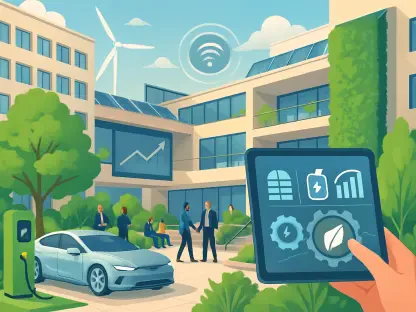
Technology is the engine that will drive this entire operation. Our partnership with a firm like OpenAI isn’t just a corporate initiative; it will have tangible applications right down to the job site. Imagine using AI to analyze a project’s 3D model and construction schedule to predict equipment needs with incredible accuracy. The system could automatically flag that a specific type of aerial lift will be needed by the facade crew in week 32 and reserve it. We can use AI for predictive maintenance, analyzing telematics data from our machinery to schedule service before a breakdown can derail a project. It will optimize our delivery routes, manage inventory across the country, and ultimately create a smarter, more proactive rental experience that anticipates needs rather than just reacting to requests.
What is your forecast for the equipment rental industry, especially as more large contractors look to bring services like this in-house to create more integrated project delivery models?
I believe we are at the beginning of a significant shift. The traditional model of fragmented, transactional services in construction is proving to be too inefficient for the complex projects being built today. The forecast is for greater vertical integration across the board. The most forward-thinking contractors will no longer see themselves as just assemblers of subcontracted services; they will become true integrators who control the most critical aspects of project delivery. This includes materials, manufacturing, and absolutely, the equipment and site services that form the physical backbone of any job. This in-house, integrated model creates predictability and de-risks projects in a way that the old way simply cannot. The rest of the industry will have to adapt to this new standard of efficiency and control.