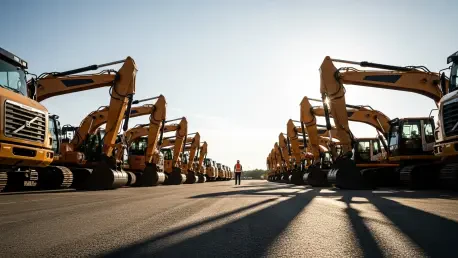

In the high-stakes world of modern construction, where project timelines are shrinking and logistical complexities are soaring, the efficient management of job site equipment and services often marks the difference between profitability and loss. Addressing this critical industry pain point, Turner Construction, the nation’s largest contractor by revenue, has strategically repositioned its internal equipment division into a standalone commercial enterprise. The formal launch of First Equipment Company (FEC) on January 8, 2026, signals a major shift, transforming a previously exclusive resource into a publicly available service aimed at optimizing operations for the entire construction sector. This move is not merely an expansion but a calculated response to the growing demand for streamlined, reliable, and centralized site management solutions. By offering its proven logistics and equipment model to a vast network of partners and competitors alike, Turner is betting that a more efficient job site, regardless of who is running it, benefits the industry as a whole. The new company is poised to leverage Turner’s immense scale and experience to bring a new level of consistency and productivity to job sites across the country.
Strategic Expansion into a Commercial Enterprise
From Internal Success to Industry-Wide Service
The creation of First Equipment Company was not a sudden development but the culmination of a long-term, internally validated strategy that proved its worth on some of Turner’s most demanding projects. For years, the division operated exclusively within the company’s ecosystem, supplying everything from heavy machinery to temporary power for Turner’s own complex builds, particularly in the advanced technology sector where precision and timing are paramount. It was within these high-pressure environments that the model for FEC was perfected, demonstrating a clear ability to enhance efficiency, reduce downtime, and streamline the otherwise fragmented process of sourcing and managing essential site resources. The success of this integrated approach provided a compelling case for its expansion. Recognizing the potential to replicate these benefits on a broader scale, Turner’s leadership made the decision to spin off the division into a commercial entity. This calculated move allows the new company to leverage the deep operational knowledge and best practices developed internally and offer them as a comprehensive service package to the wider construction market, transforming a competitive advantage into a new revenue stream.
Expanding Reach and Market Impact
With its public launch, First Equipment Company is now positioned to serve a vast and diverse clientele, moving far beyond its original scope of supporting only Turner projects. The company’s services are now accessible to Turner’s extensive network of over 40,000 trade contractor partners, a move that strengthens existing relationships by offering tangible value-added services. Furthermore, FEC is extending its offerings to other general and trade contractors throughout the United States, effectively entering the competitive equipment rental and site services market as a major new player. This expansion represents a significant strategic pivot, opening up Turner’s operational playbook to the industry at large. By providing a single point of contact for a wide array of job site necessities, FEC aims to simplify logistics for contractors of all sizes. The potential market impact is substantial, as this introduces a new model where a leading general contractor directly provides the foundational equipment and services that projects depend on, potentially setting a new industry standard for integrated project support and operational excellence.
A Comprehensive Approach to Project Efficiency
Centralizing Job Site Resources
At its core, First Equipment Company is designed to function as a one-stop solution for the logistical backbone of any construction site, centralizing the procurement and management of critical resources. The company’s portfolio is extensive, covering nearly every essential need for a modern project. This includes heavy machinery and a wide range of operating equipment, as well as crucial site infrastructure such as temporary power grids and comprehensive lighting solutions. Beyond the machinery, FEC provides essential site services, including the delivery and setup of office and restroom trailers, and the installation of site controls like security fencing and barriers. According to Turner Senior Vice President Shannon Hines, the overarching objective is to deliver a consistent and streamlined equipment experience. This centralization is intended to directly combat the inefficiencies that arise from dealing with multiple vendors and uncoordinated delivery schedules. By improving field productivity through a more organized and reliable supply chain for site services, the company ultimately aims to deliver better outcomes for project teams and their clients, translating logistical simplicity into tangible gains in time and budget.
A Pillar of Vertical Integration
The establishment of First Equipment Company is a cornerstone in Turner Construction’s broader corporate strategy to deepen its investment in vertically integrated project delivery functions. This initiative is not an isolated venture but part of a deliberate effort to build a comprehensive ecosystem of specialized businesses that can support every phase of the construction lifecycle. FEC joins a growing portfolio of in-house brands, each targeting a specific segment of the delivery process. This includes SourceBlue, the company’s dedicated supply chain management arm that optimizes material procurement; xPL Offsite, a firm focused on the burgeoning field of offsite and modular manufacturing to accelerate construction timelines; and the Turner Engineering Group, an internal architecture and engineering unit that provides technical expertise from the earliest stages of a project. By creating FEC, Turner has added a critical operational component to this integrated model. This strategic alignment allows the parent company to exert greater control over project variables, mitigate risks associated with third-party suppliers, and ensure a higher standard of quality and efficiency from conception through to completion, solidifying its position as a leader in end-to-end construction solutions.
A New Standard for Project Logistics
The launch of First Equipment Company marked a significant evolution in how major contractors approached project support and resource management. It was a strategic decision that transformed an internal operational strength into a commercial service, offering a tested model for efficiency to the entire construction industry. This move reflected a deeper trend toward vertical integration, where controlling key aspects of the supply and logistics chain was seen as essential for delivering complex projects on time and within budget. The initiative underscored a commitment to enhancing productivity not just for its own teams but for its partners and the sector as a whole, establishing a new benchmark for how integrated site services could be deployed.