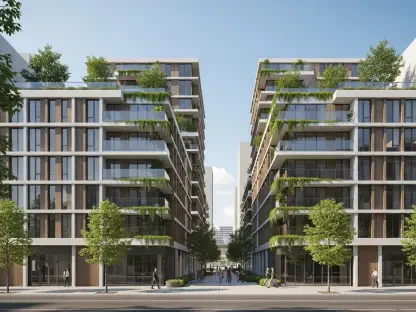

The ambitious strategy of transforming legacy retail footprints into vibrant residential hubs is currently facing a sobering reality check as market volatility forces a return to core business principles. This high-stakes shift, exemplified by retail giants attempting to act as residential developers, highlights the tension between long-term diversification and immediate financial survival. The recent “John Lewis pivot” serves as a critical case study for broader corporate property trends in an era defined by economic unpredictability and shifting capital priorities.
The Rise and Retreat of Non-Core Property Ventures
Market Drivers and the Shift in Strategic Viability
Initial corporate adoption of the build-to-rent sector peaked as firms sought to monetize surplus land in a low-yield environment. However, the landscape shifted when higher interest rates and surging construction costs eroded the profitability of high-rise developments. What once seemed like a secure path to passive revenue became a capital-intensive burden that many boards could no longer justify as financial conditions tightened.
Case Study: The John Lewis Partnership Strategic Pivot
The termination of the 1,000-unit residential program across West Ealing, Bromley, and Reading signals a major strategic retreat. By winding down its partnership with investment manager abrdn and shuttering its property management arm, the company moved from developer to seller. This transition allows the retailer to offload complex brownfield sites to professional firms better equipped to handle the specialized risks of the housing market.
Perspectives from Real Estate and Retail Industry Experts
Industry analysts suggest that retailers often struggle to balance the long-term horizons of high-rise construction with the fast-paced demands of commercial operations. For capital-constrained or employee-owned businesses, the risk-to-reward calculation has become increasingly unfavorable. Experts remain skeptical that surplus land can serve as a viable revenue stream without the specialized expertise required to navigate modern zoning and construction hurdles.
The Future of Corporate Real Estate Diversification
The retail-to-residential trend has not permanently stalled, but it is currently awaiting a more favorable interest rate cycle. Corporations are now favoring land sales over in-house construction to maintain balance sheet health. This shift has significant implications for urban planning, as cities must find new ways to secure housing commitments when large retailers withdraw from the development process to focus on their primary retail interests.
Conclusion: Balancing Innovation with Financial Stability
The retrenchment from the housing sector underscored the difficulty of maintaining non-core ventures during a period of macroeconomic instability. Strategic agility required the protection of the primary business model over the pursuit of unproven diversification goals. Moving forward, corporations prioritized specialized partnerships rather than internal expansion to manage their physical assets. This approach offered a more sustainable way to leverage brownfield sites without exposing the parent company to the volatility of the construction industry.