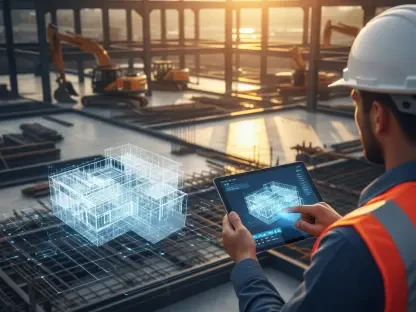

The relentless accumulation of industrial byproducts and municipal waste has catalyzed a radical shift in how engineers conceptualize the very skeleton of our modern urban landscapes. This transformation centers on the conversion of low-value residuals into high-performance structural components, effectively redefining the relationship between industry and the environment. By integrating biological processes with mineral chemistry, the construction sector is moving toward a circular model where every byproduct serves as a precursor for new growth. This approach shifts the paradigm from simple recycling to a sophisticated form of engineering where waste is no longer a liability but a primary raw material for high-performance panels.
Introduction to Waste-Derived Composite Engineering
The emergence of waste-based composites serves as a strategic response to the heavy environmental footprints of both the timber and wastewater industries. Traditionally, these sectors operated in silos, with sawdust often viewed as a disposal burden and mineral scale in pipes seen as a maintenance nightmare. Modern engineering has bridged this gap by identifying the structural potential within these discarded materials. The core principle involves utilizing these industrial byproducts to create load-bearing components that can compete with conventional building materials.
This transition toward circular construction focuses on maximizing the utility of every carbon atom and mineral molecule. By diverting sawdust from incinerators and minerals from wastewater, the industry can manufacture building materials that require significantly less energy to produce than concrete or steel. This strategy not only mitigates the environmental impact of waste disposal but also establishes a sustainable loop where the demolition of old structures provides the raw materials for new ones.
Technical Composition and Structural Mechanisms
The Role of Struvite as a Fire-Retardant Binder
Central to this innovation is ammonium magnesium phosphate, commonly known as struvite. While water treatment plants historically struggled with this mineral as a problematic buildup in pipes, researchers have repurposed its inherent chemical properties to serve as a robust binder. Unlike synthetic polymers that rely on petroleum-based chemistry, struvite provides a mineral matrix that acts as a natural fire suppressant. Its chemical structure is uniquely suited for safety applications in dense urban environments.
When temperatures rise during a fire event, the mineral undergoes a chemical transition that releases water vapor and ammonia. This reaction creates a localized cooling effect and displaces oxygen near the material’s surface, effectively preventing the spread of flames. This dual functionality as both a structural adhesive and a passive fire-fighting system makes it a superior alternative to traditional flammable resins.
Biological Catalysis via Enzyme Integration
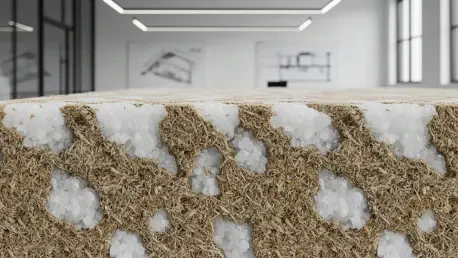
The integration of biological catalysts represents the most sophisticated aspect of this material’s development. By utilizing specific enzymes, such as those extracted from watermelon seeds, engineers can dictate the crystallization of the mineral matrix at a molecular level. These biological catalysts facilitate the growth of larger, more uniform mineral crystals that fill the voids between organic fillers. This process ensures a dense, interlocking structure that provides the material with its impressive mechanical properties.
This bio-mineralization technique overcomes the inherent brittleness typically associated with pure mineral binders. The resulting interaction between the crystals and organic fillers like sawdust creates a matrix that is often stronger than natural timber. This biological approach allows for the manufacturing of materials at room temperature, drastically reducing the carbon footprint compared to traditional cement-based binders that require intense heat for production.
Latest Developments in Sustainable Material Science
Recent breakthroughs at research institutions, such as ETH Zurich, have perfected the sawdust-to-mineral ratio to achieve maximum structural integrity without compromising weight. These advancements have introduced the concept of infinite recyclability into the construction material market. Because the panels do not rely on irreversible chemical glues, they can be ground down and reconstituted repeatedly. This advancement ensures that the material properties remain consistent across multiple lifecycles, offering a stark contrast to conventional boards that degrade during recycling.
Real-World Applications in Modern Infrastructure
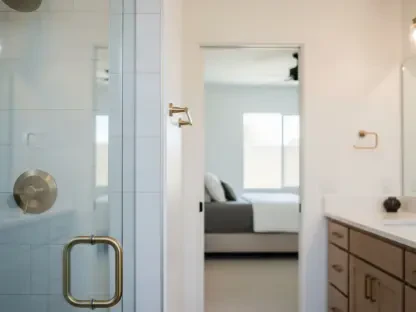
Deployment of these composites is already gaining traction within the interior architecture sector, particularly for fire-rated partitions and interior wall paneling. By utilizing sawdust—a ubiquitous byproduct of the lumber industry—manufacturers can create high-margin architectural products. This integration adds significant value to wood byproducts that were previously undervalued. Furthermore, these materials are becoming central to sustainable urban development projects where carbon sequestration and waste reduction are primary architectural goals.
Challenges to Market Adoption and Scaling
However, the transition from lab-scale success to global industrial dominance faces significant economic headwinds. The current cost of harvesting high-purity struvite remains higher than that of traditional cement or polymers. Furthermore, the logistics of establishing a reliable supply chain from municipal wastewater treatment facilities to construction manufacturing plants require substantial infrastructure investment. Regulatory and standardization barriers also remain, as current building codes are primarily designed around standardized, non-biological materials, creating a bottleneck for rapid adoption.
Future Outlook for Bio-Mineral Composites
Looking ahead, the potential for sewage-to-structure pipelines could turn municipal waste into a steady, reliable supply of building materials for growing cities. Future developments in synthetic biology are expected to further enhance the strength and durability of these waste-based matrices, potentially allowing them to replace load-bearing concrete in some applications. These technologies will play a critical role in achieving net-zero goals within the global construction industry by turning the built environment into a massive carbon sink.
Summary of the Current State of Waste-Based Composites
The review of sawdust-struvite panels indicated that the technology offered a viable path toward decarbonizing the construction supply chain. This innovation demonstrated that waste streams from disparate industries could be synthesized into superior materials that outperformed their traditional counterparts in both safety and strength. Moving forward, the success of these composites depended on the creation of integrated sewage-to-structure pipelines and the standardization of bio-mineralization techniques. Stakeholders recognized that overcoming initial cost barriers was essential for establishing these composites as the new benchmark for resilient, sustainable urban infrastructure. Cross-industry collaboration became the primary driver in making sustainable composites a standard in the green building market.