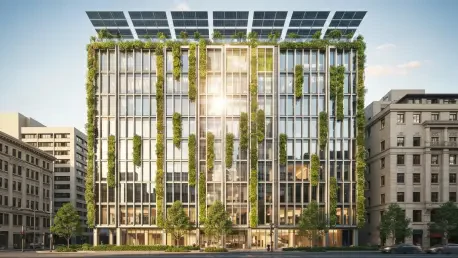

The commercial real estate landscape is undergoing a fundamental re-evaluation, where the intrinsic value of an asset is no longer defined solely by its location and square footage. A seismic shift, driven by pragmatic market forces rather than fluctuating political ideologies, has positioned sustainability as a primary determinant of financial performance and long-term viability. This transformation is not a fleeting trend but a deeply embedded economic reality reshaping how properties are developed, operated, and capitalized. According to the CEO of a leading real estate technology firm, the industry dialogue has evolved significantly; the question is no longer if sustainability creates value, but rather how quickly that value can be unlocked and maximized. The convergence of rising operational costs, sophisticated investor demands, and a competitive talent market has created an environment where green credentials are now synonymous with sound financial strategy, forcing building owners and investors to adapt or risk significant devaluation of their portfolios.
The Economic Imperative of Green Buildings
From Operational Necessity to Premium Valuations
The most immediate pressure point compelling property owners to embrace sustainability is the relentless escalation of energy costs, which directly erodes net operating income and creates significant budgetary uncertainty. This purely economic driver has made energy efficiency a top priority, transforming it from a corporate responsibility initiative into a critical operational necessity for managing expenses and mitigating exposure to future price volatility. Beyond simple cost control, a robust and growing body of empirical evidence now confirms the direct correlation between sustainable building practices and superior financial returns. Multiple independent studies have demonstrated that energy-efficient and certified green buildings consistently outperform their conventional counterparts across key performance indicators. These assets command higher rental rates, experience lower vacancy periods due to greater tenant demand, and ultimately achieve premium valuations upon sale, cementing the business case for sustainable investment.
The Unwavering Demands of Capital and Talent
The momentum toward sustainability is being powerfully amplified by the sector’s most influential stakeholders: institutional investors and corporate tenants. Large-scale capital allocators, including major property owners, insurers, and sovereign wealth funds, now view comprehensive sustainability data as an indispensable tool for risk management. For these entities, metrics related to energy use, carbon emissions, and climate resilience are not moral signifiers but essential inputs for assessing a property’s long-term exposure to regulatory changes and physical climate impacts. This investor-led demand for transparency is creating a top-down pressure that shapes market behavior. Simultaneously, a significant bottom-up force is being exerted by workforce dynamics. In the highly competitive market for attracting and retaining younger, skilled talent, a high-quality, sustainable workplace has become an integral component of an employer’s value proposition. Companies are increasingly seeking office spaces that reflect their corporate values and meet the expectations of their employees, directly influencing leasing decisions and ensuring sustained demand for green buildings.
Building a Resilient and Future-Proof Portfolio
Overcoming Data Paralysis with Pragmatic Action
While the financial and market-driven benefits of sustainability are clear, progress can sometimes be hindered by an industry-wide debate over the perfection of environmental data. The quest for flawless, universally standardized metrics can lead to a state of “analysis paralysis,” delaying meaningful action while stakeholders deliberate on the ideal methodology. However, industry leaders advocate for a more pragmatic approach, urging asset managers and owners to focus on immediate and incremental progress. The primary goal should be to accumulate the best available information to establish accurate baselines for energy consumption, water usage, and waste generation. By starting with existing data, even if imperfect, organizations can begin to identify inefficiencies, set achievable reduction targets, and implement strategies for improvement. This focus on iterative progress rather than waiting for an elusive perfect solution allows for the continuous enhancement of a building’s performance and value, ensuring that the pursuit of ideal data does not become an obstacle to tangible results.
An Enduring Market Reality Beyond Politics
The integration of sustainability into the core of commercial real estate strategy proved to be a durable, economically embedded phenomenon, insulated from the volatility of political discourse surrounding environmental, social, and governance (ESG) initiatives. The powerful convergence of tangible financial incentives, including reduced operating expenditures and demonstrable asset value appreciation, created a self-sustaining momentum. This was further solidified by the non-negotiable demands of institutional capital for enhanced risk assessment and the persistent pressure from corporate tenants needing to attract top talent. These fundamental market drivers cemented sustainability not as a discretionary add-on but as a central component of how commercial assets were valued, managed, and perceived in the marketplace. The shift had become a structural reality, ensuring that a building’s environmental performance was an inseparable part of its long-term financial identity.