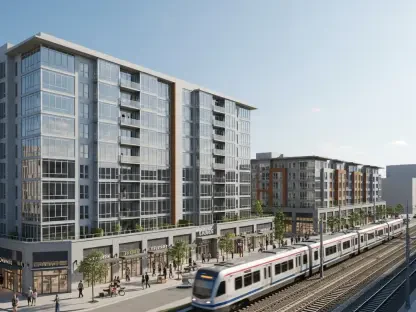

A profound and disruptive transformation is underway in downtown San Rafael, where a decades-old, community-crafted vision for development is colliding with the unyielding force of state-level housing legislation. For years, the city pursued a future that balanced modest growth with the preservation of its cherished small-town, historic character. This careful plan, however, has been effectively dismantled by a series of aggressive mandates from Sacramento aimed at combating California’s housing crisis. The result is a stark new reality where local autonomy over land use has been significantly curtailed, paving the way for a scale of urban development previously unimaginable in this Marin County hub. The conflict is not merely about building heights but represents a fundamental clash between top-down centralized planning and the principle of local self-determination, forcing residents and leaders to grapple with a future they did not choose.
The Legislative Catalyst for Change
The primary driver of this abrupt shift is Senate Bill 330, also known as the “Housing Crisis Act of 2019,” a piece of legislation that has fundamentally altered the power dynamics between the state and its municipalities. This law dramatically streamlines the approval process for housing projects that comply with existing zoning, severely limiting the ability of local governments to deny or delay development. It restricts the number of public hearings that can be held and, crucially, prevents cities from rejecting projects based on subjective standards, such as concerns about “neighborhood character” or aesthetic compatibility. In practice, this has stripped local authorities like those in San Rafael of their most effective tools for shaping development to fit a community’s specific context. The traditional mechanisms for public input and discretionary review, once central to the planning process, have been rendered largely toothless, creating a fast track for developers and overriding long-established local preferences for measured, sensitive growth.
This legislative intervention is part of a broader, overarching trend in which the state has prioritized the rapid creation of housing units above all other urban planning considerations. By imposing strict housing quotas and penalizing cities that fail to meet them, Sacramento has effectively mandated a new era of densification, regardless of local infrastructure capacity or historical context. This top-down approach treats cities not as unique communities with distinct identities but as interchangeable nodes in a statewide housing grid. The tangible result of this policy in San Rafael is the sudden emergence of proposals for high-rise buildings that will permanently alter its skyline. The approval of 13-story and 8-story apartment complexes, along with a proposed 17-story tower, signals a dramatic departure from the city’s low-rise architectural fabric. These structures will dwarf the current tallest building, the eight-story Courthouse Square, creating a jarring juxtaposition that embodies the state’s prioritization of quantity over qualitative, place-based planning.
A Tale of Two Visions for Downtown
Before the wave of state mandates, San Rafael was guided by a comprehensive downtown plan that sought to foster a vibrant, walkable urban core while preserving its historic assets. This vision was the product of extensive community engagement and aimed for a delicate balance: encouraging new housing and commercial activity to support local businesses, but doing so through development that respected the existing scale and atmosphere of the city. The goal was revitalization without sacrificing identity. This community-oriented blueprint has now been superseded by a state-driven agenda that facilitates a scale of development the original plan never envisioned. The resulting high-rises are not an evolution of the city’s character but a stark break from it, imposing a metropolitan density upon a town celebrated for its more intimate, historically rich environment. The new skyline will stand as a monument to this overridden local vision, a physical manifestation of a plan abandoned not by choice, but by legislative force.
Proponents of the new development wave, including organizations like the San Rafael Chamber of Commerce, argue that this increased density will ultimately achieve one of the primary goals of the city’s original plan: bringing more residents downtown to create consistent foot traffic and support local merchants. From this perspective, the towering new apartment buildings are a powerful tool for economic revitalization. However, this view overlooks the fundamental conflict in methodology. While the goal may be shared, the means of achieving it betray the spirit of the original community consensus. The state mandates have created a system that is a boon for developers, who can now push through large-scale projects with minimal local resistance, but gives short shrift to the long-term residents who must live with the consequences of out-of-character buildings. The debate highlights a deep philosophical divide over whether the economic benefits of forced density justify the erosion of a community’s ability to chart its own future.
Navigating the Consequences of Centralized Planning
In the end, the aggressive implementation of state housing mandates in San Rafael served as a powerful case study in the unintended consequences of centralized planning. The legislation, crafted with the laudable goal of alleviating a statewide housing shortage, ultimately failed to account for the diverse and unique character of California’s many communities. The policies prioritized expediency and housing production numbers over the nuanced, context-sensitive approach that is essential for sustainable and equitable urban development. This top-down strategy revealed a critical disconnect between state-level policymakers and the on-the-ground realities faced by cities like San Rafael, which had invested years in creating a vision that reflected the values of its residents. The experience suggested that a more effective path forward would necessitate a collaborative framework, one that balances the urgent need for new housing with a genuine respect for local history, environment, and the invaluable principle of community self-determination.