
The sheer magnitude of the current national infrastructure overhaul represents a pivot point in how state governments prioritize long-term structural integrity over short-term pavement fixes. As departments of transportation across the United States mobilize for a historic construction season, the central focus has shifted toward a high-stakes modernization effort that merges massive fiscal commitments with advanced engineering. This research explores the specific project pipelines of five key states—Minnesota, Ohio, Texas, Utah, and Wisconsin—to understand how these multi-billion dollar investments address the dual challenges of aging systems and rapid population growth. The study aims to identify the underlying strategies that move beyond simple road repair into the realm of comprehensive transit transformation.
By examining the 2024-2026 cycle, researchers can see a clear trend toward multimodal connectivity and technological integration. This analysis focuses on how various agencies are managing the “kick-off” of these massive projects, specifically looking at the replacement of deteriorating bridges and the expansion of interstate capacity. The scope encompasses a wide variety of project types, from local pedestrian safety improvements to multi-year freeway reconstructions that involve several phases of development. Central to this inquiry is the question of whether these investments are merely catching up with past neglect or actively building a framework for the future of American mobility.
Economic Vitality and the Modernization of American Roadways
Infrastructure serves as the physical backbone of the American economy, yet much of the existing transit network was designed for the demands of the mid-twentieth century. This research is critical because it highlights the transition from traditional highway maintenance to a more sophisticated model of economic resilience. The background of this study lies in the increasing pressure on transit corridors caused by shifting supply chains and the densification of urban centers. Without the modernization of these routes, the cost of moving goods and people would continue to rise, eventually stifling the competitive edge of regional economies.
The broader relevance of this study extends to societal safety and environmental adaptation. Modern roadways are no longer just paths for cars; they are complex environments that must accommodate cyclists, pedestrians, and public transit systems while withstanding increasingly volatile weather patterns. By analyzing the current construction boom, it becomes evident that the modernization of American roadways is a prerequisite for urban sustainability. The importance of this research lies in its ability to demonstrate that infrastructure is a proactive tool for shaping community growth rather than a reactive response to traffic congestion.
Research Methodology, Findings, and Implications
Methodology
The methodology for this investigation involved a systematic review of state-level transportation improvement programs and fiscal reports released by various Departments of Transportation. Analysts reviewed project schedules, budgetary allocations, and engineering goals for hundreds of individual projects to identify commonalities in strategy and execution. By focusing on a representative sample of states across different geographic and economic regions, the study was able to synthesize broad national trends from specific local data. This approach allowed for a comparative analysis of how different states prioritize their spending based on regional needs.
Data collection was supplemented by an analysis of regional transit goals, including pedestrian safety metrics and interstate expansion requirements. Tools used during the research included geographic information systems to map the density of construction zones and economic modeling to project the impact of large-scale interchanges on local commerce. The researchers focused on the 2024-2026 window as a specific case study to observe the immediate deployment of funds and the actualization of engineering plans. This structured approach ensured that the findings were grounded in tangible project data rather than theoretical projections.
Findings
The findings reveal a staggering scale of investment, with states like Ohio leading the charge through a $3.4 billion budget aimed at repairing over 4,500 miles of roadway. In Texas, the focus is dominated by megaprojects, such as the $4.5 billion I-35 Capital Express Central initiative, which represents a fundamental redesign of critical urban arteries. Meanwhile, Utah has committed $2.8 billion to projects that specifically target the elimination of bottlenecks through the construction of new system interchanges. These figures suggest that the current period is defined by a move toward total system reconstruction rather than incremental maintenance.
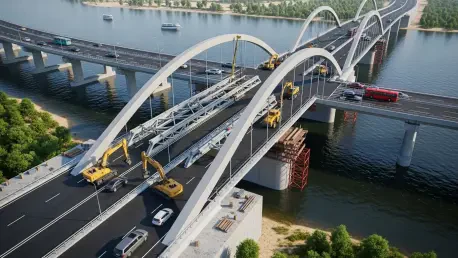
In addition to pure expansion, the research discovered a significant emphasis on structural longevity. Minnesota and Wisconsin are directing hundreds of millions toward replacing bridges that have reached the end of their design lives, such as the $1.7 billion I-94 East-West project in Milwaukee. These projects often include specialized infrastructure for railroad crossings and water ports, signaling a move toward integrated transit networks. The data indicates that the 2024-2026 cycle is characterized by a synchronized effort to overhaul aging infrastructure while simultaneously expanding capacity to meet the demands of growing metropolitan areas.
Implications
The implications of these findings suggest that the United States is entering a period of intensive capital expenditure that will redefine the physical landscape for decades. Practically, this means that commuters and logistics companies must prepare for several years of significant disruption in exchange for a safer and more efficient network. The shift toward multimodal options, such as the inclusion of shared-use paths in Utah and pedestrian bridges in Texas, indicates that the theoretical concept of “complete streets” is finally being applied to high-speed transit corridors. This has profound implications for how cities will be planned and navigated in the coming years.
From a societal perspective, these projects reflect a growing consensus on the importance of data-driven safety improvements. The move toward replacing traditional intersections with sophisticated interchanges is designed to reduce high-speed collisions and improve traffic flow. Furthermore, the massive investment in bridge stability highlights a move toward long-term resilience, ensuring that critical supply lines remain open during emergencies. The results of this study can be applied by urban planners to better understand the alignment between state-level funding and local development goals, fostering a more collaborative approach to infrastructure design.
Reflection and Future Directions
Reflection
Reflecting on the research process, it is clear that the primary challenge was the sheer volume of data across disparate state agencies. Each Department of Transportation uses different reporting standards and fiscal cycles, making a direct comparison difficult at times. However, by focusing on the 2024-2026 window, the study was able to capture a snapshot of a unified national trend toward modernization. One area where the research could have been expanded is the analysis of labor shortages, as the ambition of these projects often outpaces the availability of skilled workers required to execute them.
The findings also highlight the tension between immediate traffic needs and long-term environmental goals. While many projects include multimodal elements, the bulk of the funding remains tied to highway expansion. Overcoming the logistical hurdles of such massive constructions required a high level of coordination between local and federal authorities, a process that revealed both the strengths and weaknesses of the current funding models. Despite these challenges, the study successfully documented a historic shift in infrastructure priority that favors structural permanence over temporary fixes.
Future Directions
Future research should focus on the long-term performance of these new interchanges and their actual impact on accident rates over the next decade. There are still unanswered questions regarding how these expanded highways will integrate with the rise of autonomous and electric vehicles, which may require different types of physical and digital infrastructure. Exploring the intersection of digital traffic management and physical road design offers a significant opportunity for further study. Additionally, more work is needed to assess the carbon footprint of these massive construction efforts and whether the long-term efficiency gains offset the initial environmental cost.
Another promising avenue for exploration is the role of public-private partnerships in maintaining these new assets once the initial construction boom concludes. As the 2024-2026 cycle transitions into the operational phase, researchers can begin to evaluate the economic return on investment for local communities. Investigating the impact of these projects on property values and business development near new interchanges would provide a more complete picture of the societal benefits. These future directions will help refine how future infrastructure cycles are planned and funded to ensure maximum public benefit.
Synthesis of National Transit Trends and Structural Resilience
The investigation into the current state of American infrastructure revealed a coordinated and well-funded effort to move beyond the limitations of legacy systems. The study demonstrated that state Departments of Transportation successfully initiated a multi-billion dollar shift toward modernization, prioritizing the replacement of high-risk bridges and the strategic expansion of critical interchanges. By analyzing the fiscal and engineering goals of diverse states, the research provided a clear picture of a nation in the midst of a structural renaissance. The findings confirmed that the focus on safety and multimodal connectivity has become a central pillar of modern transportation policy.
The results of this study underscored the vital link between robust infrastructure and economic vitality. The transition toward integrated transit networks was shown to be a necessary response to the evolving needs of a mobile and growing population. This research contributed to the field by synthesizing complex state-level data into a coherent narrative of national progress, highlighting the move toward long-term resilience. Ultimately, the construction boom represented more than just a series of road projects; it was a fundamental reinvestment in the physical foundation of the country, ensuring that the transit network remains capable of supporting the demands of the modern era.