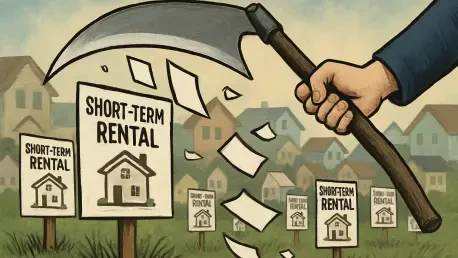

In a move poised to fundamentally reshape its community fabric and housing market, the Town of Southold is advancing a comprehensive legislative overhaul that would eliminate nearly nine out of every ten short-term rentals currently operating within its borders. The town is transitioning away from a largely symbolic and unenforceable ban on rentals shorter than 14 days toward a highly restrictive, permit-based system. This proposal, born from the work of a dedicated task force, seeks to legalize but severely curtail the lucrative $25 million rental industry, directly addressing escalating concerns from full-time residents about quality of life, neighborhood character, and the critical shortage of affordable housing.
The Core of the New Regulation
A Numbers Game Drastic Reduction by Design
The centerpiece of the proposed code is a stringent cap that would redefine short-term rentals (STRs) as any rental lasting fewer than 30 days and limit the total number of permits issued to a mere one percent of the town’s entire housing stock. With approximately 13,770 residential properties in Southold, this would authorize a maximum of about 125 legally operating STRs. This figure represents a dramatic contraction from the current market, which, according to data from analytics firm AirDNA, included 985 active rentals as of August 2024. The implementation of this cap would result in an 87.3% reduction in available STRs, signaling the town’s clear intent to substantially rein in, rather than simply manage, the vacation rental industry that has flourished in defiance of existing but ineffective regulations. This deliberate and drastic reduction is designed to restore a more balanced housing ecosystem, prioritizing long-term community needs over the economic interests of a small but powerful group of property owners.
To further ensure that the remaining STRs do not fundamentally alter the character of any single area, the legislation mandates an equitable distribution of permits across the town. Rather than allowing permits to cluster in the most popular tourist destinations, the 1% cap will be applied on a hamlet-by-hamlet basis. This “scattered sites” approach, strongly supported by officials like Zoning Board Chair Leslie Weisman, is intended to preserve the unique identity and residential feel of each neighborhood. In hamlets where the number of permit applications surpasses the allocated quota, the town plans to implement a lottery system. This mechanism is designed to provide a fair and unbiased method for awarding the limited number of permits, preventing favoritism and ensuring that all eligible property owners have an equal opportunity to participate in the newly regulated market while maintaining the town’s overarching goal of community preservation.
Shifting from Inaction to Enforcement
The primary impetus behind this sweeping regulatory reform is not economic but social, driven by a growing chorus of complaints from year-round residents. Deputy Town Supervisor John Stype, who chaired the task force that drafted the proposal, explicitly framed the issue as a matter of protecting the “quality of life” for those who call Southold home. Officials have voiced deep concerns that the unchecked proliferation of STRs is a major contributor to real estate speculation, which in turn inflates housing costs to unsustainable levels. This trend has made it increasingly difficult for local families, service workers, and young professionals to afford to live in the community, a demographic shift starkly reflected in the town’s declining school enrollment figures. The proposed regulations are therefore a direct response to this crisis, aiming to reclaim housing inventory for the local population and stabilize neighborhoods that have felt increasingly transient.
A critical component of the new framework is the introduction of robust enforcement mechanisms, a stark departure from the town’s previous inability to police its 2015 ban. Recognizing that rules without consequences are ineffective, Southold has invested in new technology to ensure compliance. The town has adopted Rentalscape, a software platform developed by Deckard Technologies that allows officials to monitor major rental websites like Airbnb and Vrbo in real-time. This powerful tool can identify the precise location of rental properties, track their pricing and availability, and even monitor when tenants check in and out. This provides code enforcement officers with the concrete, actionable evidence required to issue citations and pursue legal action against violators. By closing the enforcement gap, the town intends to bring its vast underground rental market into the light and ensure that the new, stricter rules are universally respected.
Fine-Tuning the Legal Framework
Navigating Legal and Ethical Hurdles
During the code’s development, the task force’s initial recommendation to restrict STR permits exclusively to an owner’s primary residence encountered a significant legal obstacle. Assistant Town Attorney Ben Johnson cautioned the board that such a requirement could be vulnerable to a court challenge, arguing it might be interpreted as a violation of the U.S. Constitution’s Commerce Clause, which is designed to protect interstate commerce from discriminatory state or local laws. To sidestep this potential legal battle while still ensuring local accountability, Johnson proposed a creative alternative. Instead of limiting ownership, the law would require every permitted STR to have a designated “operator”—who could be the owner or a local property manager—physically available to respond to any complaints or issues at the property within 60 minutes. This operator-based model was met with a receptive audience on the Town Board, as it effectively addresses concerns about absentee landlords without infringing on constitutional property rights.
Furthermore, the board expressed considerable skepticism toward the idea of creating hardship exemptions for homeowners who claim to rely on STR income to afford their mortgages or property taxes. Town Supervisor Al Krupski questioned the feasibility and fairness of establishing a system to adjudicate financial need, remarking that it would be nearly impossible to define a consistent threshold for what constitutes a true hardship. Rather than creating a complex and potentially inequitable exemption process, officials suggested a more constructive solution for residents facing financial difficulties. They encouraged such homeowners to explore participation in the town’s Community Housing Plan, which would involve renting out Accessory Dwelling Units (ADUs) on a long-term basis. This alternative would provide a stable, predictable income stream for the property owner while simultaneously helping to alleviate the critical shortage of affordable long-term housing for local residents, thereby aligning individual financial needs with broader community goals.
Targeting the Market Structure
To prevent the newly regulated STR market from being consolidated and controlled by large commercial entities, the proposed legislation includes a strict “one permit per person” rule. This limitation is designed to extend to corporate-owned properties as well; the permit would be the only one sought by any owner, shareholder, or partner associated with that corporate entity, effectively preventing individuals from using multiple LLCs to amass a portfolio of rental properties. This provision is a direct and targeted response to data revealing that a small number of professional operators have an outsized impact on the local market. For instance, recent findings showed that just four property management companies were responsible for 40 of the 960 active STR listings in the area. By curbing the ability of commercial interests to dominate the permit lottery, the town aims to keep the limited number of STRs in the hands of small-scale, local owners.
The draft code, which has been meticulously reviewed, also established severe penalties to deter violations and ensure compliance from all parties. For property owners, a first offense could lead to a fine between $3,000 and $10,000, or an amount equal to the gross rental revenue for 30 days, whichever is greater, and could even include up to 15 days of imprisonment. A second offense committed within five years would carry an even steeper fine, ranging from $5,000 to $20,000. Recognizing that tenants also play a role, the law would allow for fines of up to $1,000 for those found occupying an illegal rental. The jurisdiction of this new law was specifically defined to exclude Greenport Village, which maintains its own independent zoning authority and recently passed its own STR regulations. Fishers Island was also expected to remain exempt, continuing a historical precedent based on its remote location and unique, informal system of home sharing. The town acknowledged that the path to implementation would be a deliberate one, requiring a thorough public hearing process before the code could be finalized and adopted, with officials having projected that the earliest the new system could realistically be in effect was January of 2027.