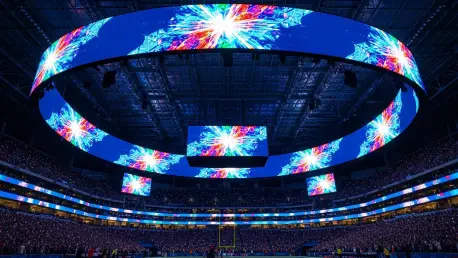

The roar of the crowd is no longer just an auditory experience; it is now a digital symphony conducted through massive screens, seamless connectivity, and an invisible shield of cybersecurity. Smart Stadium Technology represents a significant advancement in the sports and entertainment industry, fundamentally altering how fans interact with live events. This review will explore the evolution of the technology, its key features, performance metrics, and the impact it has had on various applications. The purpose of this review is to provide a thorough understanding of the technology, its current capabilities, and its potential future development.
Defining the Modern Smart Stadium
The modern smart stadium is far more than a venue equipped with digital amenities; it is a fully integrated ecosystem designed to be immersive, connected, and secure. The core principle involves a strategic technological overhaul that transforms the entire facility into an interactive platform. This represents a fundamental shift in event management, moving away from a model of passive viewing toward one of active and personalized fan engagement.
This transformation is driven by a multi-faceted approach that touches every aspect of the attendee’s journey. From the moment a fan enters, their experience is shaped by a web of interconnected systems that manage everything from digital ticketing and wayfinding to real-time content delivery and frictionless commerce. The ultimate goal is to create a seamless environment where technology enhances the live event without becoming a distraction, making the stadium itself a dynamic participant in the spectacle.
Core Technological Pillars of the Fan Experience
Next-Generation Digital Signage and Immersion
The visual and auditory systems within a smart stadium are the most visible components creating an immersive atmosphere. The deployment of massive 4K video boards, some boasting a 300% increase in pixel density over previous generations, provides unparalleled clarity and engagement. These central screens, complemented by extensive LED ribbon displays that encircle the venue, act as a dynamic canvas for live action, replays, and interactive content, enveloping fans in the event.
This entire sensory experience is orchestrated from sophisticated, on-site data centers. These command hubs function as the central nervous system for the stadium’s production, controlling every visual and audio element in real-time. This centralized control ensures a synchronized and powerful presentation, delivering what industry leaders describe as a brighter, louder, and more compelling gameday.
Advanced Connectivity and Network Infrastructure
Robust wireless connectivity forms the invisible backbone of the smart stadium, enabling the rich digital interactions that modern fans expect. The implementation of first-of-their-kind Wi-Fi 7 systems is a direct response to the immense data traffic generated by a connected crowd. This advanced network technology is engineered for high-density environments, offering the scalability required to manage tens of thousands of simultaneous connections.
Furthermore, these networks are specifically designed to handle the heavy uplink demands characteristic of large events, where countless fans are live-streaming and uploading content. To ensure comprehensive coverage and reliability, this advanced Wi-Fi is often paired with a 5G distributed antenna system (DAS). This dual infrastructure provides redundant, high-speed connectivity that not only enriches the fan experience but also supports critical operational innovations like cashierless concession stands.
Integrated Cybersecurity and Infrastructure Protection
In a hyper-connected environment, a comprehensive security posture is not an option but a necessity. Smart stadiums require a proactive strategy that involves constant monitoring of all inbound and outbound network traffic. This protective shield extends beyond the public-facing fan network to encompass all operational systems, including those used by vendors, staff, and the event organizers themselves.
This defense-in-depth approach utilizes a multi-layered suite of integrated security technologies to protect data integrity and service availability. By leveraging threat intelligence, secure firewalls, and network visibility tools, stadium operators can identify and mitigate potential cyber threats before they can disrupt the event. This ensures that while fans enjoy a seamless digital experience, their data and the stadium’s critical infrastructure remain protected from the heightened risks associated with high-profile gatherings.
Emerging Trend The Rise of Digital Synchronicity
A key development in smart stadium technology is the move toward “digital synchronicity.” This concept transcends the use of isolated digital elements for simple information delivery, such as displaying scores or menu prices. Instead, it focuses on weaving all digital components—signage, lighting, and audio—into a single, cohesive, and centrally orchestrated production.
This integration transforms the physical infrastructure of the venue into an integral part of the event’s narrative. For instance, a key play on the field can trigger a synchronized sequence of effects across every screen and light fixture in the stadium, amplifying the moment for everyone present. This holistic approach fosters a powerful sense of collective experience, making attendees feel as though they are part of a unified and spectacular show.
Case Study Levi’s Stadium Technological Overhaul
The real-world application of these technologies is exemplified by the recent $200 million renovation of Levi’s Stadium. Undertaken ahead of major global events, this project focused on deploying a new generation of visual, connectivity, and security systems to create a premier fan experience. The installation included two of the world’s largest outdoor 4K video boards and over 55,000 square feet of additional LED displays.
This technological overhaul was pivotal in enabling operational innovations that streamline the fan journey. The robust network infrastructure, featuring both Wi-Fi 7 and a 5G DAS, supports a frictionless environment where technologies like cashierless concession stands can thrive. By providing a seamless and secure digital platform, the stadium has successfully transformed itself into a model for modern venue design and functionality.
Key Challenges and Strategic Solutions
The primary technical challenge for any smart stadium is managing the unprecedented network strain generated by fan activity. The collective demand of tens of thousands of users simultaneously streaming, posting, and interacting places immense pressure on both uplink and downlink capacity. This hurdle is directly addressed by deploying next-generation wireless systems engineered for high-density environments.
Equally critical is the need to defend against the heightened cybersecurity threats that target high-profile events. With countless endpoints and interconnected systems, the modern stadium presents a complex and attractive target for malicious actors. The strategic solution lies in an integrated security architecture that provides comprehensive visibility and control over all network traffic, allowing security teams to proactively monitor for and neutralize threats.
The Future Outlook Operational Flexibility and Adaptability
Looking ahead, the most significant long-term benefit of a fully digital infrastructure is its inherent operational flexibility. The ability to control branding, content, and system configurations through a central platform provides a level of adaptability that was previously unattainable. This is particularly valuable for multi-purpose venues that host a wide variety of events with different sponsors and requirements.
This digital agility allows a stadium to completely rebrand itself for different international events, such as the World Cup, with the “click of a button.” This capability drastically reduces the time, cost, and labor associated with the physical removal and replacement of static branding assets. Consequently, it positions the venue to compete for and execute a diverse array of world-class events more efficiently and effectively.
Conclusion Redefining the Live Event Landscape
The strategic integration of advanced visual, connectivity, and security systems has fundamentally redefined the fan experience and the operational model of modern venues. Smart stadium technology successfully transforms passive spectators into active participants by creating a deeply immersive and interactive environment. The fusion of massive 4K displays, robust Wi-Fi 7 and 5G networks, and a vigilant cybersecurity posture establishes a new standard for live entertainment. This technological foundation not only elevates the gameday spectacle but also provides the critical adaptability and efficiency required for long-term success in an evolving global market.