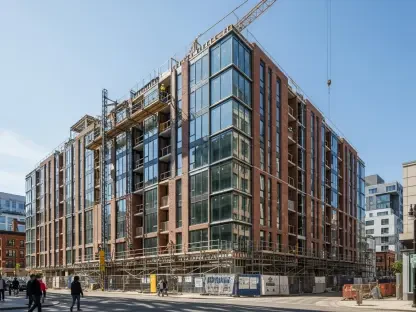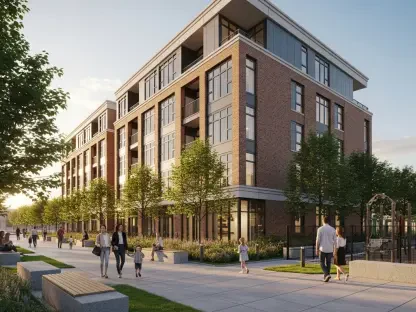

The path of urban redevelopment is often a complex journey of vision, setbacks, and reinvention, a narrative embodied by the latest chapter of the downtown Beacon project in Grand Forks. Following a period of uncertainty after the original developer filed for bankruptcy two years ago, a revitalized plan has emerged under new leadership, promising not only to complete the development but to enhance it with a dynamic public plaza designed for year-round community engagement. Spearheaded by Dakota Commercial and Community Contractors, this revised proposal aims to create a new focal point for the city center, blending residential growth with vibrant public space. The comprehensive plan is now moving toward a crucial decision point with the city, hinging on a new financial structure and a shared vision for a more active downtown.
A New Vision for Downtown
The Public Plaza and Community Hub
At the heart of the revitalized Beacon development lies the ambitious creation of a year-round public plaza, a feature designed to serve as a central gathering place for residents and visitors alike. This meticulously planned space is envisioned to transform with the seasons, featuring a lively hockey and skating rink during the winter months that gives way to a versatile open area for community events and recreation in the warmer seasons. To ensure the long-term success and financial sustainability of this public amenity, the city has engaged in a detailed analytical process. City Administrator Todd Feland is collaborating with Oak View Group, the experienced management firm behind the Alerus Center, to conduct a thorough financial viability study. This critical analysis involves establishing a precise operating budget, refining the capital cost estimates, and clearly defining the city’s potential financial contribution. The objective is to proactively address any potential operational deficits, ensuring the plaza can thrive without placing an undue burden on public funds. This strategic partnership underscores a commitment to creating a well-managed and financially sound community asset that enhances the downtown experience for everyone.
Expanding Residential and Commercial Use
Beyond the public plaza, the new proposal introduces significant changes to the residential and commercial components of the Beacon project, aiming to increase density and adapt to current market demands. A central element of this strategy is the construction of a third apartment building, which will substantially increase the housing stock in the downtown core and anchor the development’s next phase. Complementing this new construction, the developers have outlined a plan to repurpose existing commercial space within the first two Beacon buildings. Specifically, they intend to convert second-floor commercial areas into approximately 20 to 24 new apartment units. This adaptive reuse strategy is a practical response to the evolving needs of the downtown area, prioritizing residential living to foster a more vibrant, 24/7 community. By increasing the number of residents living directly within the development, the plan seeks to create a built-in customer base for local businesses and contribute to a more dynamic street-level atmosphere, fulfilling a key objective of urban revitalization efforts.
Navigating Financial and Political Hurdles
Restructuring the Financial Incentives
A critical component of the revised Beacon plan involves a significant overhaul of the project’s financial incentives, reflecting a new agreement between the city and the developers. The original arrangement with Epic Companies was structured around a 25-year, 80% tax incentive, which was intended to finance a city-sold revenue bond for the construction of the public plaza. The new proposal pivots to a different model: a shorter-term, 15-year payment in lieu of taxes (PILOT) agreement, also at an 80% rate. This change represents a fundamental shift in the financial partnership, reducing the long-term tax abatement period and altering the mechanism for public support. The city is currently undertaking a rigorous and detailed financial analysis of this transition to fully understand its implications for municipal revenues and the project’s overall return on investment. This careful due diligence is essential to ensure the new incentive structure is both fiscally responsible for taxpayers and sufficient to make the ambitious project viable for the developers, striking a careful balance between private investment and public benefit.
The Path to Final Approval
The culmination of extensive negotiations and meticulous planning was reached when the entire revised plan for the Beacon development was presented to the Grand Forks City Council on February 1. This presentation marked a pivotal moment for the project, where developers and city officials laid out a comprehensive vision that addressed previous challenges and charted a clear path forward. The council was tasked with evaluating the intertwined elements of the proposal, from the construction of the third apartment building and the creation of the public plaza to the approval of the newly structured 15-year PILOT agreement. The debate and subsequent decision were framed by the project’s complex history and its promising future. The approval of the plan signified a crucial vote of confidence in the new development team and their strategy. It represented the city’s commitment to revitalizing a key downtown parcel, transforming a stalled project into a tangible asset that balanced increased residential density with the creation of a vibrant new public space for the entire community.