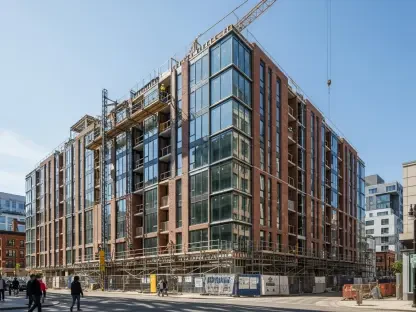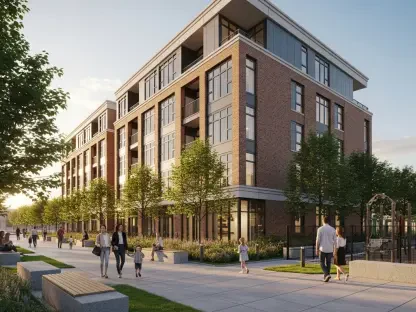

In a significant move to address Ontario’s persistent housing supply crisis, the provincial government is rewarding municipalities that successfully accelerate residential construction, with the City of Guelph becoming a prime example of this strategy’s impact. The city has received a substantial financial injection of over $3.6 million after breaking ground on 1,279 new homes last year, a figure that represents more than 85 percent of its provincially mandated housing target for 2024. This achievement not only highlights Guelph’s commitment to growth but also demonstrates the tangible results of the province’s incentive-based approach, which ties funding directly to performance in an effort to get more homes built faster. The award, drawn from the province’s Building Faster Fund, is designated for reinvestment into community infrastructure, ensuring that new housing developments are supported by the necessary roads, water systems, and public services to foster sustainable growth.
An Incentive-Driven Approach to Development
The financial reward given to Guelph is a direct result of the Building Faster Fund, a three-year, $1.2 billion provincial initiative designed to motivate municipalities across Ontario. The fund operates on a straightforward performance-based model: local governments that achieve at least 80 percent of their annual, provincially-set housing start targets become eligible for funding. This capital is specifically earmarked for “housing-enabling” and “community-enabling” infrastructure projects, which are often critical bottlenecks in the development process. By providing dedicated funds for the expansion of roads, water and sewer systems, and other essential services, the program helps cities absorb the costs associated with rapid growth. To grant municipalities greater operational latitude in executing these often complex and multi-year projects, the province has extended the deadline for spending these funds to 2028, offering increased flexibility for long-term strategic planning and implementation.
The success in Guelph serves as a concrete illustration of the program’s intended effect. By breaking ground on a significant number of new homes, the city unlocked $3,692,960 in funding that will now be channeled back into the community. Provincial officials have emphasized that this reinvestment is key to creating a virtuous cycle of development. The new infrastructure supported by these funds will, in turn, enable the construction of even more homes, supporting not only population growth but also stimulating the local economy and creating jobs in the residential construction sector. Guelph’s performance, exceeding its annual target by a notable margin, positions it as a leading example for other municipalities on how to effectively align local planning and development efforts with provincial housing objectives to secure crucial financial support for community infrastructure needs.
A Broader Provincial Housing Strategy
The Building Faster Fund is not a standalone policy but a central component of a comprehensive, multi-pronged provincial strategy aimed at kickstarting the housing sector. Minister of Municipal Affairs and Housing, Rob Flack, has stated that the government is “relentlessly focused” on this issue, deploying a combination of financial incentives, legislative reforms, and direct support to both municipalities and homebuyers. This broader strategy includes significant legislative tools, such as the “Fighting Delays, Building Faster Act, 2025,” and the “Protect Ontario by Building Faster and Smarter Act, 2025.” These acts are designed to streamline the notoriously complex development approval process, reduce regulatory hurdles, and ultimately help builders bring new housing units to market more quickly and efficiently. These measures, combined with commitments outlined in the “2025 Ontario Economic Outlook and Fiscal Review,” signal a concerted effort to dismantle long-standing barriers to construction across the province.
Beyond supporting municipalities and builders, the province is also implementing measures to improve affordability for homebuyers. A major proposal involves rebating the full eight percent provincial portion of the harmonized sales tax (HST) for first-time buyers on most new homes valued up to $1 million. This initiative, contingent on federal legislation, could provide substantial financial relief, potentially saving a buyer up to $80,000 when combined with other programs. In addition to the Building Faster Fund award, Guelph is a recipient of other targeted provincial investments. The city is receiving over $2 million through the Municipal Housing Infrastructure Program, a separate funding stream expected to directly facilitate the construction of nearly 2,000 additional new homes. This layered approach of providing infrastructure funding, streamlining regulations, and offering direct homebuyer relief demonstrates a holistic strategy to tackle the housing crisis from multiple angles.
Local Reception and Market Momentum
The announcement of the funding was met with enthusiasm by Guelph’s municipal leadership, who see it as a validation of their proactive efforts and a crucial component of their future growth plans. Mayor Cam Guthrie expressed that the city was “thrilled” to have met its housing target and secured the “much-needed support” from the provincial fund. He framed the financial award not just as a reward but as a vital partnership that recognizes the city’s progress in developing a diverse range of housing options. The mayor emphasized that this collaboration with the province is essential for tackling the housing crisis effectively while simultaneously enhancing the overall livability of the community. The funding provides Guelph with the resources to ensure that as new neighborhoods are built, they are fully supported by the infrastructure necessary for residents to thrive, reinforcing the city’s ability to manage growth sustainably.
This specific award to Guelph is contextualized within a broader, positive trend in the provincial housing market, particularly in the rental sector. Recent data indicates a significant surge in the construction of rental units, a critical area of need. Between January and October 2025, Ontario recorded 18,103 rental housing starts, a figure that represents a more than 34 percent increase over the same period in 2024 and marks the highest number of starts on record for that timeframe. This robust growth suggested that the government’s combination of incentive programs, legislative reforms, and targeted investments was yielding measurable results in key segments of the housing market. The success in Guelph stood as a tangible case study, demonstrating how a strategy that empowered and rewarded proactive municipalities could directly contribute to solving Ontario’s pressing housing shortage and build stronger communities.