
Luca Calarailli, an expert in construction with a keen eye on design and technological innovation, joins us to dissect a recent report showing a sharp 20.5% drop in construction starts. While the headline suggests a market in retreat, Luca will help us understand the nuances behind this number. We’ll explore the pullback in megaprojects, the different paths of commercial and institutional sectors, the boom-and-bust cycle of manufacturing, and the surprising resilience in residential building.
The report cites a 20.5% drop in total construction starts, blaming a slowdown in megaprojects. Beyond the lack of billion-dollar jobs, what underlying economic or financing headwinds are making developers hesitant to kick off these massive projects right now?
It’s about the sheer gravity and complexity of these massive undertakings. A month with only two projects topping a billion dollars highlights the intense capital required, and in a climate of economic uncertainty, developers are understandably de-risking. It’s a natural cooling-off period following the surge we saw in October. These projects aren’t canceled; they are just in a holding pattern as everyone recalibrates risk before committing billions.
We saw a sharp 40.5% pullback in office and data center starts, yet institutional projects like healthcare grew 11.4%. Could you detail the different market signals driving this divergence and provide an example of the types of projects succeeding in each sector?
You’re seeing two completely different stories. The 40.5% drop in office and data center starts reflects a market grappling with new realities like hybrid work. Conversely, the 11.4% growth in institutional projects is driven by non-negotiable societal needs. A perfect example is the nearly $800 million UCSF Benioff Children’s Hospital campus. People will always need healthcare and education, making these investments less sensitive to short-term economic cycles and more about long-term community planning.
Manufacturing starts have been extremely volatile, tumbling over 50% in November after a strong October. Could you walk us through the typical timeline for a large manufacturing project that might explain why these groundbreakings appear in such dramatic, inconsistent waves?
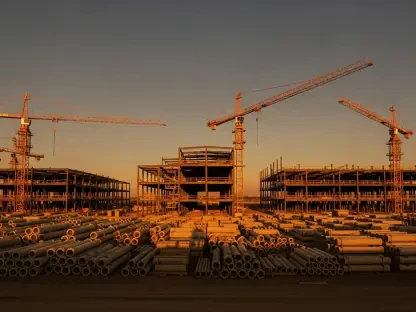
That volatility in manufacturing is completely expected. A 50.7% tumble in one month feels dramatic, but it’s just the quiet after the storm. Before a shovel hits the dirt on a massive plant, there are years of site selection, permitting, and financing. When a project finally breaks ground, it lands as a massive, single event in the data. The quiet month of November simply means we are between these waves; the next multi-billion dollar project is likely deep in its planning phase and will cause another spike when it starts.
Infrastructure starts fell 43.7% in one month but remain up over 17% for the year. What specific types of utility projects paused in November, and what does the strong yearly performance tell us about the long-term pipeline for public works?
The 43.7% monthly drop was almost entirely due to a pause in the utility and energy sector, which is prone to these large starts. When a few massive projects like the $1.7 billion Entergy substations don’t break ground in a given month, the numbers plummet. However, the bigger picture, the 17.5% year-to-date increase, tells the real story. It shows a robust, long-term commitment to upgrading our national infrastructure, driven by both public funding and the need for a modern energy grid.
Residential construction was a rare bright spot, up 13.3%, despite lagging on a yearly basis. What specific factors, like interest rates or material costs, contributed to this monthly boost, and do you see this as a temporary blip or the beginning of a sustained recovery?
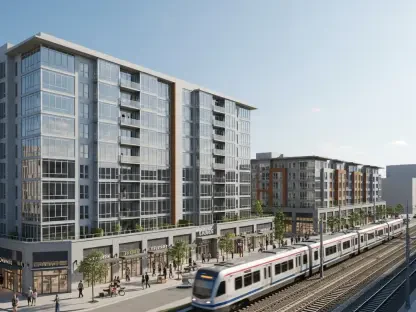
The 13.3% jump in residential starts is a fascinating surprise, though we must be cautious. While it doesn’t erase the nearly 5% decrease year-to-date, this monthly boost suggests resilience. It could be that builders are finding new financing or that strong demand for multi-family units, like the $391 million project in Seattle, is pushing through. It feels less like a blip and more like the market beginning to adapt to the new economic environment, even if the road to recovery is uneven.
What is your forecast for construction megaproject starts heading into the new year?
The volatility is the new normal, but the underlying trend is positive. The second half of 2025 has shown a much healthier trajectory, and I expect that momentum to carry forward. While we won’t see the explosive surge of October repeated every month, the pipeline for transformative projects in energy and infrastructure is incredibly full. I forecast a continued, albeit lumpy, pattern of groundbreakings as these massive projects work their way through the final stages of planning and financing.