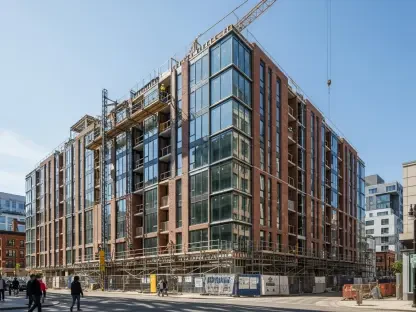

With a career built at the intersection of architecture, construction, and technology, Luca Calaraili has a unique perspective on the challenges facing modern building projects, especially those involving public and historic properties. When news broke of a lawsuit filed by the National Trust for Historic Preservation to halt construction of a new White House ballroom, we sat down with him to unpack the complex legal and procedural issues at play. Our conversation explored the fundamental constitutional questions of executive power, the specific regulatory steps allegedly ignored by the administration, and a pattern of conflict that suggests a growing rift between the executive branch and the guardians of America’s architectural heritage.
The lawsuit alleges violations of both the Constitution’s Article IV and the Administrative Procedure Act. Can you walk us through the key differences between these claims and explain the step-by-step review process the administration allegedly bypassed for the ballroom project?
It’s crucial to understand these are two very different lines of attack, one fundamental and the other procedural. The Article IV claim is a powerful constitutional argument. It asserts that Congress, not the President, has exclusive power over federal property. The lawsuit essentially says that when you’re talking about demolishing parts of a federal building or constructing a new one, the President can’t just decide to do it on his own; it’s an overreach of executive authority. The second claim, under the Administrative Procedure Act, is about the nitty-gritty process. It’s a roadmap that federal agencies like the GSA and National Park Service are legally required to follow for projects in Washington. This involves conducting an environmental assessment, publishing an impact statement, and, critically, submitting the plans for approval to the National Capitol Planning Commission and review by the Commission of Fine Arts. This all happens after a period of public comment, ensuring transparency. The allegation is that this entire, well-established playbook was simply thrown out the window.
The White House argues that the president has “full legal authority to modernize, renovate, and beautify,” just as his predecessors did. How does this assertion hold up against the specific review requirements, and can you share examples of how past administrations handled major renovations?
That’s the central tension here. The statement that presidents have the authority to renovate is true, but it’s an oversimplification that feels intentionally misleading. Historically, that authority has always been exercised within the established legal framework, not outside of it. No one is arguing a president can’t update the White House. The issue is how it’s done. Previous administrations, when undertaking significant projects, have typically engaged with the review commissions and preservation bodies from the outset. It was a collaborative process, respecting the fact that these buildings don’t just belong to the current occupant but to the American people. To claim a blanket authority to “beautify” while ignoring the specific laws designed to protect these historic properties is to fundamentally misrepresent how this process has worked for decades. It sets a dangerous precedent that personal taste could override established preservation law.
Carol Quillen stated the National Trust was “met with silence” by the administration before filing suit. Describe the typical communication and collaboration process between preservation groups and agencies like the GSA for projects impacting historic federal buildings.
Being “met with silence” is an extraordinary and frankly alarming breakdown of protocol. Normally, for a project of this magnitude, there is a constant, open channel of communication. Preservation groups like the National Trust, which was chartered by Congress in 1949 specifically for this oversight role, are key stakeholders. Agencies like the GSA would typically engage them early in the planning process, sharing schematics, discussing materials, and working through potential impacts on the historic fabric of the building. It’s supposed to be a partnership, not an adversarial relationship. The goal is to find a solution that achieves the project’s aims while honoring the building’s historical significance. For the National Trust to have to resort to a lawsuit suggests that this collaborative spirit completely evaporated. It implies the administration made a conscious decision to circumvent the very partners legally designated to be part of the conversation.
This issue seems broader than just the ballroom, citing the Eisenhower building lawsuit and a GSA official’s warning about four other buildings. What does this pattern of conflict suggest about the current procedures and oversight for managing historically significant federal properties in Washington?
Exactly. The ballroom project isn’t happening in a vacuum. When you look at the lawsuit to stop renovations at the Eisenhower Executive Office Building, which was only withdrawn after the GSA promised to pause work, you start to see a clear pattern. Then you have the sworn declaration from a former GSA official warning that the administration might be preparing to demolish four other historic federal buildings. It paints a picture of a systemic disregard for established preservation procedures. It suggests that the oversight mechanisms we have in place are being tested, if not outright ignored. The statement that the GSA “doesn’t have the president’s actions under control” is a chilling one from a legal and architectural standpoint. It points to a potential crisis in how we steward our nation’s most important public properties.
What is your forecast for the future of legal challenges between preservation organizations and the executive branch regarding the management of federal historic properties?
I believe we are entering a new, more contentious era. This series of conflicts will almost certainly lead to more aggressive legal action from preservation groups in the immediate future. They’ve seen that dialogue can be met with silence, and their only recourse is the courts. In the long term, this could force a crucial reckoning. Congress may be compelled to strengthen the language in these preservation laws, adding more explicit checks and balances to prevent any future administration from claiming this kind of unilateral authority. These lawsuits are highlighting ambiguities and weaknesses in the current system. While painful now, the ultimate result could be a more robust legal framework that ensures our national architectural treasures are protected from political whims, solidifying the principle that their stewardship is a shared, public responsibility, not a presidential privilege.