
The roar of traditional machinery and the chaotic energy of a thousand moving parts on a construction site are increasingly being replaced by the rhythmic precision of a climate-controlled factory floor. This evolution marks a fundamental shift in how the built environment is conceived, moving away from unpredictable outdoor conditions toward the surgical accuracy of industrial manufacturing. JE Dunn, a Kansas City-based giant in the general contracting world, has formalized this transition with the launch of Form Off-Site Solutions. This new division represents more than just a brand extension; it is a dedicated manufacturing powerhouse built to solve the most stubborn problems in modern project delivery.
A Shift From Traditional Jobsites to Factory Precision
The construction industry has reached a pivotal moment where traditional on-site methods are frequently struggling to meet the aggressive timelines and exacting standards of modern developers. By moving high-complexity construction tasks off the jobsite and into a controlled environment, JE Dunn is effectively decoupling the building process from the volatility of the outside world. This move transforms five years of internal research and development into a specialized operation designed to deliver components with a level of consistency that is nearly impossible to achieve in the field.
This transition allows for a parallel workflow that traditional methods cannot replicate. While groundwork and foundations are being laid at the project location, the intricate components of the building are simultaneously being fabricated in a factory. This overlap significantly compresses the overall project schedule, ensuring that the critical path of construction is no longer held hostage by the linear nature of traditional assembly. By treating the building process as a series of sophisticated products rather than a singular, sprawling event, the firm is redefining the boundaries of what a general contractor can achieve.
Tackling Chronic Industry Bottlenecks Through Industrialization
Launching a dedicated off-site division serves as a direct response to the persistent challenges of labor shortages and the erratic nature of material costs. By following the strategic path of other industry leaders like Turner Construction and Boldt, JE Dunn is addressing the urgent need for cost certainty in an era of economic fluctuation. Moving labor-intensive tasks into a centralized hub minimizes the impact of local labor gaps and reduces the safety risks associated with high-altitude or cramped on-site work.
Furthermore, this industrial approach provides a buffer against the unpredictability of weather delays, which have historically been a primary cause of budget overruns. When the most complex portions of a structure are manufactured indoors, the quality of the finish is protected from the elements, and the timeline remains intact regardless of the season. This shift toward industrialization is not merely about speed; it is about creating a more scalable and predictable business model that benefits both the builder and the end-user by stabilizing the entire project lifecycle.
The Form Off-Site Ecosystem: Comprehensive Service Groups
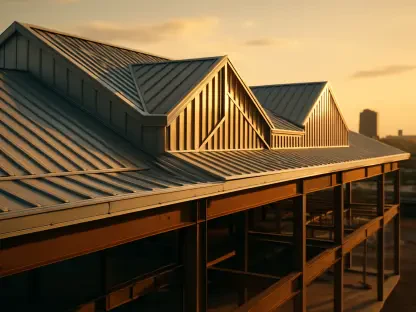
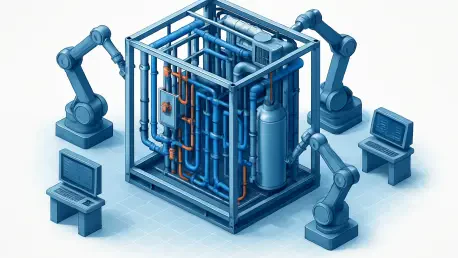
Form Off-Site Solutions operates across the full spectrum of the construction value chain, utilizing a Design for Manufacturing (DfM) strategy to bridge the gap between architectural vision and factory output. This methodology ensures that every component is engineered for production efficiency and ease of installation before the first piece of material is even cut. The division’s output is structured into four specialized categories: precision-engineered metal assemblies, high-quality wood assemblies, advanced building skin systems, and integrated multi-trade assemblies that combine mechanical, electrical, and plumbing systems into a single unit.
The integration of these various assemblies allows for a holistic approach to building enclosures and internal systems. For instance, the building skin assemblies allow a structure to become weather-tight much earlier in the schedule, enabling interior trades to begin their work sooner. Similarly, the multi-trade assemblies reduce the logistical nightmare of coordinating dozens of individual subcontractors on a crowded site. By consolidating these complex systems into prefabricated modules, the division simplifies the supply chain and reduces the margin for error during final assembly.
Institutional Expertise Meets Technological Innovation
The division is led by National Offsite Manufacturing Director Nick Effenheim, who brings a focus on merging long-standing construction expertise with the agility of a technology startup. This “endorsed brand” model allows Form Off-Site Solutions to tap into JE Dunn’s massive historical data pool and institutional knowledge while operating with the specialized focus required for high-tech manufacturing. The result is a system where quality control is handled at the source, utilizing rigorous factory inspections to ensure that every module meets exact specifications before it leaves the plant.
By functioning as a manufacturing entity, the division can implement continuous improvement protocols that are difficult to maintain on a traditional jobsite. Lessons learned from one project are immediately integrated into the factory’s production line, creating a feedback loop that drives constant innovation. This technological edge ensures that the firm is not just building faster, but also smarter, utilizing data-driven insights to optimize material usage and minimize waste, which aligns with modern sustainability goals without sacrificing the bottom line.
Implementing Off-Site Strategies for Project Success
To maximize the benefits of these new capabilities, developers and stakeholders must adopt a framework that prioritizes early-stage collaboration and logistical synchronization. Integrating Form Off-Site Solutions effectively requires engaging the manufacturing team during the conceptual phase so that DfM principles are baked into the blueprints. This early involvement ensures that the building is designed to be built in sections, preventing costly redesigns later in the process and ensuring that every component fits perfectly upon arrival.
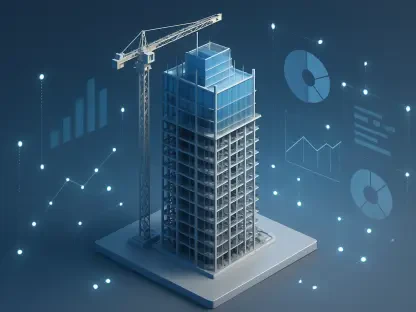
Success in this new landscape also hinges on precise coordination between factory production and site readiness. Components must arrive in a “just-in-time” sequence to minimize on-site storage needs and reduce the risk of damage. By leveraging multi-trade assemblies and factory-controlled benchmarking, project managers could significantly reduce the number of individual touches required on-site. As the industry moves toward this modular future, the focus turned toward creating standardized interfaces and digital twins that allowed for a seamless handoff between the manufacturing floor and the final building site.