
The quiet reliability of a city’s water supply often hides the precarious state of the aging pipes buried beneath its streets, yet the City of Boulder has taken a decisive stand against this invisible decay. By finalizing a massive $25 million infrastructure initiative focused on its water distribution network, the municipality has reached a significant milestone in its long-term utility management strategy. This project, which centered on the comprehensive replacement of the 63rd Street waterline, represents one of the most substantial capital investments in the city’s recent history and serves as a proactive defense against potential utility failures. While many American cities operate under a reactive maintenance model, Boulder has moved toward a philosophy of resilience, prioritizing the health of its transmission arteries before catastrophic breaks occur. This move not only secures the water supply for thousands of residents but also establishes a modern benchmark for how local governments can navigate the complex intersection of aging physical assets and evolving economic pressures.
Strengthening the Backbone of City Utilities
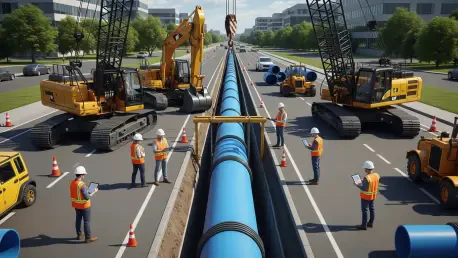
The centerpiece of this initiative involved the replacement of nearly two miles of large-diameter drinking water pipes located along the 63rd Street corridor, stretching from Colorado State Highway 119 to Boulder Creek. These are not standard distribution lines found under residential side streets; they are critical transmission arteries that function as the structural backbone of the city’s entire water network. Before this replacement, this specific area was identified as a high-risk concentration point where the original pipes had reached the end of their functional lifespan. Due to the scale and pressure of these transmission lines, a single major rupture in this corridor could have triggered cascading service interruptions, potentially leaving businesses and residential sectors in the Gunbarrel area without reliable water for extended periods. By addressing this vulnerability now, the city has significantly lowered its risk profile and ensured that its most vital utility corridor can withstand the demands of a growing urban population for several decades.
Execution of the project required a rigorous phase of construction and pressure testing to ensure the new lines met the highest standards of safety and efficiency. Now that these lines are fully operational, they deliver clean, high-quality drinking water while providing a much-needed stabilization effect on the citywide distribution network. Although the underground work is finished and the road has been temporarily patched to allow for immediate traffic flow, the city has strategically scheduled the final asphalt resurfacing for late spring 2026. This delay is a calculated engineering decision, as paving during optimal seasonal temperatures ensures a superior bond and extends the longevity of the road surface. This surgical approach to infrastructure repair demonstrates a sophisticated commitment to long-term stability, proving that the city is willing to prioritize technical excellence over quick cosmetic fixes. Such detailed planning minimizes the need for future interventions, saving taxpayer money and reducing the recurring inconvenience of road construction.
Navigating National Funding and Policy Hurdles
Boulder’s investment does not exist in isolation but rather serves as a response to a burgeoning national crisis regarding the state of aging public utilities. Data from the Environmental Protection Agency and engineering associations highlights a staggering gap between current infrastructure needs and available municipal funding. Nationally, the drinking water infrastructure gap reached approximately $309 billion in 2024 and is projected to double to $620 billion by 2043 if current investment trends do not accelerate. Most water pipes in the United States average nearly half a century in age, with some cast-iron segments remaining in use after a hundred years. This systemic neglect results in an estimated 260,000 water main breaks annually across North America, leading to the daily loss of six billion gallons of treated water. By completing this $25 million project today, Boulder has effectively insulated itself from the immediate financial uncertainty and the physical risks associated with this broader national decline in utility reliability.
Furthermore, a significant policy shift looms as the Infrastructure Investment and Jobs Act is set to expire in late 2026, creating what many experts call a funding cliff for local governments. This federal legislation has provided billions of dollars annually for water projects, but without guaranteed reauthorization, many cities may soon find themselves without the subsidies required for critical repairs. Boulder’s decision to move forward with the 63rd Street project while costs were predictable and federal support structures were still in place reflects a high level of fiscal foresight. By securing the core of its water network now, the city has protected itself against the rising costs of labor and materials that typically accompany delayed infrastructure work. This proactive stance ensures that the city remains ahead of the curve, avoiding the desperate scramble for emergency funding that often occurs after a major system failure. The project serves as a clear example of how disciplined capital planning can protect a community from shifting national economic policies.
Integrating Physical Infrastructure with Digital Tools
What truly distinguishes Boulder’s approach to municipal health is the deliberate integration of physical utility upgrades with modern digital governance tools. In tandem with the physical pipe replacement on 63rd Street, the city has engaged in a national initiative supported by the Harvard Kennedy School to explore how Artificial Intelligence can improve city services. This dual-track strategy suggests a holistic view of resilience where the physical delivery of water is supported by a sophisticated digital layer. While the new pipes ensure the physical flow of water, digital governance tools aim to optimize how those utilities are monitored and maintained throughout their lifecycle. This alignment with modern technological trends allows the city to transition from a schedule-based maintenance model to a predictive one. By using data to understand the stresses on the system, the city can address minor issues before they escalate, further extending the life of the $25 million investment and ensuring high service standards.
This forward-thinking mindset mirrors shifts in the private sector, where venture capital investment in water-focused technology reached a record $1.12 billion in 2024. These investments are largely flowing into AI-enabled leak detection and predictive analytics designed to make utility management more efficient and less wasteful. Boulder’s willingness to adopt both heavy iron infrastructure and soft digital solutions places it at the forefront of modern city management. By embracing these advancements, the city ensures that its newly installed pipes are not just passive conduits but are part of an intelligent system that can be monitored with the same level of precision used in high-tech industries. This integration maximizes the value of the project, providing the city with better data for future planning and ensuring that the water network remains resilient in the face of changing environmental conditions. It represents a shift toward a smart city model where every physical asset is backed by actionable data.
Strategic Focus and Economic Impact
A comparative analysis of utility trends reveals that Boulder’s strategy is unique in its geographic and financial concentration. While larger, regulated utilities in the Midwest often spread their infrastructure budgets across dozens of communities for incremental upgrades, Boulder chose to concentrate $25 million on a high-stakes, two-mile stretch. This strategy of resilience densification ensures that the heart of the system is nearly invincible before the city considers wider, less critical expansions. By eliminating a specific, high-stakes vulnerability in its core network, Boulder has secured the foundation of its utility system more effectively than if it had diluted the funds across a larger area. This focused investment acts as a safeguard for the city’s economic engine, ensuring that the critical infrastructure necessary for business operations remains uninterrupted. It demonstrates that for mid-sized cities, targeted interventions on high-impact assets can often yield better long-term results than broad, shallow improvements.
The successful completion of the 63rd Street project also provides immediate and long-term economic benefits to the local community and the broader region. In the short term, the reopening of the corridor restores vital traffic flow to the Gunbarrel business district, which is home to several high-tech firms and commercial centers. In the long term, a stable and reliable water supply is a fundamental driver of property values and commercial continuity. Within the broader context of the Colorado economy, which has become a major hub for climate technology and infrastructure innovation, Boulder’s investment serves as a strong signal to the private sector. It demonstrates that the city is a stable and reliable environment for long-term residency and commercial investment. By mitigating the risk of massive utility failures, the city protects its tax base and maintains its reputation as a premier location for a high-tech workforce. This commitment to excellence ensures that the city remains competitive and resilient in an increasingly unpredictable economic landscape.
Future Considerations for Municipal Utility Management
The City of Boulder successfully moved beyond the outdated model of reactive utility maintenance by completing the 63rd Street project before any major service interruptions occurred. This initiative demonstrated that disciplined capital planning and early intervention are the most effective tools for protecting a city’s most essential resources. By addressing the core of the water distribution network, the city established a foundation of reliability that will serve residents and businesses for several decades. The project also highlighted the importance of aligning physical infrastructure work with strategic financial timing, especially as federal funding structures remain in a state of flux. Future municipal efforts should continue to prioritize high-impact transmission corridors, ensuring that the primary arteries of city life are fortified against the stresses of aging and environmental change. The technical success of this replacement project provided a clear blueprint for other mid-sized cities facing similar challenges with subterranean infrastructure.
Moving forward, the integration of predictive digital tools and physical assets must become a standard practice for all departments involved in public works. The city’s collaboration with academic and private sectors proved that smart technology can significantly enhance the lifespan and efficiency of traditional engineering projects. To maintain this momentum, local governments should invest in training programs that bridge the gap between civil engineering and data science, allowing for more nuanced management of public utilities. The final resurfacing scheduled for spring 2026 will serve as the concluding chapter of this specific initiative, but the lessons learned will likely influence city policy for years to come. By prioritizing long-term durability over immediate convenience, Boulder ensured that its water system remains a robust asset rather than a hidden liability. This proactive philosophy created a sustainable model for urban resilience, providing a secure environment where the community can continue to thrive without the constant threat of infrastructure failure.