
I’m thrilled to sit down with Luca Calaraili, a renowned expert in the construction industry with a deep background in design and architecture. Luca’s passion for integrating technology into construction equipment and tools has made him a go-to voice on innovation and legal disputes in this space. Today, we’re diving into the high-stakes patent battle between Bobcat and Caterpillar, exploring the intricacies of machine control technology, the strategic legal maneuvers across multiple jurisdictions, and the broader implications for competition and innovation in the construction equipment sector.
What sparked Bobcat’s recent legal actions against Caterpillar, and can you elaborate on the specific technologies at the heart of this dispute over machine control and agility?
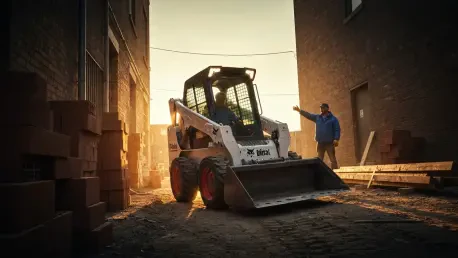
I’ve been following this case closely since Bobcat filed their lawsuits on December 2nd in Texas federal court and at the U.S. International Trade Commission. The core issue revolves around patents Bobcat holds for advanced machine control and agility in their construction equipment, particularly in dozers and excavators. These innovations are game-changers—think of the precision that allows an operator to maneuver a massive machine in tight spaces with the finesse of a sculptor. I recall a project years ago where a Bobcat skid-steer loader transformed a cramped urban site into a workable space; it was like watching a dancer weave through a crowded room. Bobcat’s claim is that Caterpillar has integrated similar technology without permission, undermining years of R&D. The backstory here is one of grit—Bobcat, since its early days as Melroe Manufacturing in 1947, has poured resources into perfecting compact machinery, and this feels personal to them, a fight to protect their legacy.
How did Bobcat pioneer their skid-steer loader technology, and what sets it apart in the competitive landscape of compact machinery?
Bobcat’s journey with skid-steer loaders is a classic tale of innovation born from necessity. Back in the mid-20th century, when they started as Melroe Manufacturing, they saw a gap in the market for compact, versatile equipment that could handle tough jobs in confined spaces. What makes their tech unique is the combination of power and nimbleness—imagine a machine that can pivot on a dime while lifting heavy loads, something competitors struggled to replicate for years. I remember speaking with an old-timer engineer who worked on early prototypes; he described sleepless nights tweaking hydraulic systems to get that perfect balance, a breakthrough that reshaped job sites. Their compact machinery became a staple, setting a benchmark in the industry for efficiency. The challenge was balancing durability with size, but once they cracked it, Bobcat loaders became synonymous with small-scale construction—think of them as the Swiss Army knife of equipment.
Can you explain Bobcat’s dual strategy of filing both a federal lawsuit and a complaint with the U.S. International Trade Commission, and how these approaches might unfold?
Bobcat’s dual approach is a strategic masterstroke, aiming to cover all bases. Filing in Texas federal court allows them to seek monetary damages for alleged infringement, while the ITC complaint targets an import ban on Caterpillar’s equipment—a direct hit to market access. In the federal case, they’ll likely go through discovery, expert testimonies, and a trial that could stretch over years, dissecting every patent claim. The ITC, on the other hand, moves faster; I’ve seen cases where import bans were issued within 18 months, creating immediate pressure. I recall a similar dispute in the tech sector years ago where a dual filing led to a swift settlement because the ITC threat was too disruptive. Bobcat’s playing hardball here, leveraging the ITC’s speed to push for a resolution while building a long-term damages case in court. It’s a high-stakes chess game, and they’re positioning every piece carefully.
What’s behind Bobcat’s decision to pursue lawsuits internationally in Germany and the EU’s Unified Patent Court alongside their U.S. actions, and how do these legal systems differ in handling such disputes?
Going international shows Bobcat is serious about protecting their intellectual property on a global scale. Filing in German district court and the EU’s Unified Patent Court alongside U.S. actions means they’re targeting Caterpillar’s operations in key markets—Europe is a massive hub for construction equipment. German courts are known for their technical rigor; I’ve seen cases there where judges, often with engineering backgrounds, dive deep into patent details, which can be an advantage for a plaintiff like Bobcat with strong technical claims. The EU’s Unified Patent Court, being newer, offers a streamlined process across multiple countries but comes with uncertainties since its precedents are still forming. I remember advising a client on a cross-border patent issue a few years back, and the logistical headache of differing timelines and languages was brutal—but the payoff was a unified ruling that saved them from fragmented battles. Bobcat likely sees this as a way to send a message: infringe on our patents anywhere, and we’ll fight you everywhere.
How does this lawsuit reflect larger trends in the construction equipment industry, and in what ways does Bobcat’s historical focus on innovation influence their stance today?
This dispute is a microcosm of the fierce rivalry and rapid innovation defining the construction equipment industry today. Companies are racing to integrate cutting-edge tech—think automation and precision control—while guarding their intellectual property like hawks, because a single breakthrough can redefine market share. Bobcat’s history, dating back to 1947 as Melroe Manufacturing, gives them a pioneer’s mindset; they’ve been at the forefront of compact equipment for over 65 years, and I can still picture the pride in their spokesperson’s voice when they talk about defending fair competition. I once toured a job site in the ‘90s where Bobcat machines were everywhere, a testament to how their early innovations became industry standards. Competition has only intensified since then, with global players pushing boundaries, but Bobcat’s legacy of craftsmanship drives their resolve to protect every ounce of their ingenuity. This isn’t just a lawsuit; it’s a stand for their identity in an increasingly cutthroat field.
What is your forecast for the future of intellectual property disputes in the construction equipment industry?
Looking ahead, I see intellectual property disputes becoming even more frequent and complex in this industry as technology continues to evolve at breakneck speed. With advancements like autonomous machinery and IoT integration, the lines between innovation and imitation will blur, sparking more legal battles over who owns what. I anticipate a surge in cross-border cases, much like Bobcat’s current strategy, as companies expand globally and patents become battlegrounds for market dominance. Honestly, it’s a bit daunting to think about the resources and expertise needed to navigate this landscape, but it’s also exciting to witness how these conflicts will push companies to innovate smarter. I believe we’re heading toward a future where collaboration might temper some of this rivalry—perhaps through licensing agreements—but only if trust can be rebuilt after clashes like this one.