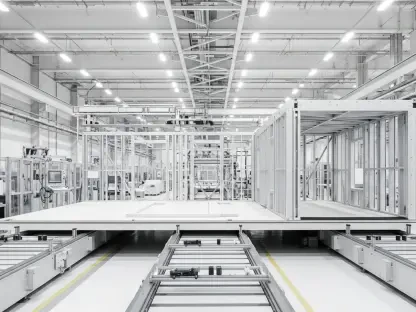

The familiar landscape of a massive construction project, dominated by steel, concrete, and human labor, is on the cusp of a profound transformation driven by data, algorithms, and autonomous machinery. Engineering titan Bechtel is not just observing this shift; it is actively architecting it, betting that the future of building lies in a synthesis of century-old expertise and cutting-edge technology.
A New Blueprint for Building
In a move that reverberated through the engineering and construction sector, Bechtel established a new senior leadership position explicitly designed to spearhead a technological overhaul. By appointing 25-year company veteran John Platt to the role of Senior Vice President of EPC Transformation, the firm signaled a pivotal moment. This is not a departmental experiment but a top-down mandate to reimagine its core project delivery methods on a global scale.
The creation of such a role marks a significant departure from the industry’s typically cautious approach to innovation. Where many competitors have engaged in fragmented or pilot-based tech adoption, Bechtel’s comprehensive commitment is a clear statement. The initiative aims to deeply embed artificial intelligence, automation, and robotics into the foundational processes of Engineering, Procurement, and Construction (EPC), suggesting a future where digital strategy is inseparable from building strategy.
A Legacy of Building Meets a Digital Future
With a history stretching back over 125 years, Bechtel has earned its reputation as one of the world’s largest and most experienced EPC contractors, responsible for some of modern history’s most ambitious infrastructure projects. This legacy provides a deep reservoir of experience and project data, a crucial asset in the digital age. However, tradition alone is no longer sufficient to meet the demands of the modern world.
The drivers behind this transformation are multifaceted. According to company leadership, the pivot is a direct response to maturing technology that now offers tangible benefits, coupled with growing customer ambitions for more complex projects delivered at an unprecedented speed. The global need for enhanced productivity has created a fertile ground for innovation, pushing established giants like Bechtel to evolve or risk being outpaced.
The Core Components of Bechtel’s Tech Revolution
Integrating Artificial Intelligence
Bechtel views artificial intelligence not merely as a tool for digitization but as the essential fuel for its next generation of work. The strategy moves beyond simply converting analog processes to digital ones; instead, it focuses on using AI to analyze vast datasets and unlock new efficiencies. The goal is to create a powerful synergy where decades of hands-on project experience inform and refine advanced AI models.
This integration is designed to generate greater value for clients by optimizing everything from project scheduling and resource allocation to risk assessment and safety protocols. By combining its historical knowledge with modern computational power, the company aims to deliver projects that are not only faster and more cost-effective but also safer and of higher quality, turning its legacy into a competitive advantage in the AI era.
Deploying Automation and Robotics
The push toward automation and robotics on Bechtel’s jobsites is a deliberate escalation of a multi-year initiative. This long-term commitment underscores the company’s belief that machines can significantly enhance human capabilities, improving both quality and execution capacity. The plan involves a deeper integration of robotic systems for tasks that are repetitive, dangerous, or require immense precision.
From automated welding and material transport to robotic inspections, the objective is to create a more efficient and safer working environment. This allows skilled human workers to focus on more complex, high-value tasks while automation handles the routine, thereby boosting overall project productivity and helping to mitigate potential labor shortages on massive, long-term projects.
Forging Strategic Tech Partnerships
Recognizing that no single company can master every aspect of this technological frontier, Bechtel is actively forging strategic partnerships to accelerate its transformation. A prime example is its collaboration with chipmaker Nvidia. By leveraging Nvidia’s Omniverse platform, Bechtel can create sophisticated digital twins of its projects, allowing for advanced simulation and optimization before a single piece of equipment arrives on site.
These alliances provide Bechtel with direct access to cutting-edge tools and specialized expertise, effectively fast-tracking its adoption of complex technologies. Such collaborations are critical for tackling highly technical projects, like the current boom in data center construction, where digital modeling and accelerated timelines are paramount to success.
What Makes Bechtel’s Approach Unique
What distinguishes Bechtel’s initiative is its scale and structure. The establishment of the Senior Vice President of EPC Transformation role centralizes the effort under a single, high-level leader, ensuring a cohesive, company-wide strategy. This top-down commitment provides the necessary authority and resources to drive fundamental change across all of Bechtel’s global operations.
This stands in stark contrast to the more common bottom-up or project-specific tech adoption seen elsewhere in the construction industry. While pilot programs can demonstrate the potential of a new tool, they often fail to achieve widespread integration. Bechtel’s approach is designed to overcome this inertia, transforming technology from a niche application into a core component of its operational DNA.
The Strategy in Action Current Megaprojects
This technological pivot is not merely theoretical; it is being actively deployed on some of the world’s most significant megaprojects. Bechtel is a key player in the booming data center market, an industry where technology is both the tool for construction and the final product. Its partnership with the Department of Commerce to support infrastructure investments underscores its role in building the digital backbone of the economy.
The company’s prowess is also on display in the energy sector, exemplified by its $4.77 billion contract to construct the Rio Grande liquefied natural gas (LNG) facility in Texas. On high-stakes projects like these, the ability of AI and automation to enhance efficiency, manage complexity, and ensure safety is not a luxury but a necessity for successful delivery.
Reflection and Broader Impacts
Strengths and Challenges of the AI Pivot
The potential strengths of Bechtel’s AI-driven strategy are compelling. Increased speed, enhanced safety through automation, and improved quality control via data analytics could redefine project execution standards. This technological edge enables the company to confidently tackle the increasingly complex megaprojects demanded by a growing global population and economy.
However, the path is not without its challenges. The initial cost of implementing advanced robotics and AI systems is substantial, and a significant investment in training is required to cultivate a workforce with the necessary digital skills. Furthermore, managing the security of the vast amounts of data generated by these systems is a critical concern that must be addressed to maintain client trust and operational integrity.
A Tectonic Shift for the Construction Industry
Bechtel’s decisive move is likely to create a ripple effect across the entire construction landscape. By setting a new benchmark for technological integration, the company is effectively pressuring its competitors to accelerate their own digital transformations. This could trigger an industry-wide race to adopt similar technologies, fundamentally altering the competitive dynamics of the sector.
In the long term, this shift could reshape the nature of construction jobs, placing a greater emphasis on digital literacy and data analysis skills. It may also redefine the relationship between contractors and clients, leading to more collaborative, data-driven partnerships. The era of building based on historical precedent alone may be giving way to a new paradigm of predictive, optimized construction.
Constructing Tomorrow The Final Verdict
Bechtel’s strategic, leadership-driven push into artificial intelligence and automation was clearly more than a fleeting experiment; it represented a foundational shift in its corporate identity. The company did not just adopt new tools but restructured its organization to place technology at the very heart of its value proposition.
This comprehensive overhaul, combining a rich legacy with a forward-looking digital vision, served as a powerful new blueprint. It demonstrated how a traditional industry heavyweight could reinvent itself for the modern era, and in doing so, it laid down a compelling case that this integrated, tech-forward approach was indeed the future of global construction.